My next adventure: TBC

Month: August 2026

Day 3 (Singapore) – Gardens by The Bay

To one, Gardens by The Bay epitomises tourism in Singapore with attractions including a Formula 1 exhibition and Supertrees, even a McDonald’s! Of course, one is expected to pay a high price in advance for the majority of these attractions. As a result, tickets were only bought for the Flower Dome and Cloud Forest. These structures are placed around a 10 minute walk away from the MRT through the picturesque gardens…
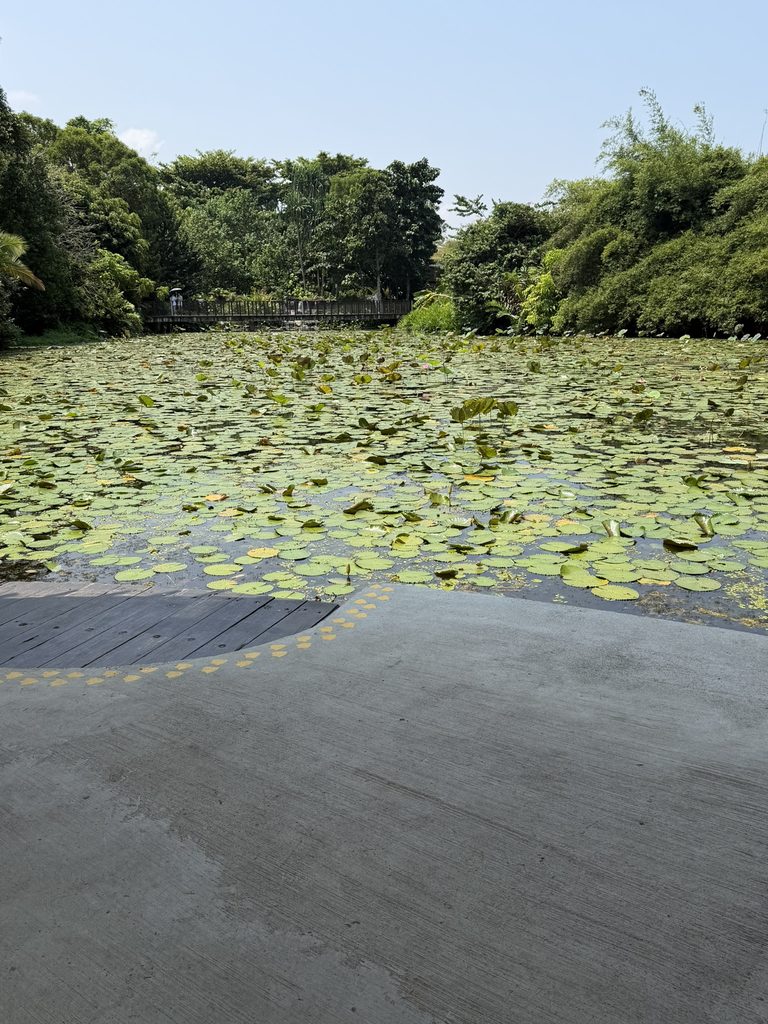
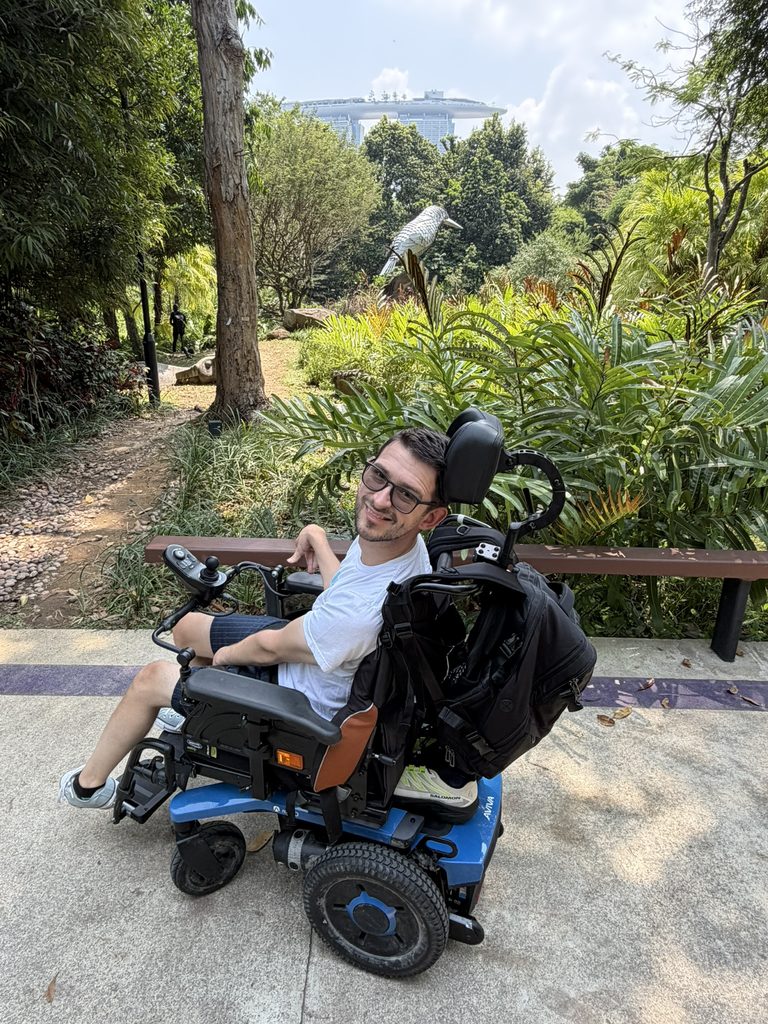
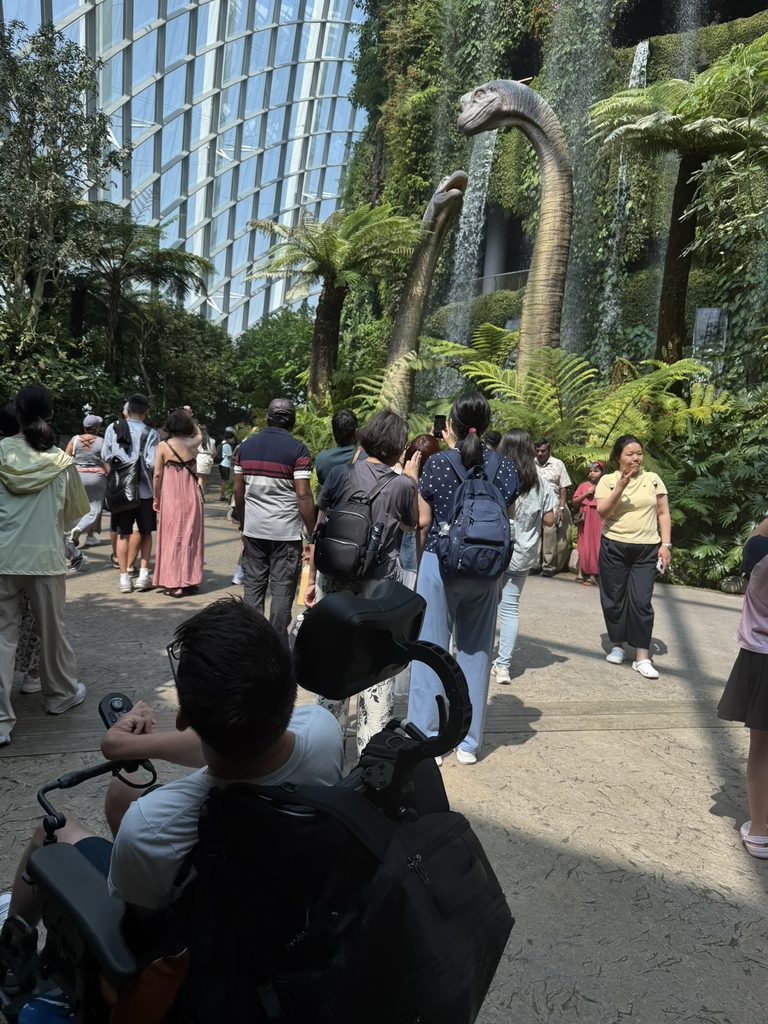
As of 2026, the Cloud Forest is home to the ‘Jurassic Park Experience’ but this doesn’t deter away from the lush greenery set against giant waterfalls. The majority of the Cloud Forest is wheelchair accessible including a canopy walkway…
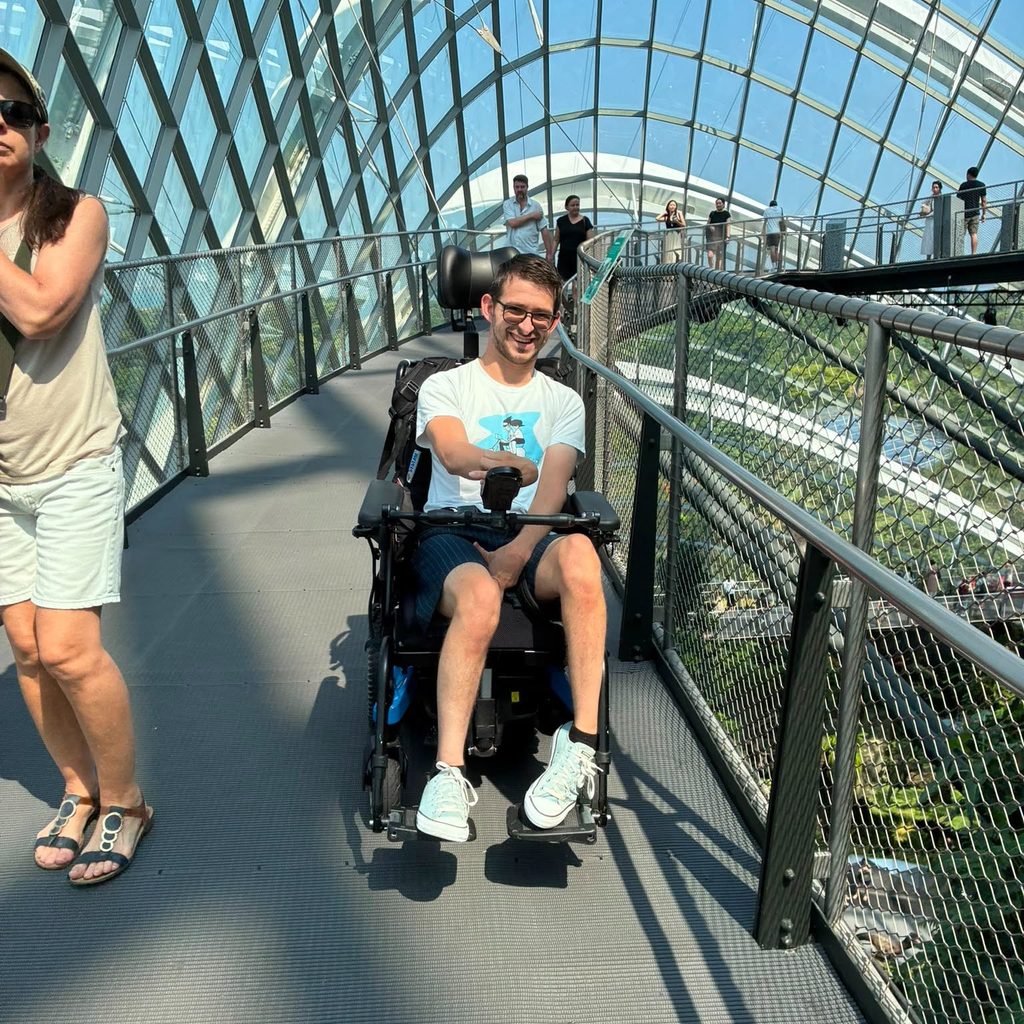
Located adjacent to the Cloud Forest is the Flower Dome. Again, this attraction is wheelchair accessible containing flora from across the world, perfect if one is a plant lover…
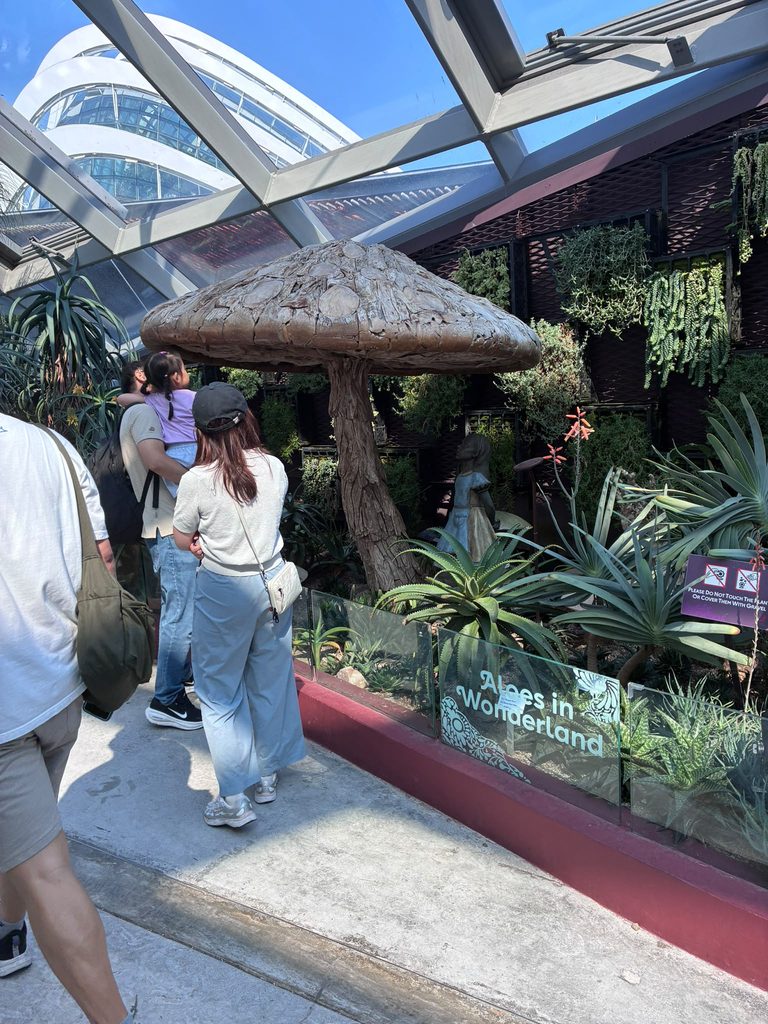
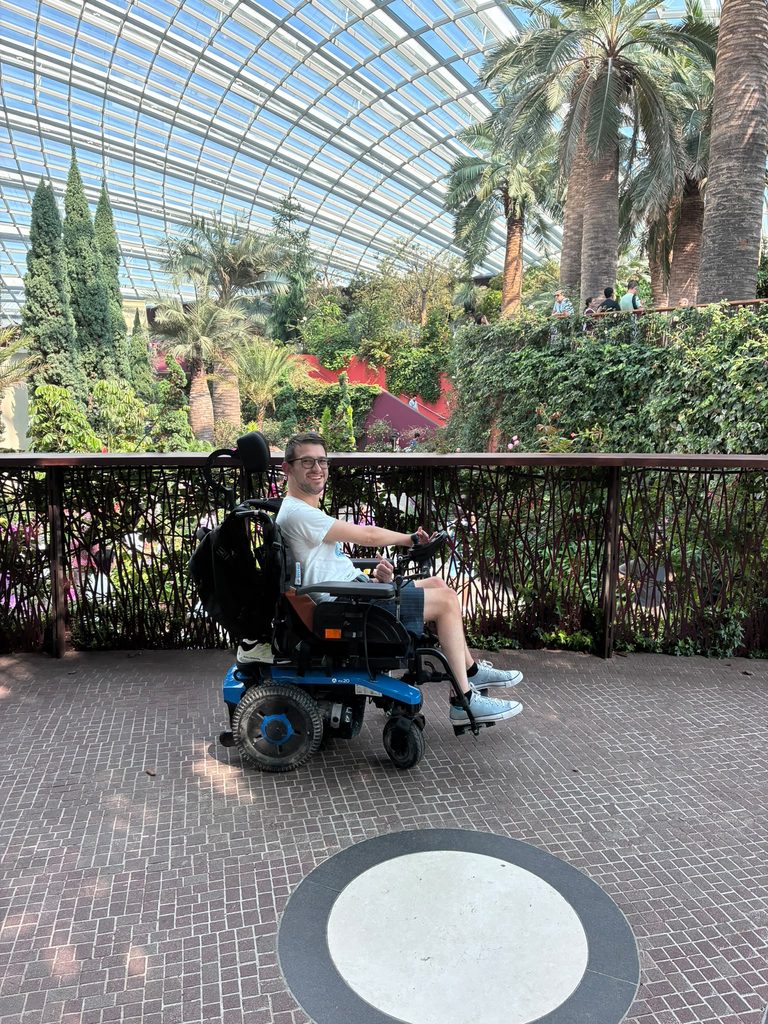
Both attractions are air conditioned making for a great few hours if one wishes to escape the heat!

Day 2 (Singapore) – Marina Bay Sands SkyPark

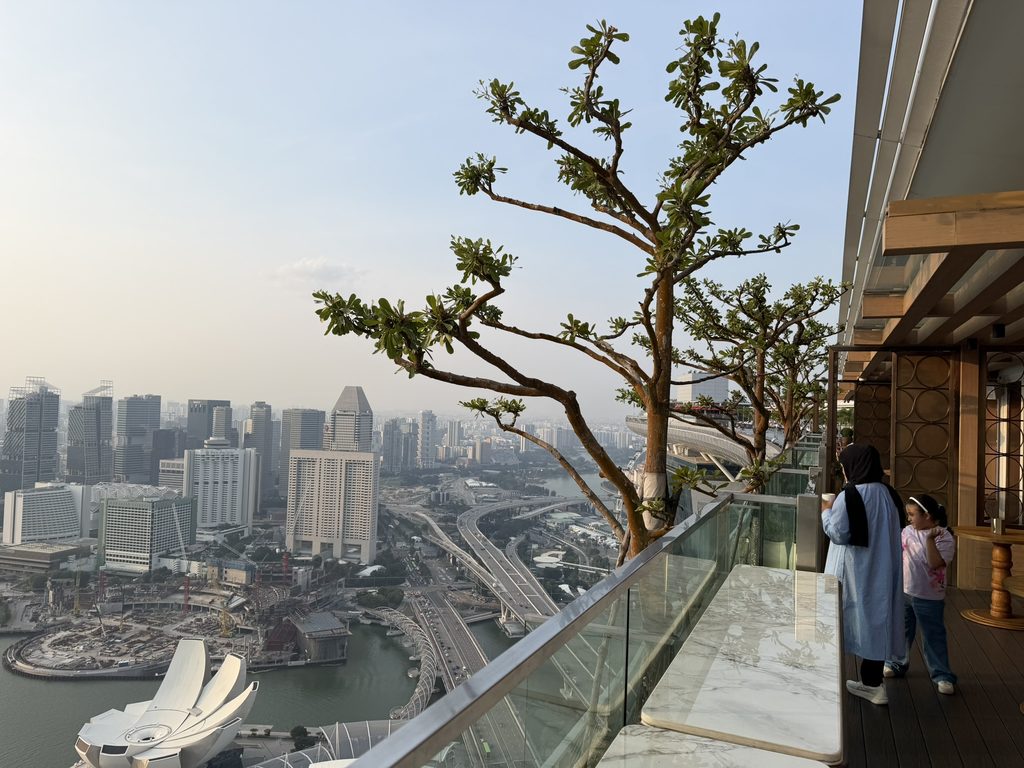
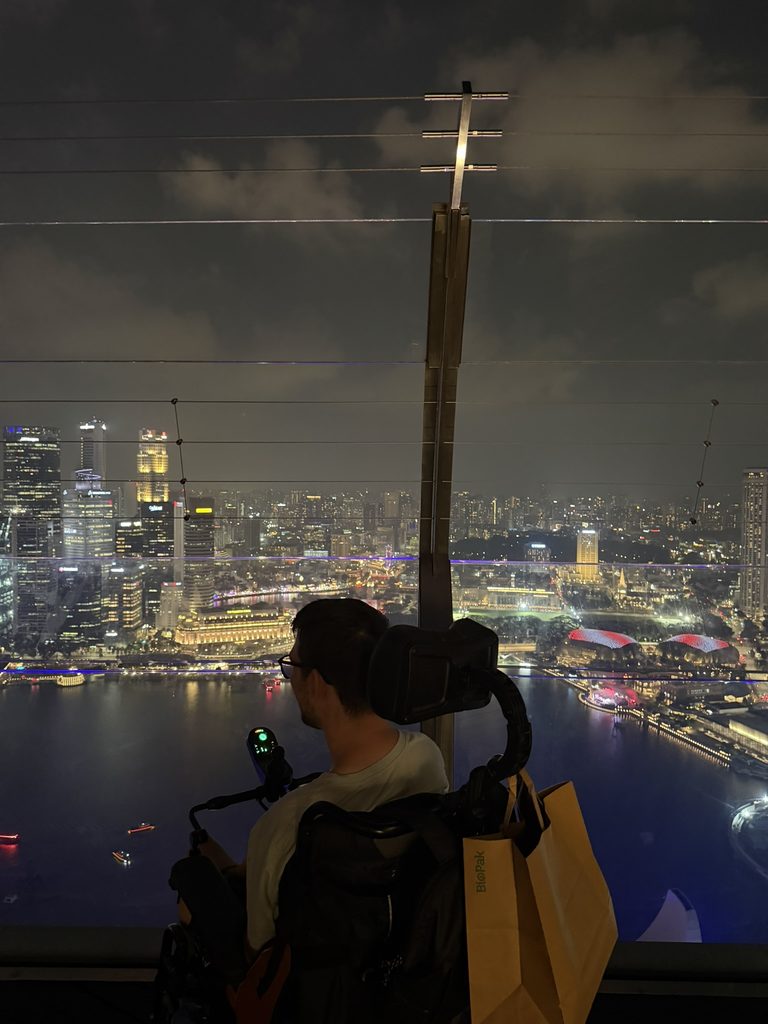
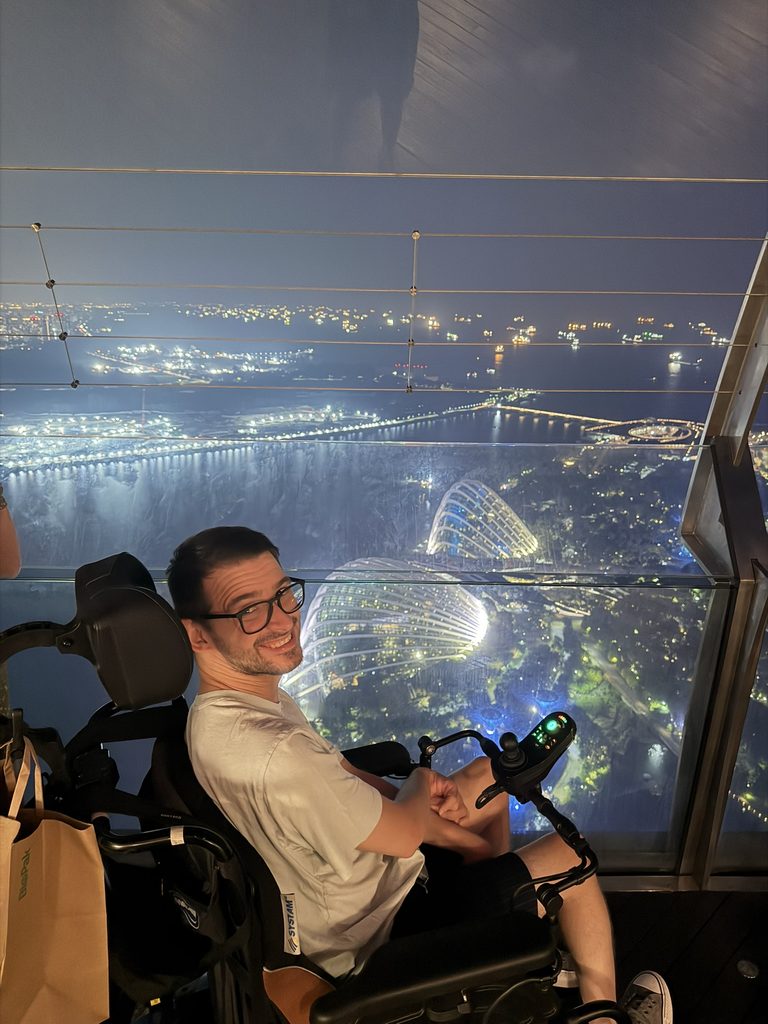
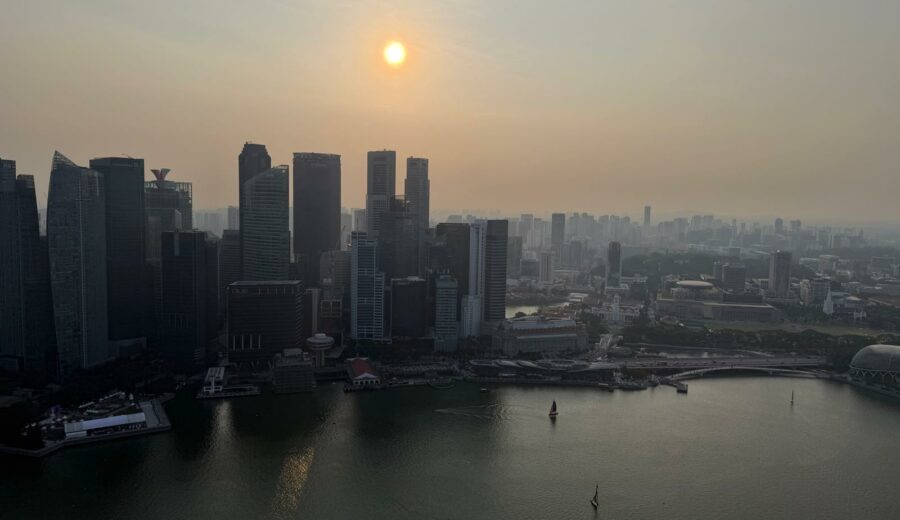
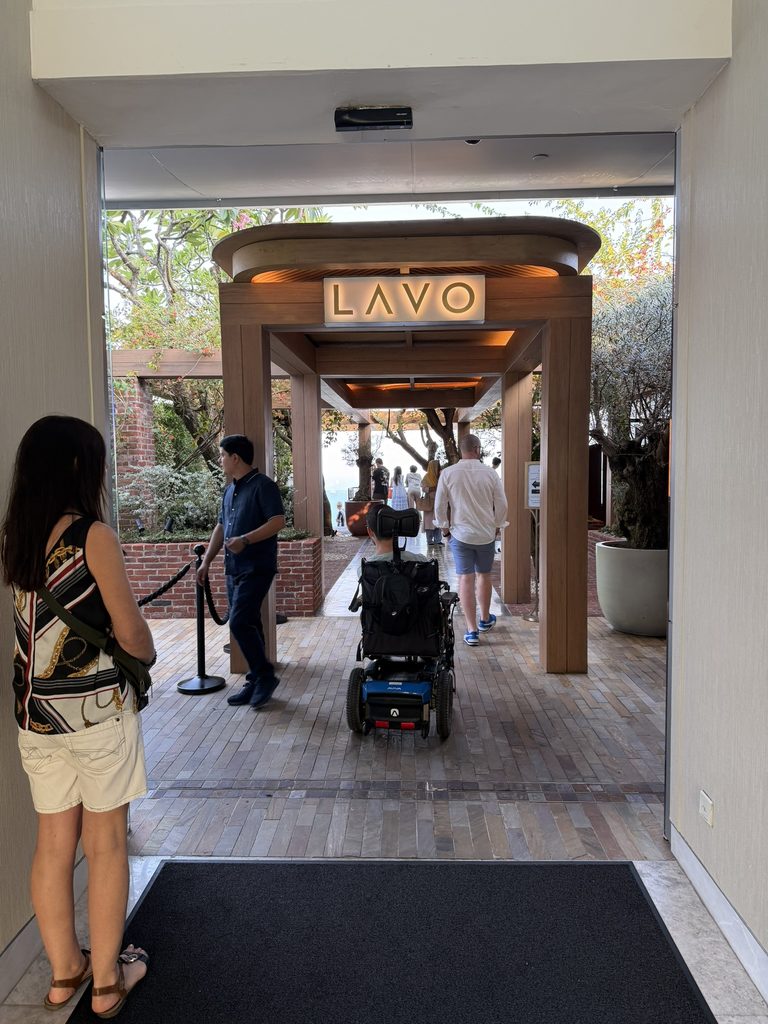
If one was to think of Singapore, it is likely that images of Marina Bay Sands come to mind. With its iconic boat-shaped ‘SkyPark’, it lures tourists from around the world with its panoramic views of the Downtown skyline and surrounding areas. As with many attractions in Singapore, one must purchase a ticket in advance to ensure availability. Although there is an option to add food to your ticket, this only includes one slice of pizza plus a few snacks rather than a sit down meal. It was for this reason that one booked a table at LAVO located atop of one of the other towers in the complex. Not only does it offer reasonably priced food and drink, it also offers views in a more relaxed atmosphere than the SkyPark…

Now, to reach the famous SkyPark, wheelchair users must take a short diversion assisted by staff. However, when one reaches the top, level access enables you to marvel…

Day 1 (Singapore) – Downtown Accessibility

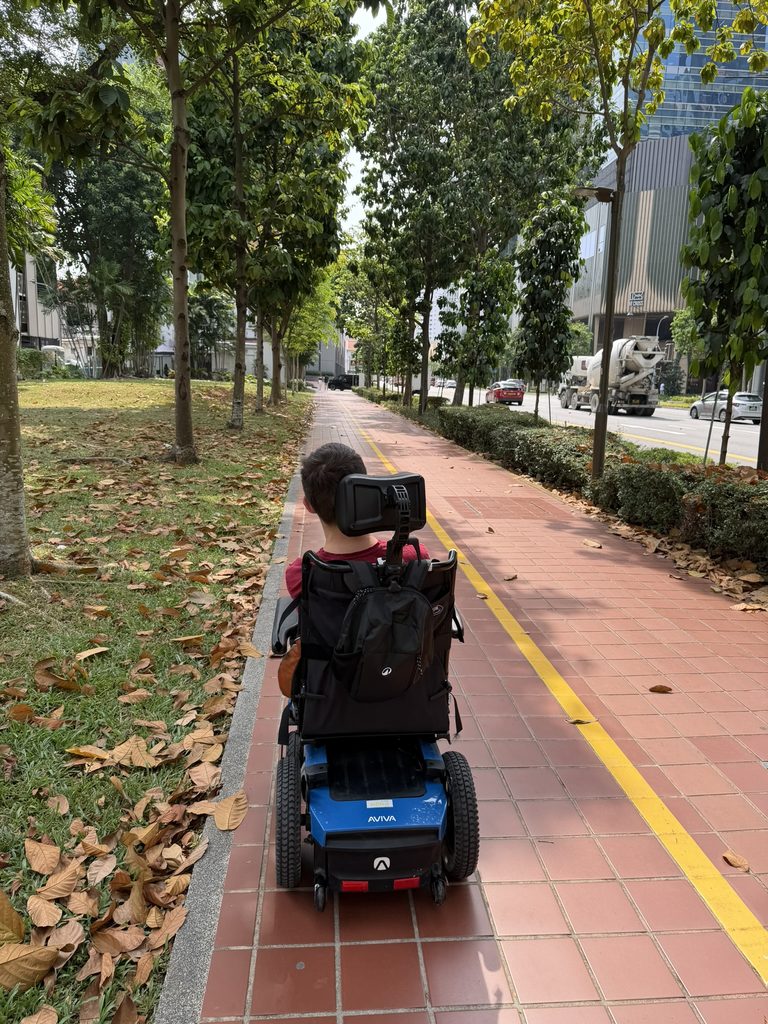
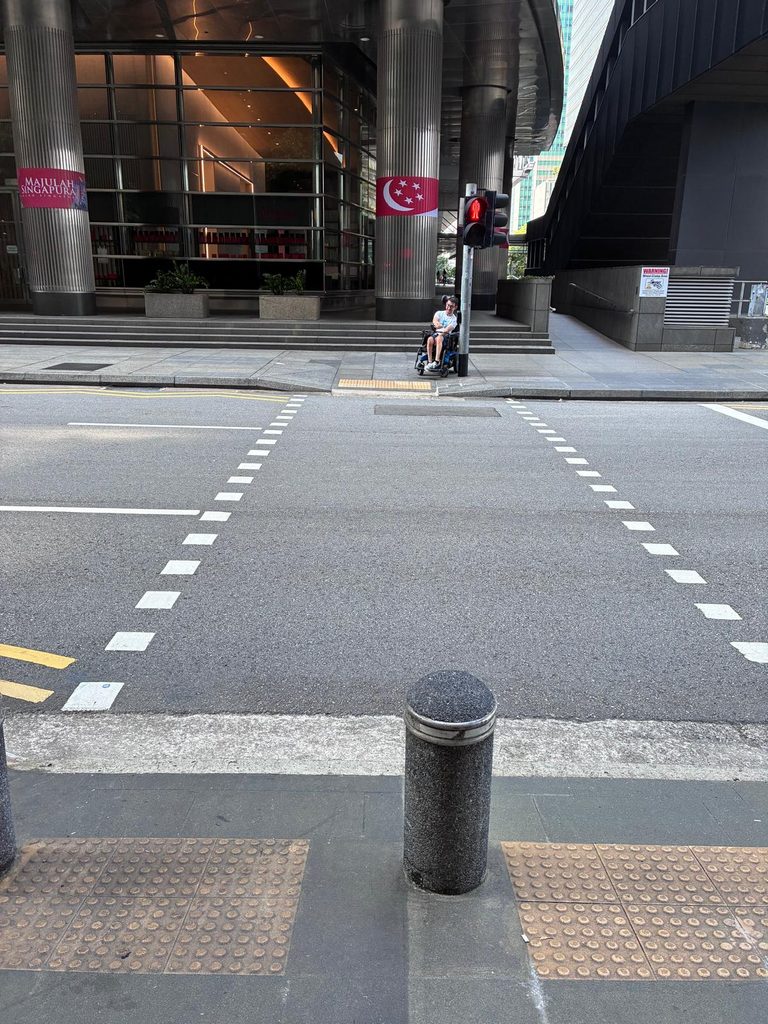
It is no secret that Singapore is one of the more accessible countries in South East Asia but to what extent? Rolling around the ‘Downtown Core’, one couldn’t deny this claim surrounded by ramps and drop kerbs enabling a wheelchair user to fully explore the area…

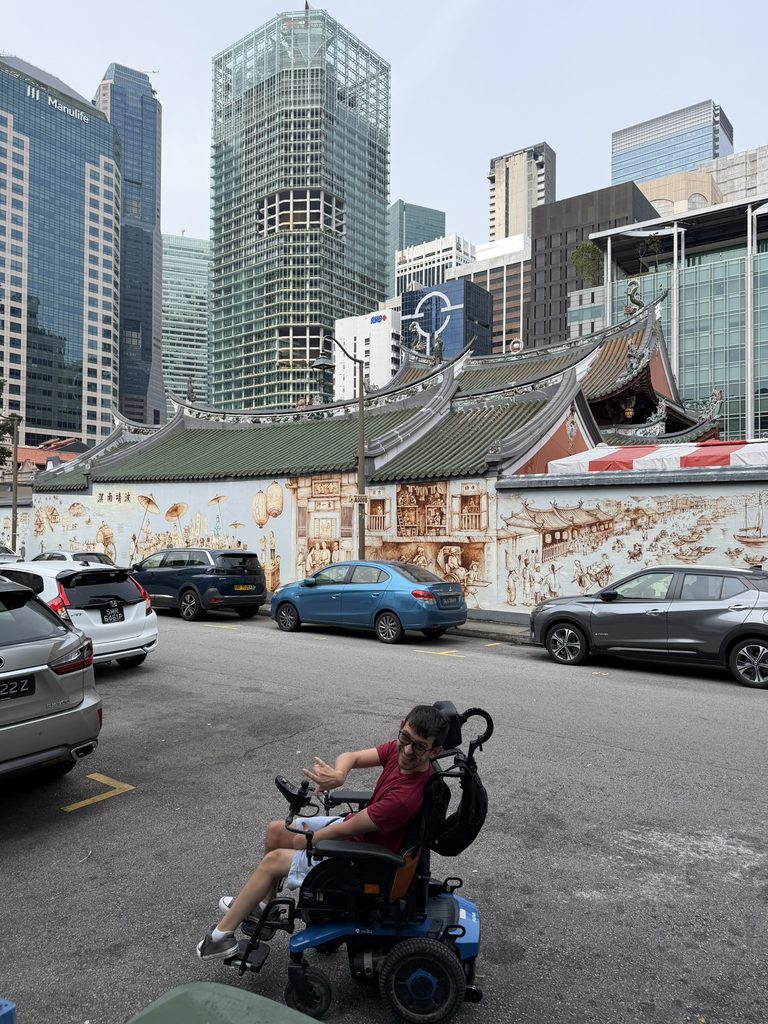
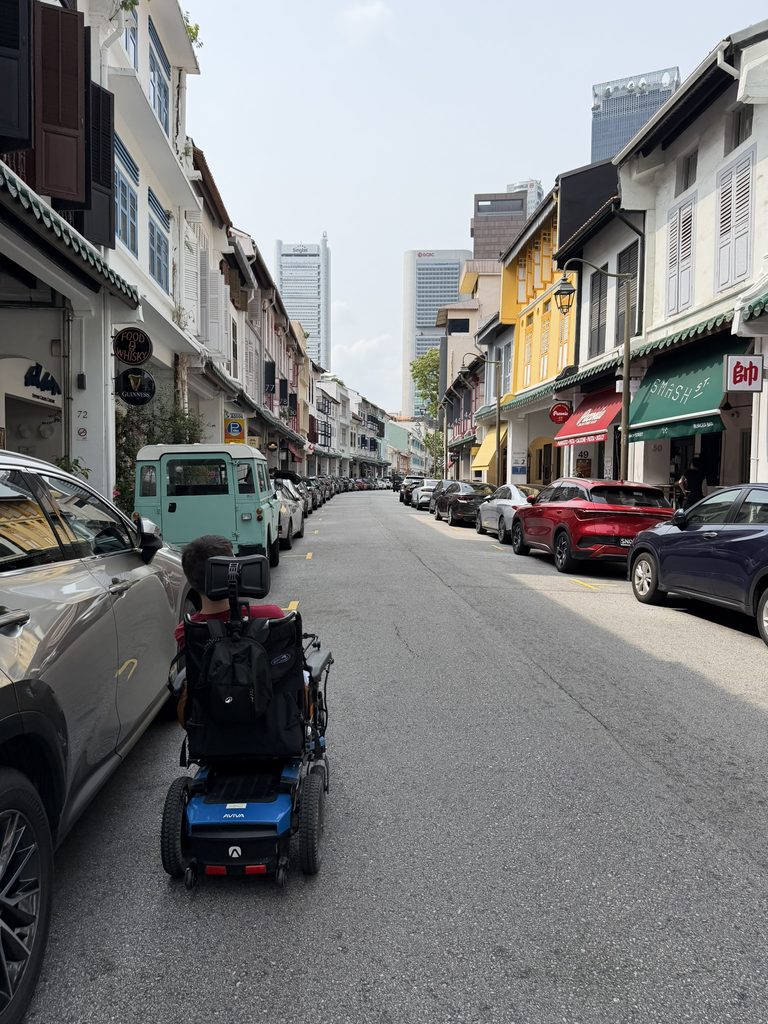
However if one was to roll out of the ‘Downtown Core’ and enter lesser known areas such as China Town, things are a little different. Granted, some streets are equipped with accessibility features, however some lack drop kerbs and many restaurants possess entrance steps..

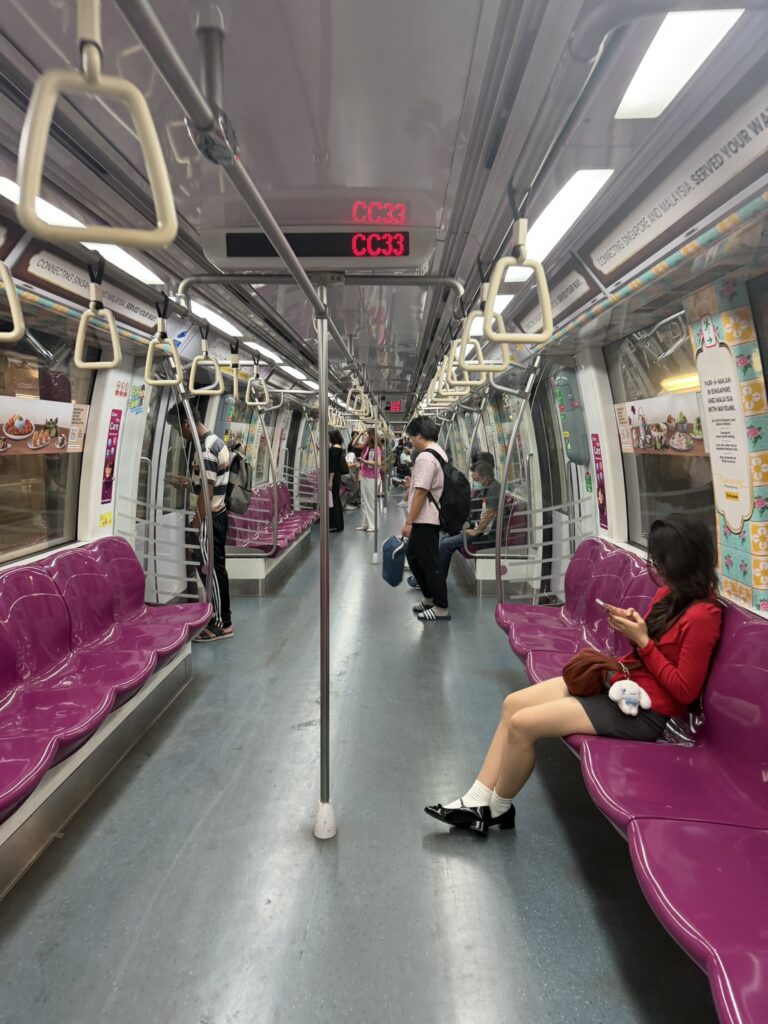
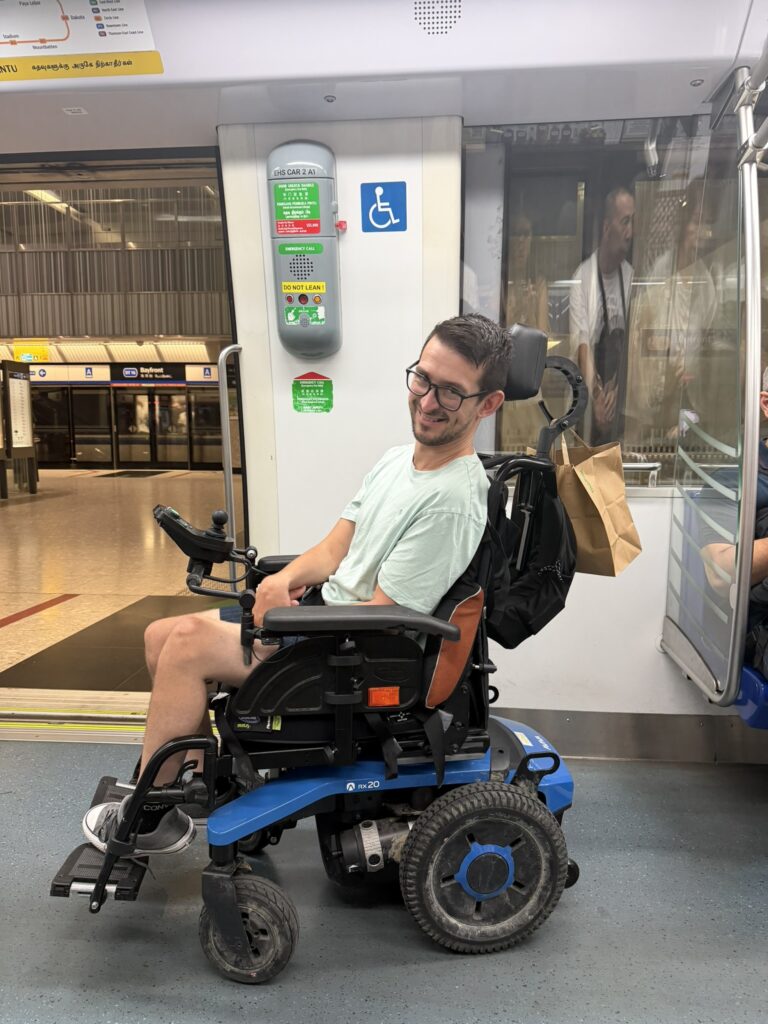
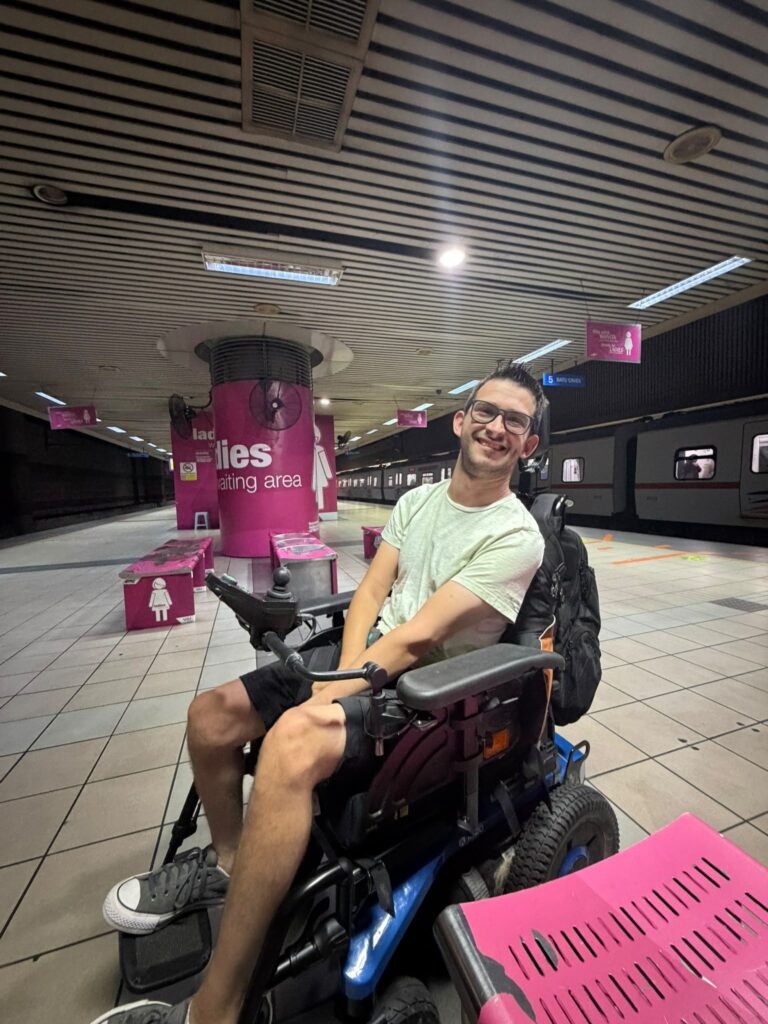
Despite Singapore presenting a mixed bag in terms of accessibility, this small country does know how to implement accessible transport, especially the SMRT. All stations possess elevators in addition to level boarding making it a breeze for wheelchair users…

Of course, many attractions such as the Gardens by The Bay are fully wheelchair accessible and connected to the SMRT hence one would highly recommend using the system to navigate Singapore.

The Malaysian and Singapore Border Crossing Guide

Thanks to the extension of the KTM Intercity service to JB Sentral, it has never been easier to travel to Singapore by land as a wheelchair user. However, it became apparent to one that the process can be bewildering if you are crossing for the first time thus let’s delve into how to cross.

Now, many people arriving at JB Sentral use the KTM Shuttle train to cross said border, however, as of 2026, this is not very wheelchair accessible (especially for larger wheelchairs) thus it is easier to use the bus ‘system’. In theory, the system is pretty easy to use, pass through Malaysian immigration (located adjacent to JB Sentral), board a bus across the causeway and then enter Singapore via the Woodlands Checkpoint.

Wheelchair should note that both border control buildings are accessible complete with ‘Special Assistance’ queues for a smooth process. However, the tricky bit comes when one needs the bus. A large percentage of buses crossing the causeway are not wheelchair accessible thus one needs to follow signs for Causeway Link. These buses do have fold out ramps.

After passing through the Woodlands Checkpoint, one would recommend boarding the CW1 bus as this allows one to join the SMRT system in a matter of minutes at Kranji station.

Day 6 (Malaysia) – The KTM Intercity Experience

Malaysia wasn’t exactly famous for its semi-high speed train service, that was until 2010 with the introduction of the KTM Intercity. Over the next 15 years (and more), the entirety of the West Coast Line was upgraded to allow for semi-high speed trains starting in December 2025. This made ones journey to Singapore significantly easier thanks to a fully accessible train now in operation to JB Sentral.

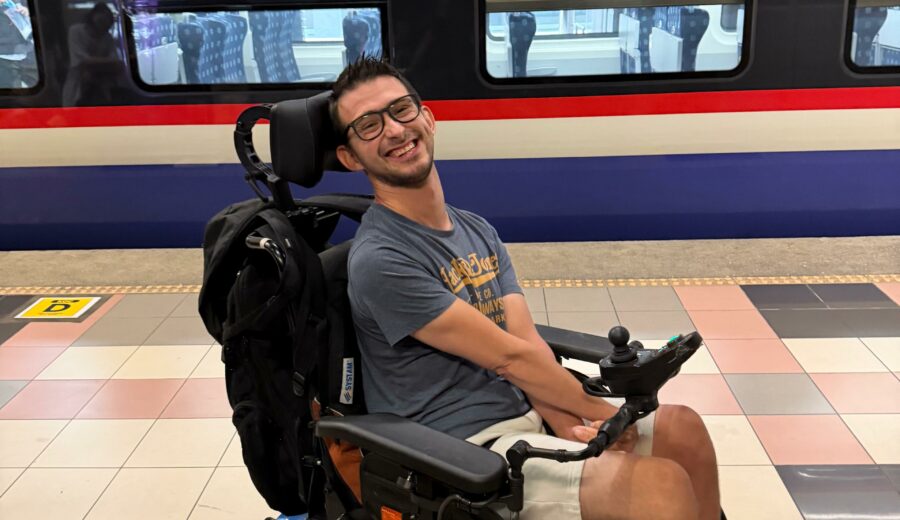
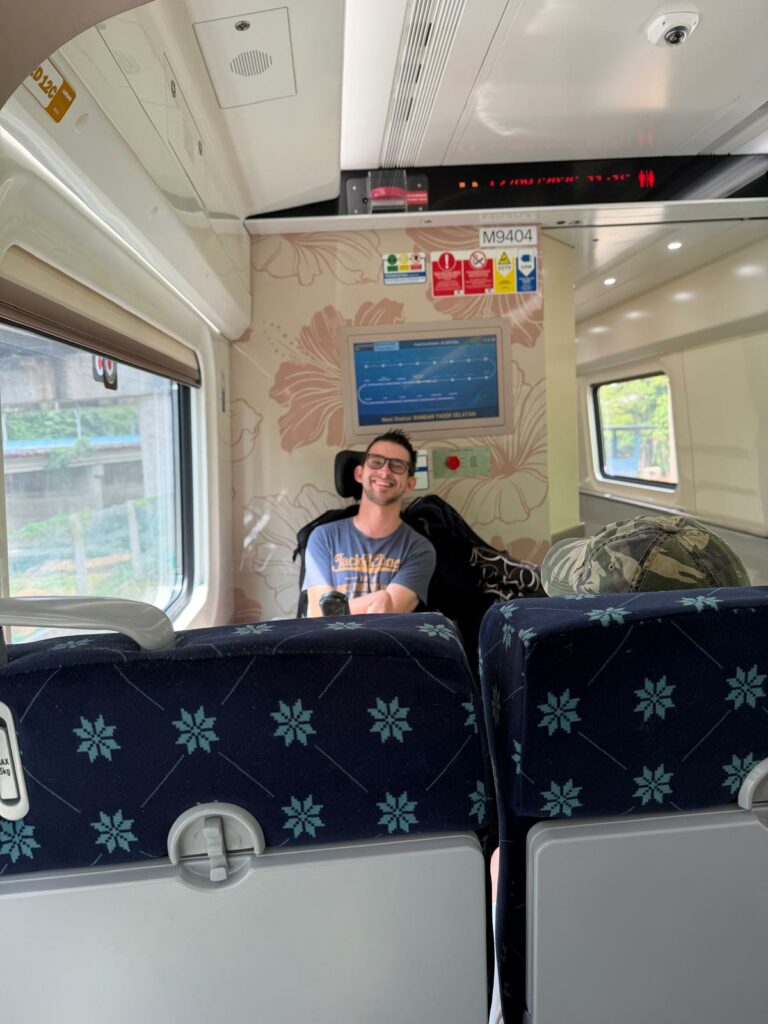
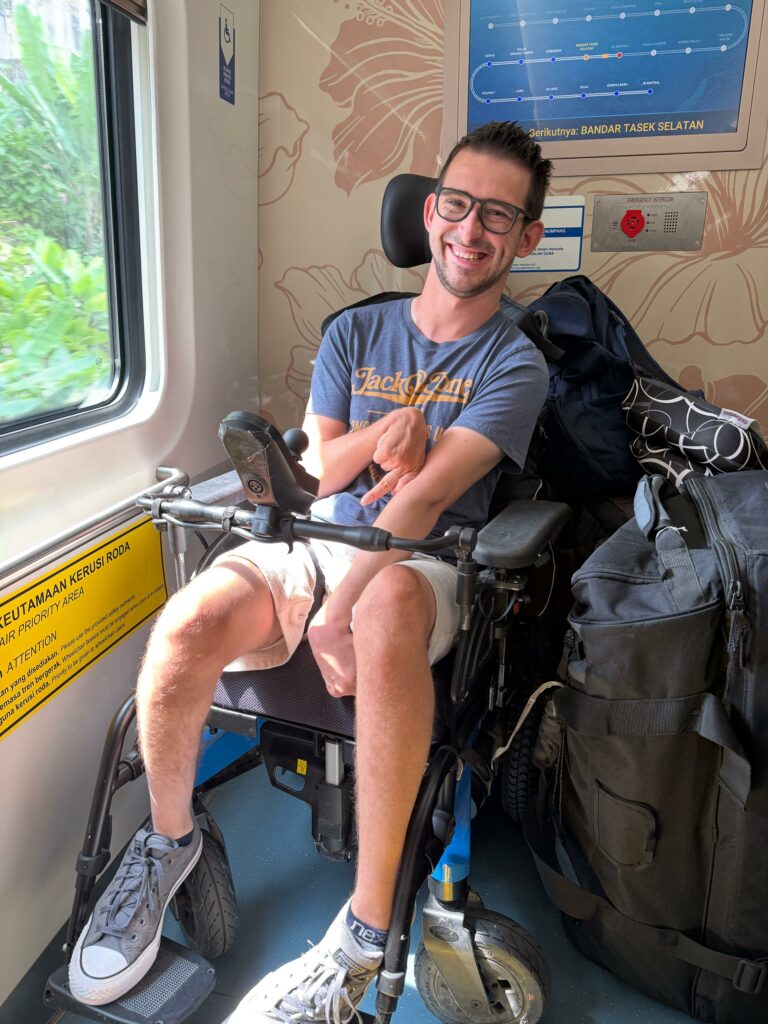
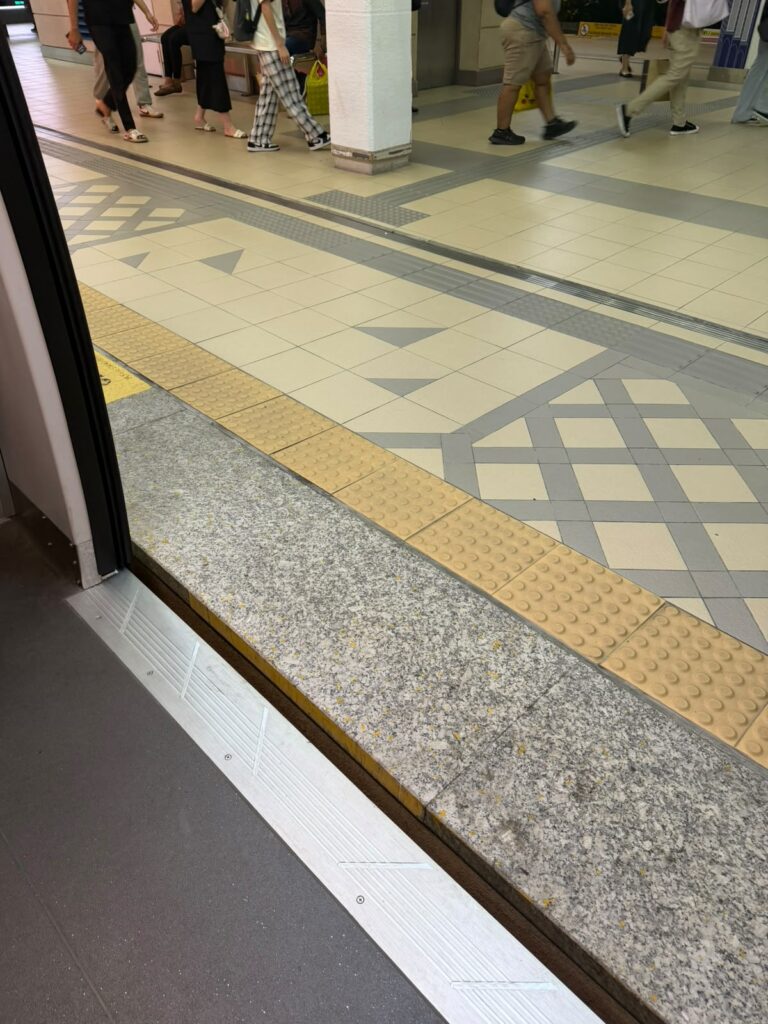
Akin to Thailand, stations along this key route appear to have been rebuilt to accommodate for step free access and even level boarding. It needs to be noted that there is a gap between the train and the platform, however assistance crews are happy to help. Once onboard, one is presented with 2 wheelchair spaces…

Wheelchair users should note that, as of 2026, the online booking system appears to get ‘stuck’ when booking a space. As a result, one purchased a standard ticket and then hoped for the best. Of course, luggage was occupying both spaces to begin with.

Day 5 (Kuala Lumpur) – City Accessibility

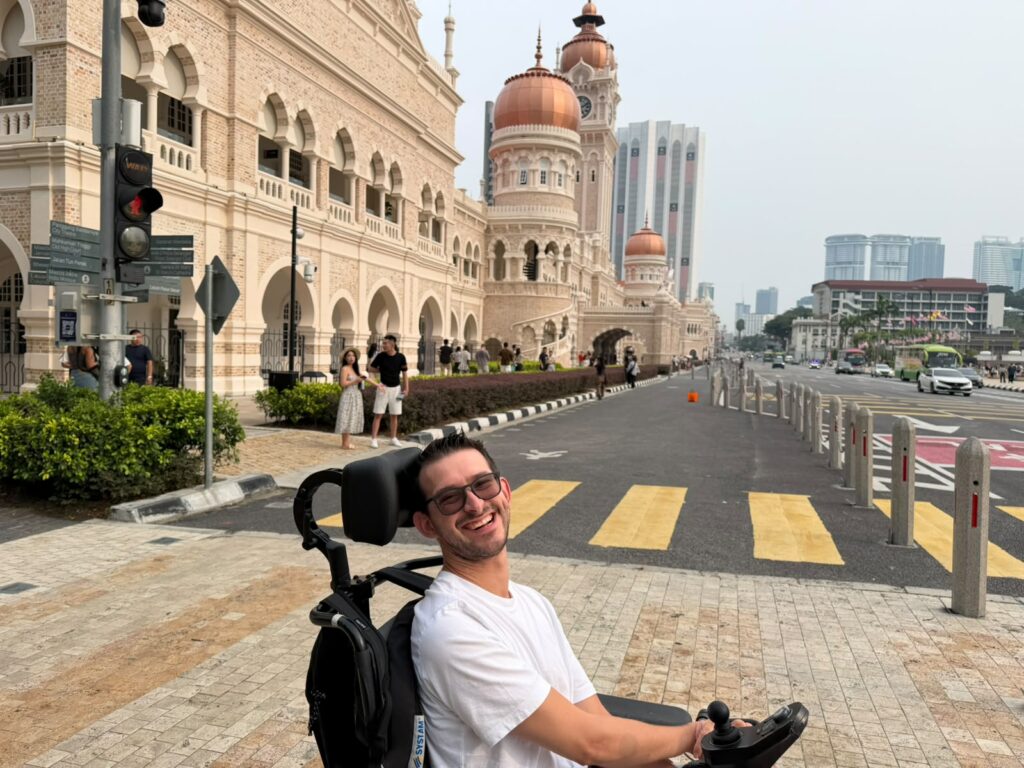
Compared to many cities in South East Asia, rolling around the centre of Kuala Lumpur is pretty easy as a wheelchair user. As one mentioned, drop kerbs are a little hit and miss, however it seems that you are never too far away from accessible public transportation including the LRT should it be necessary…

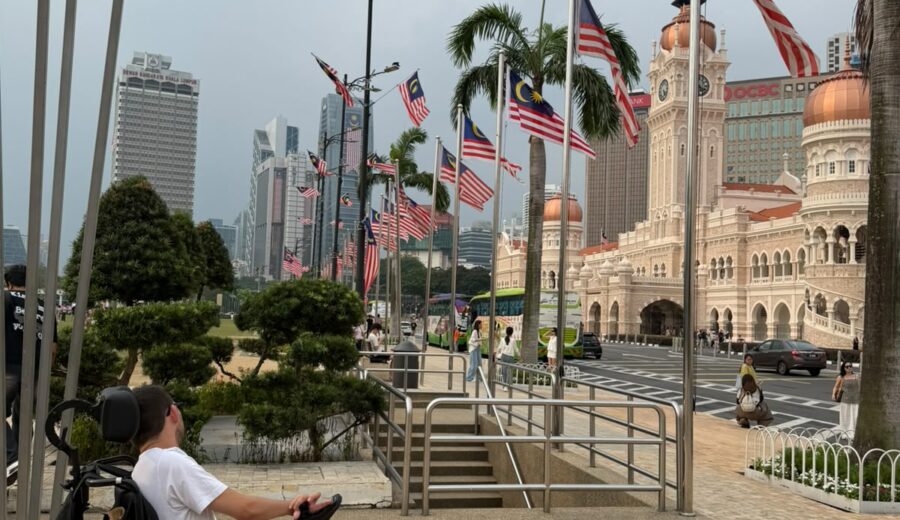
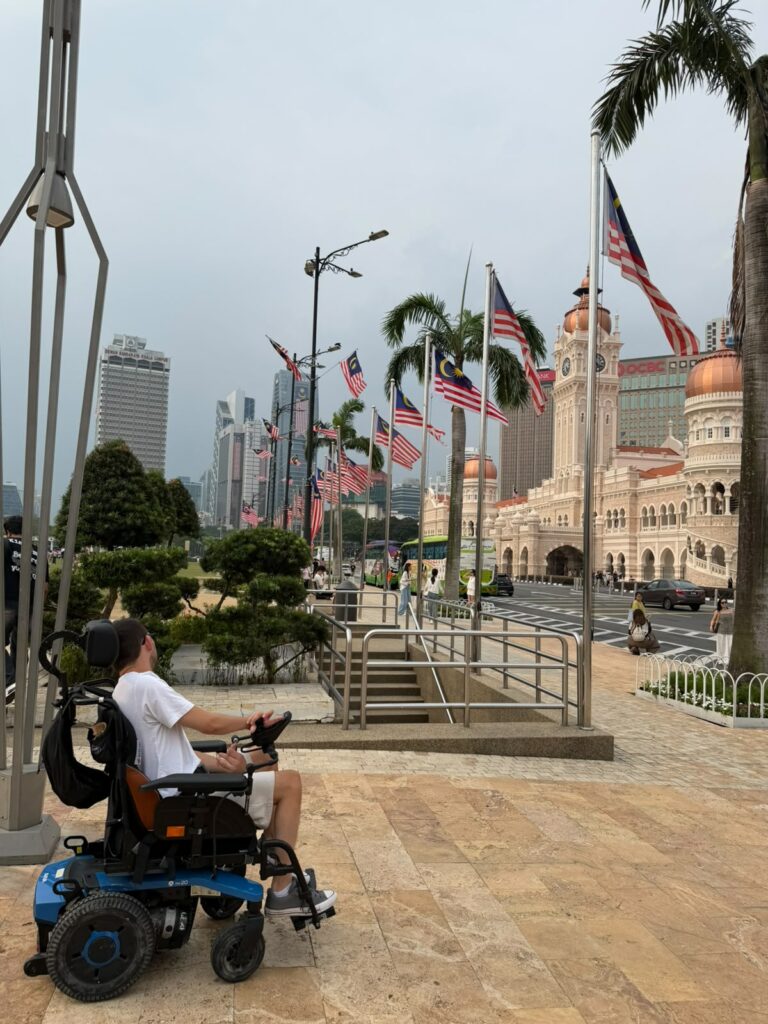
Must see areas such as Merdeka Square have accessibility in mind making it a breeze to explore…

When rolling between Merdeka Square and China Town, one noticed the presence of cycle lanes should drop kerbs be absent.

The only real issue that one came across when rolling around KL is motorcycle barriers on a few pavements. To combat this, designated wheelchair ‘gates’ which Superbunny just about fitted through, however this could prove problematic for larger wheelchairs.

Day 4.5 (Kuala Lumpur) – KL Tower

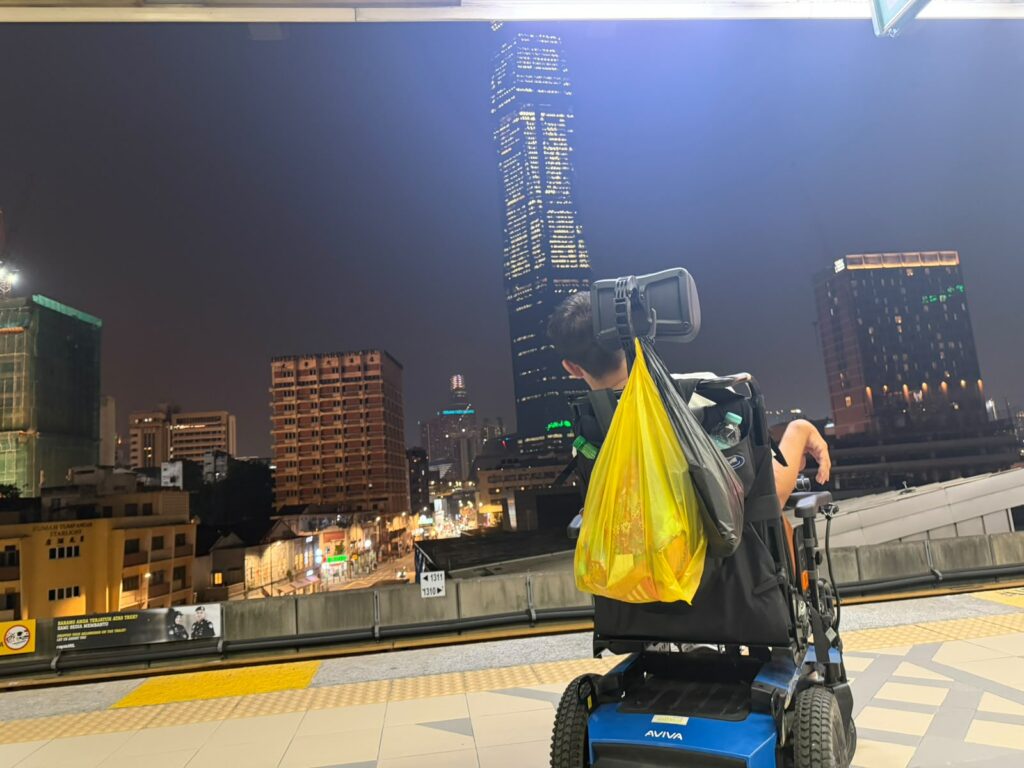
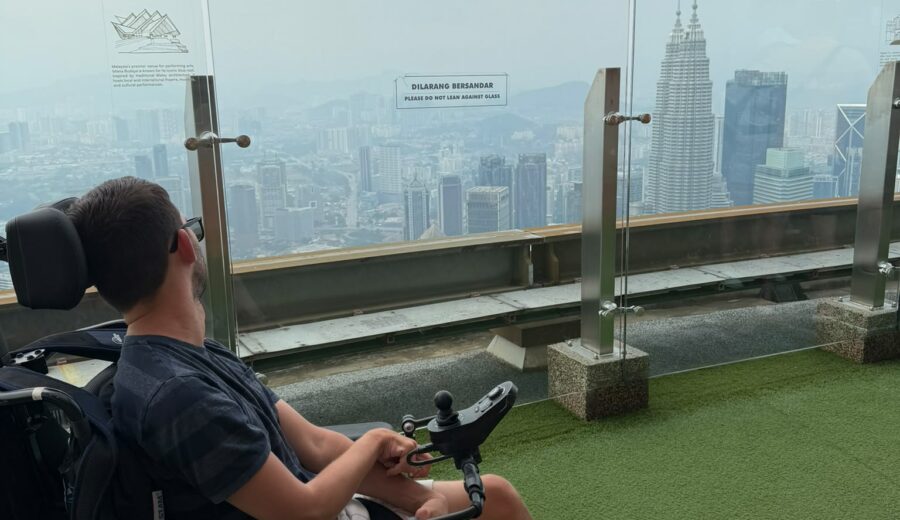
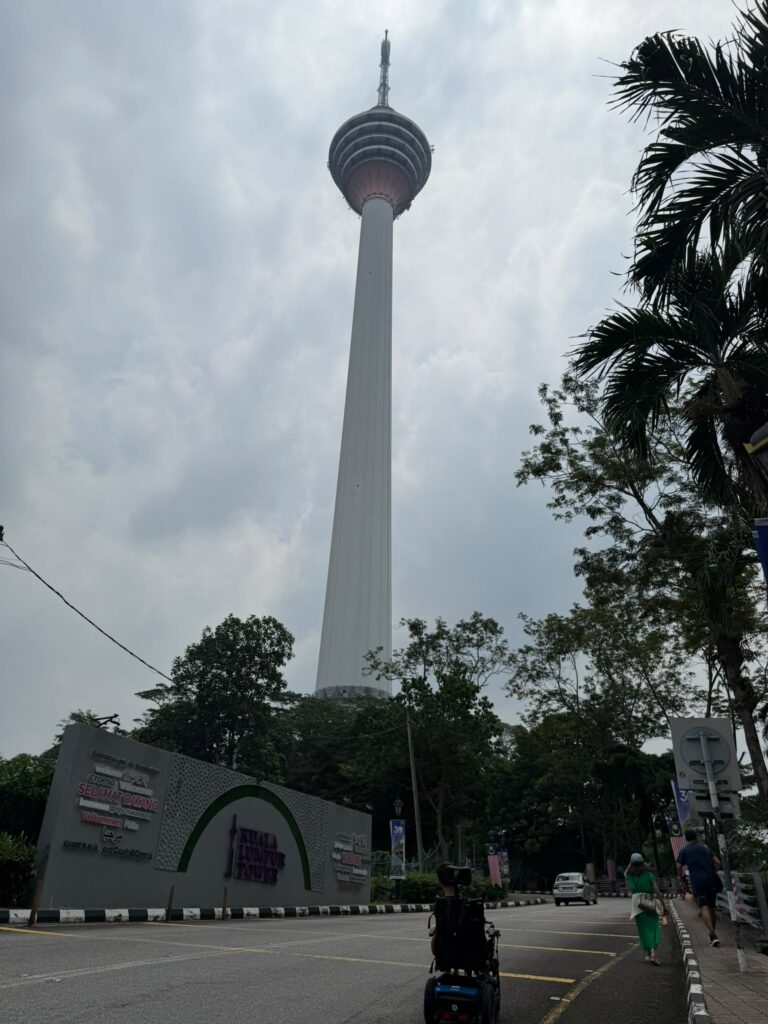
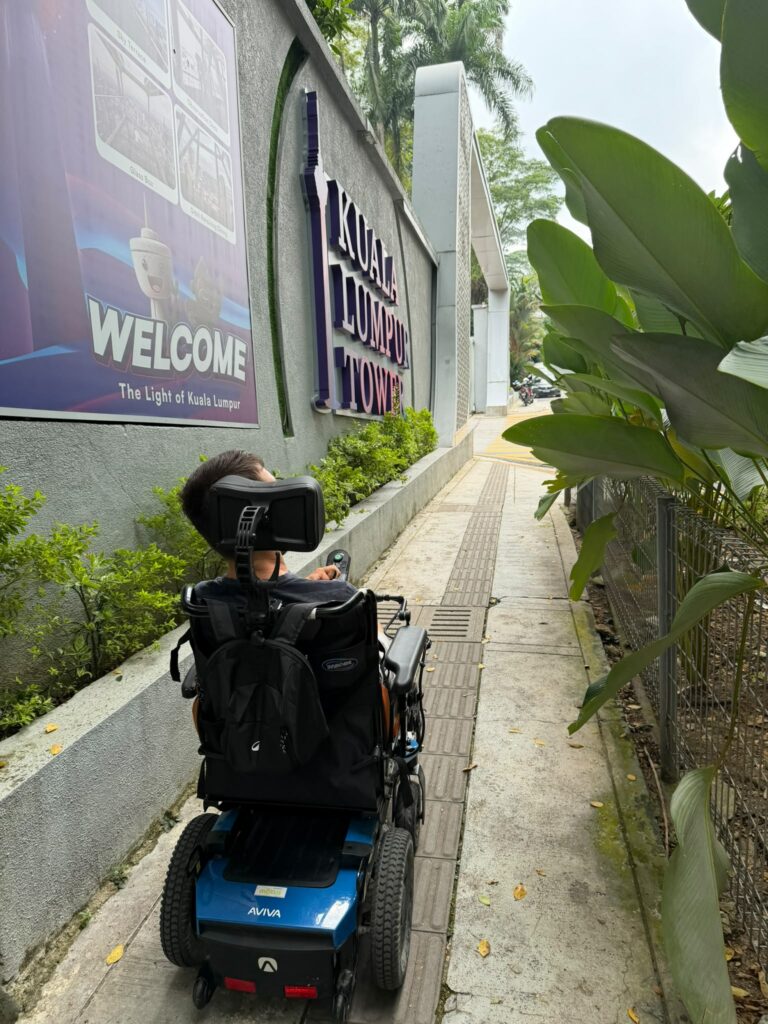
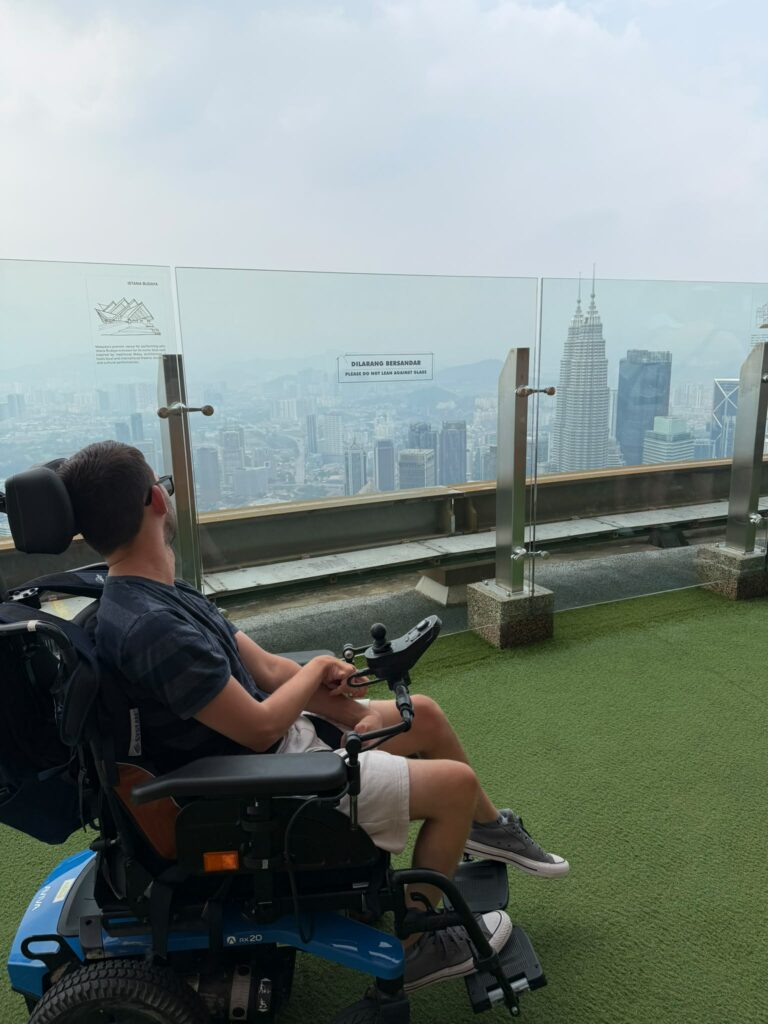
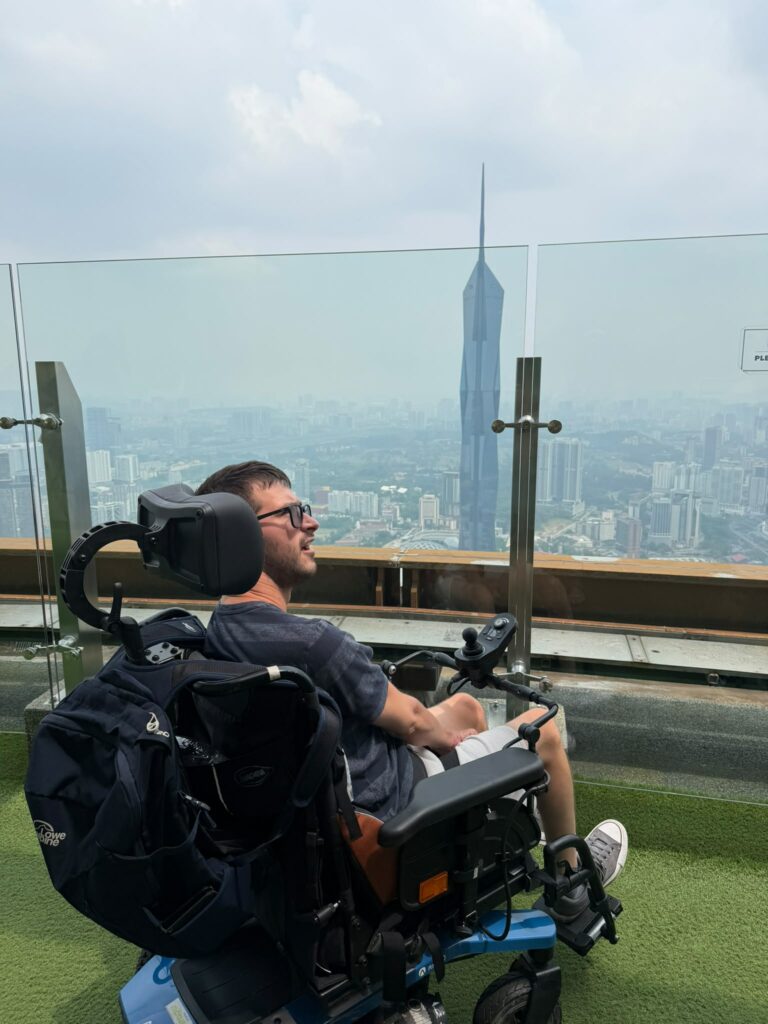
Perhaps overshadowed by the newer, shinier Petronas Towers in terms of observation decks, the KL Tower stands proud in the heart of the city and provides panoramic views. From KL Sentral, one can take the MRL and then walk around 20 minutes. Wheelchair users should note that drop kerbs are a mixed bag around Kuala Lumpur and it may be necessary to use the road at times…

The KL Tower offers both an indoor and outdoor observation deck. Akin to Bangkok, wheelchair users cannot access the ‘Glass Box’, however, one can still admire the city below…

The KL Tower also offers a revolving restaurant meaning that one can enjoy the views without lifting a finger!
Day 4 (Kuala Lumpur) – KL Monorail

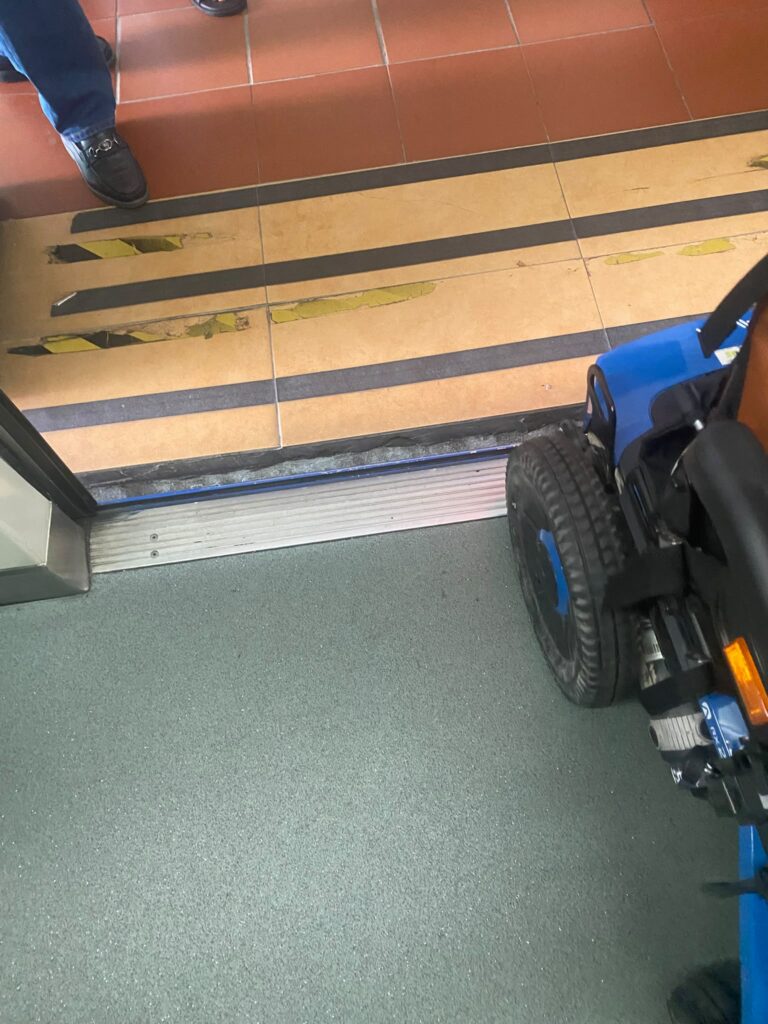
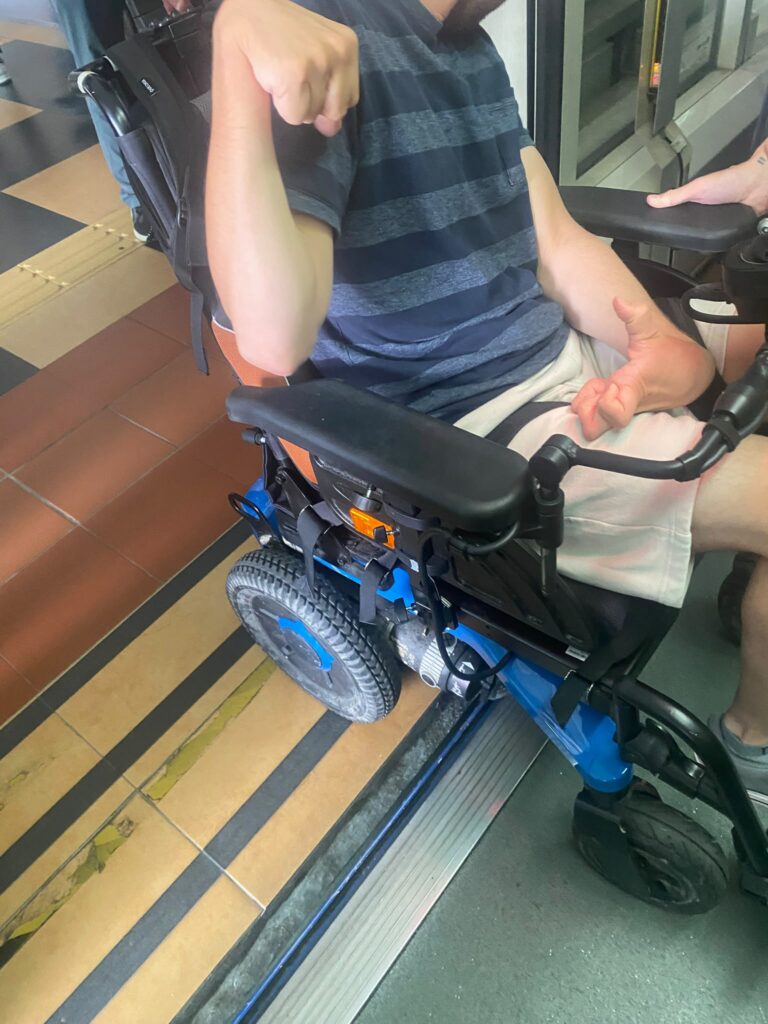
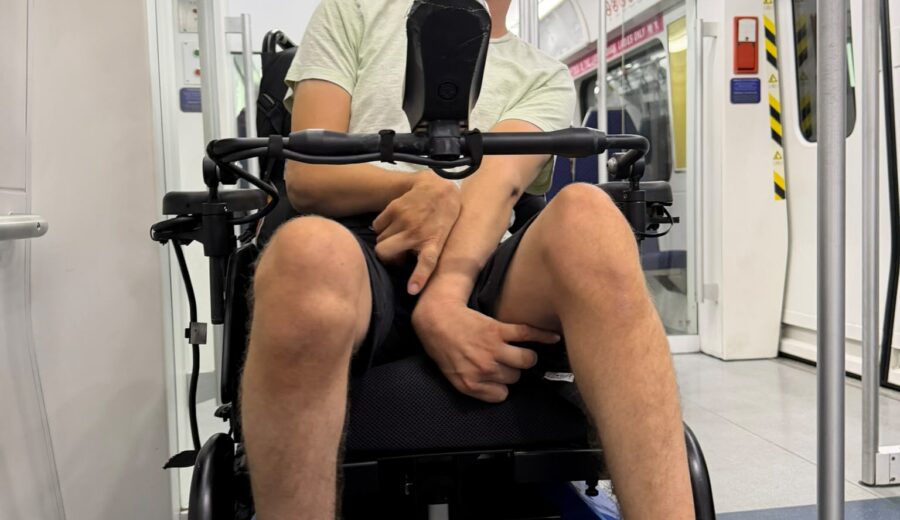
The MRL is part of the KL Monorail system and can be used to reach attractions such as the KL Tower. Akin to the KTM Komuter, wheelchair users should note that it is not very clear as to the location of the wheelchair space. In addition, it appears that a few platforms are at a slant meaning that one door may have a bigger gap than another…

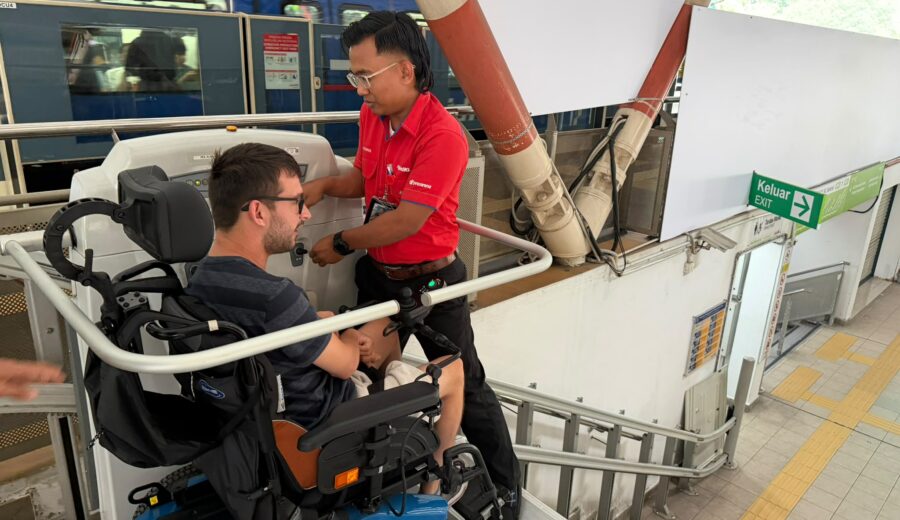
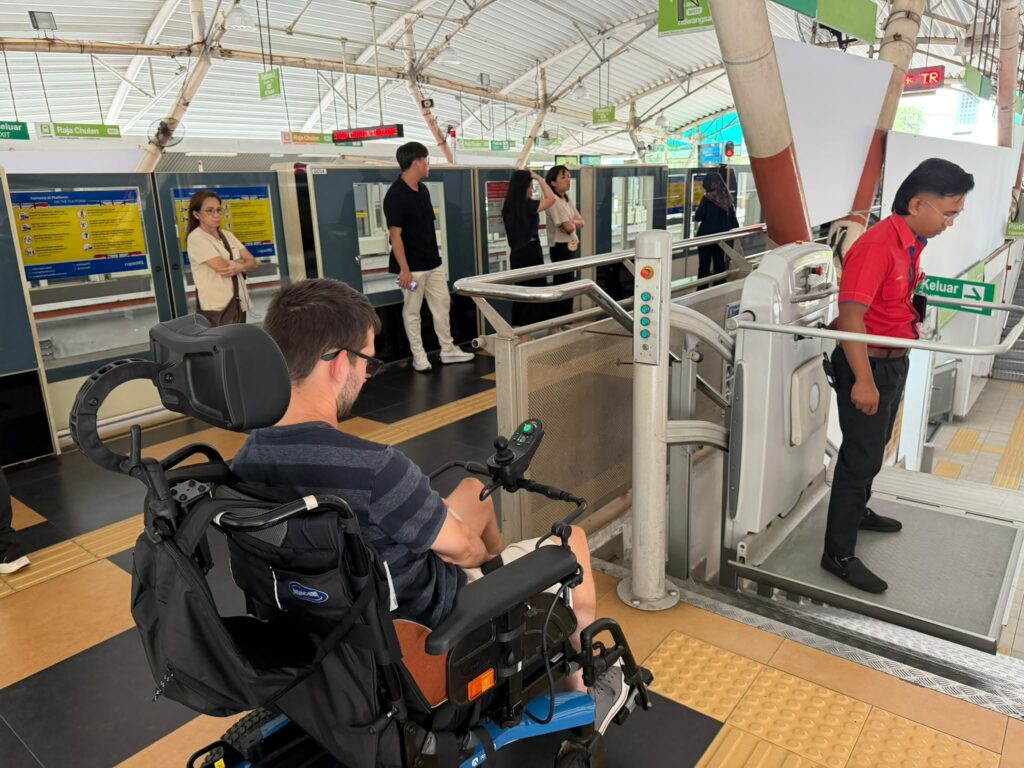
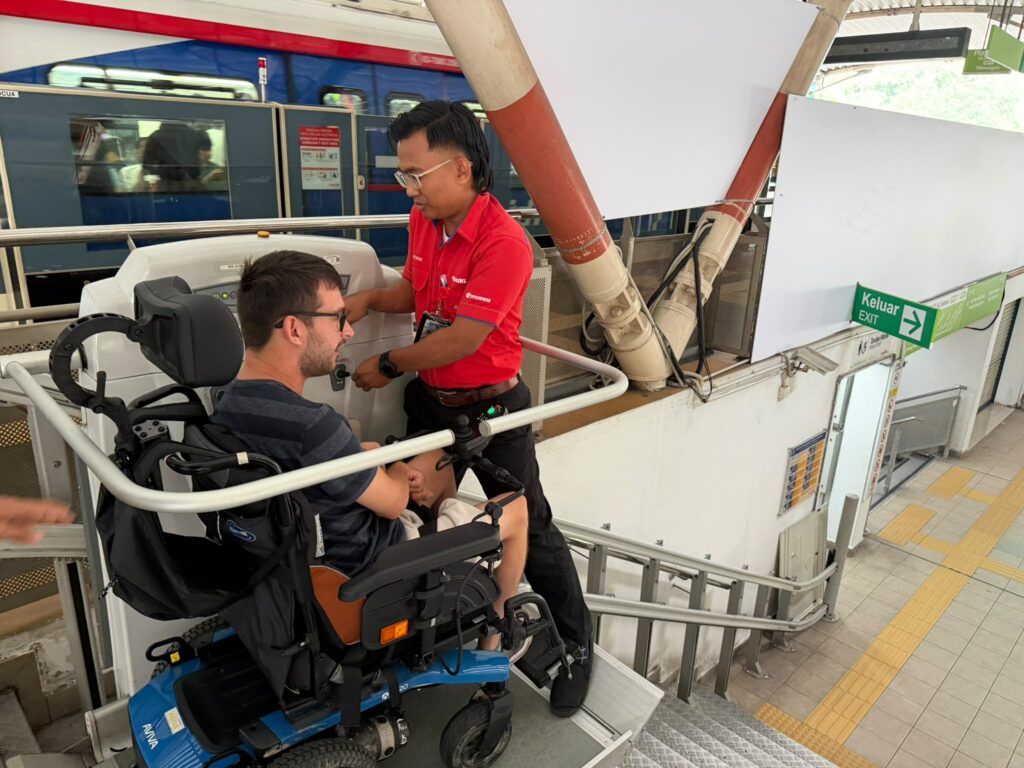
As the MRL is elevated above the streets, elevators are used at stations. However, some of these are stairlifts which we know are temperamental, especially if they haven’t seen the light of day for a while…

Day 3.5 (Kuala Lumpur) – Exploring Batu Caves

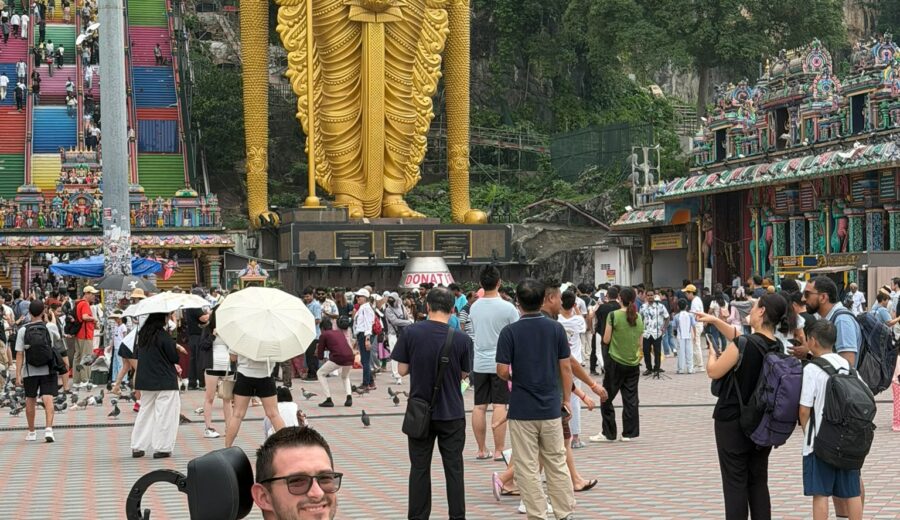
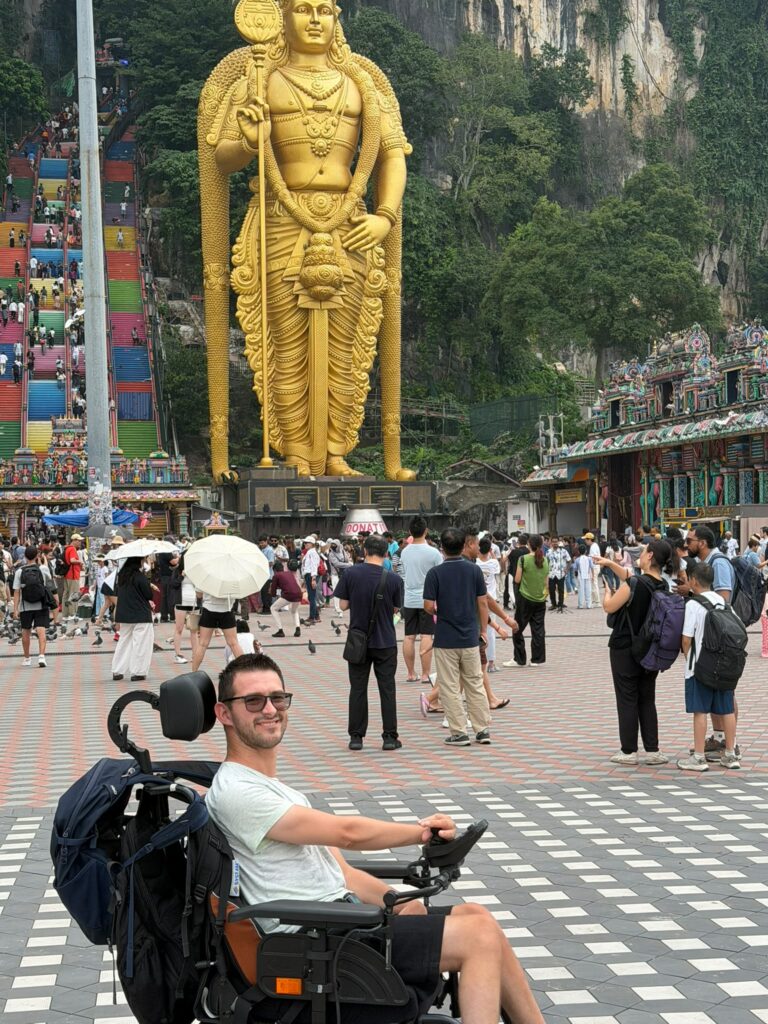
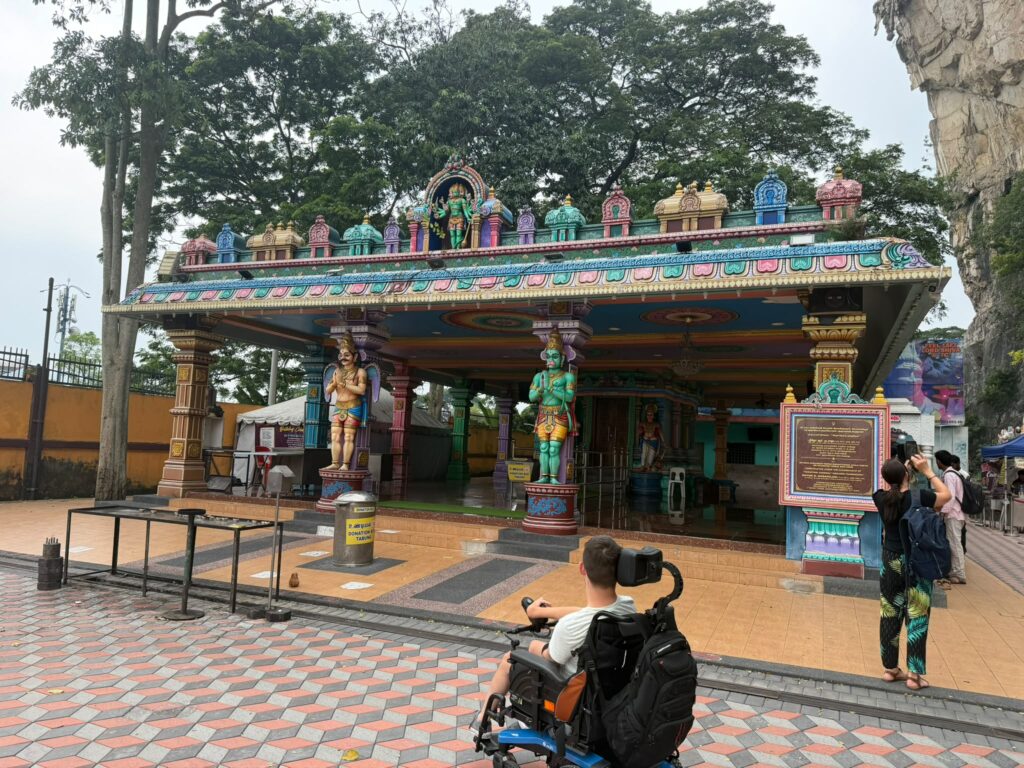
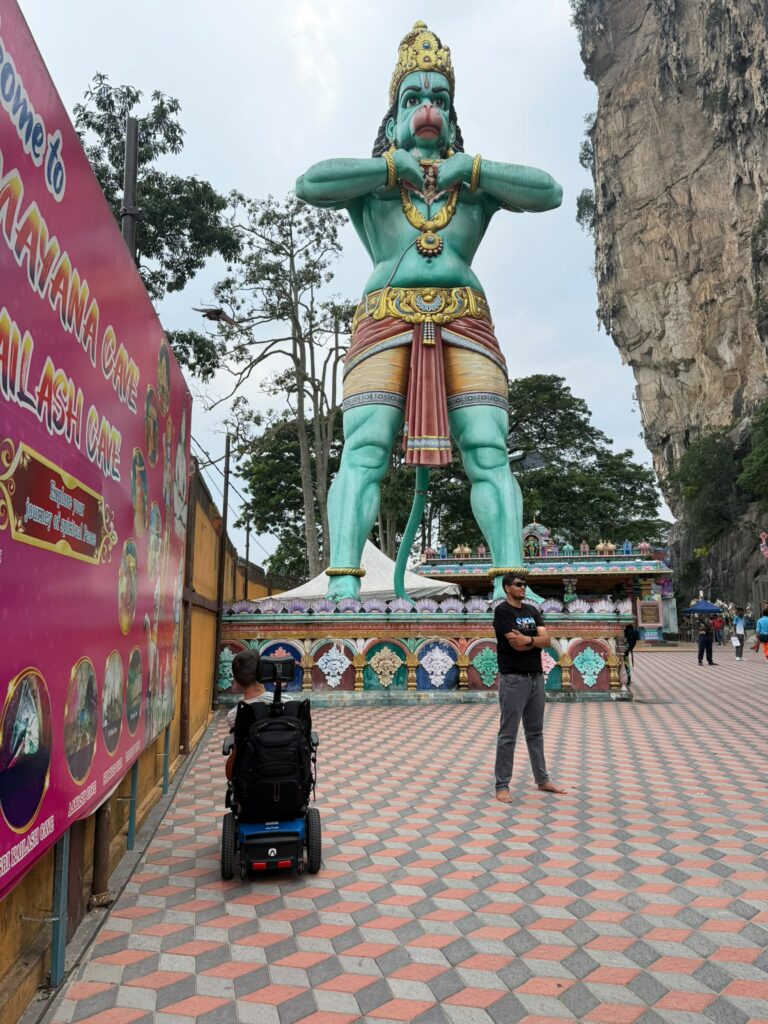
One of Malaysias top attractions is the Batu Caves which is located around 13km north of Kuala Lumpur. Carved into a cliff, the Batu complex contains a variety of Hindi temples with the main draw being the shrine of Murugan. Due to the 272 steps to the entrance, the shrine is not currently wheelchair accessible (as of 2026), however there are plans for an escalator to be installed in the future. As a result, one can only admire from the bottom for now (providing that they do not fear pigeons!)…

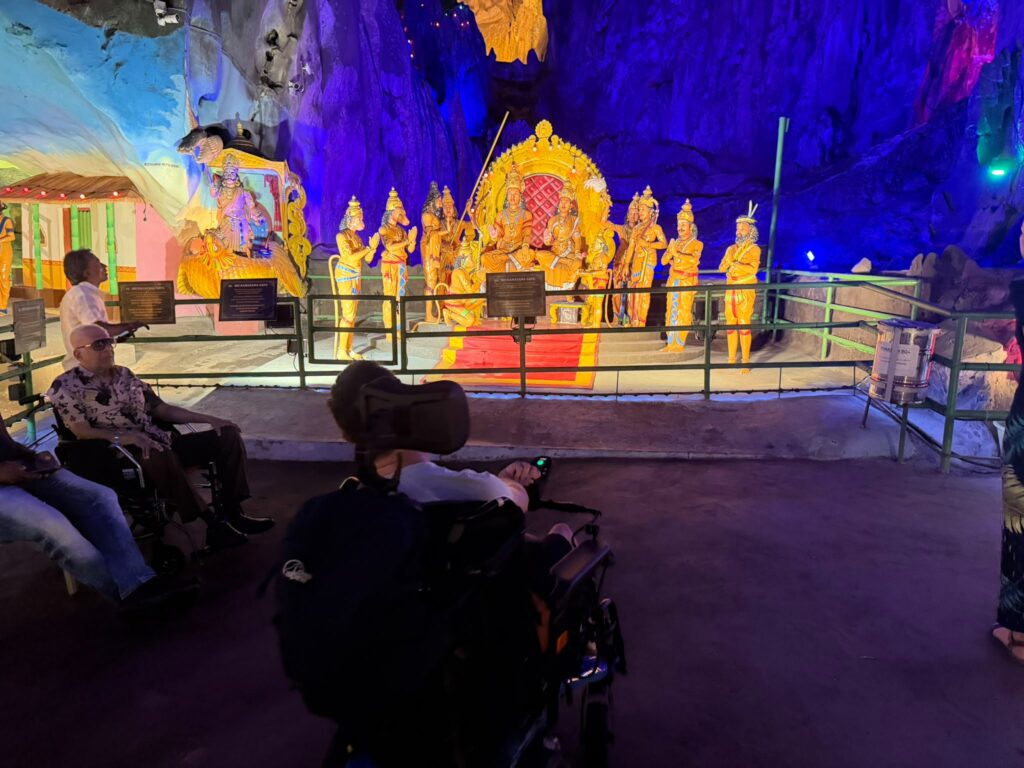
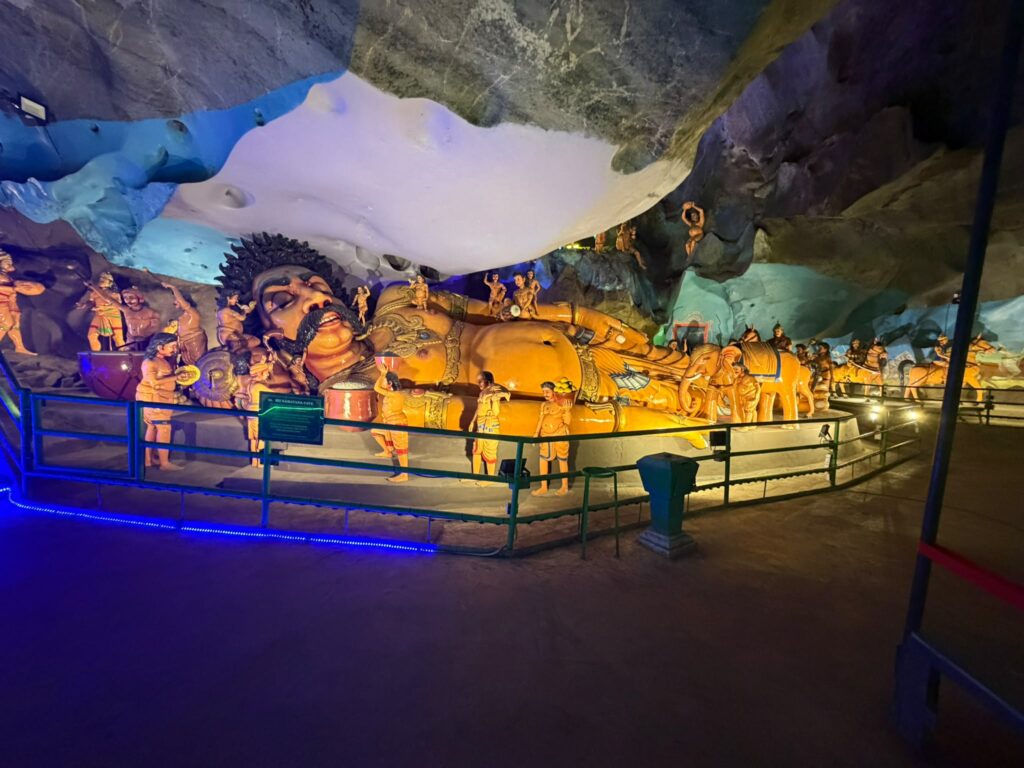
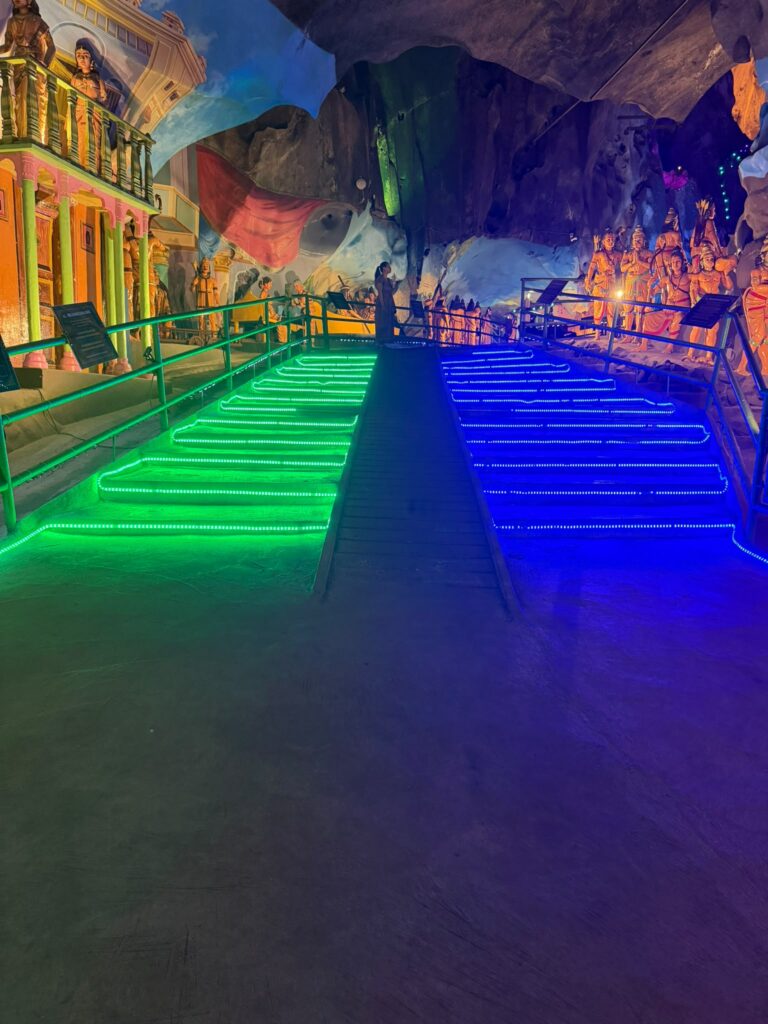
If a wheelchair user is to follow the path to the left, one will stumble across Ramayana Cave which is accessible to a point. However, one feels that this is enough to experience what the caves have to offer…

A secondary level can also be reached via this rather steep ramp…

The exterior of the Batu Caves is mostly wheelchair accessible except when one exits the KTM station meaning that one has to do a diversion around the car park. One can therefore admire the outdoor structures (and monkeys)…

Day 3 (Kuala Lumpur) – KTM Komuter Accessibility

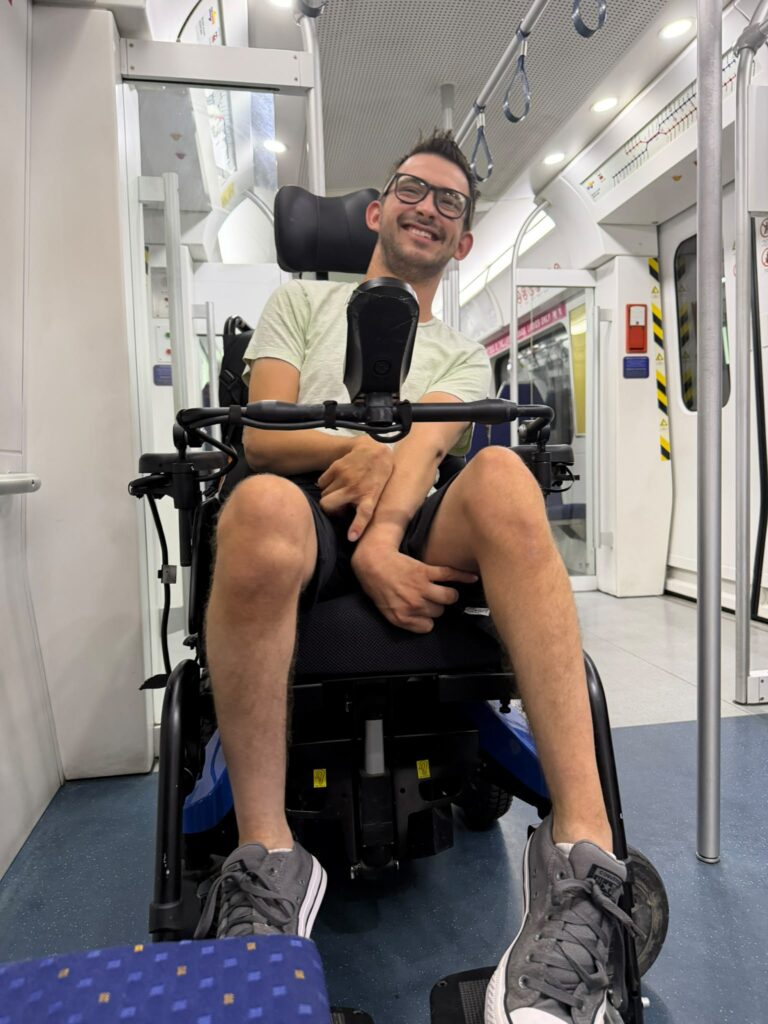
Kuala Lumpur is home to a number of transit systems, one of which is the KTM Komuter. This can be used to travel within touching distance of the famous Batu Caves from the heart of KL. As one would expect from Malaysian public transport, a large proportion of stations provide level boarding for wheelchair users. Despite this, a small gap is present hence a run up may be necessary.

Unlike many transit systems, the KTM Komuter does not have a dedicated boarding area for wheelchair users meaning that it can be difficult to find the wheelchair space if one isn’t used to the system, however such places are plenty across the train…

Scroll to top