Packed full of ancient history, rugged terrain and beach resorts, Bulgaria has something to satisfy everyones taste. Prior to ones visit, it appeared that the country would present many challenges for wheelchair users. Granted, planning the trip wasn’t the easiest, however, a large proportion of the stumbling blocks were simply due to the language barrier. For example, contacting Bulgarian Railways to discover that it is actually the Red Cross who provide wheelchair assistance.
In some respects Bulgaria and its capital are, in fact, ahead of their European counterparts in terms of accessibility. For example, all stations on the Sofia Metro possess elevators to street level in addition to providing level access to attractions such as the Saint Alexander Nevsky Cathedral. However, it can be said that the country still has a long way to go to become truly accessible. This is evident in the lack of private wheelchair accessible transportation.
For now, it is necessary for one to be a little creative when visiting the country. This may mean carrying a portable ramp, however, it certainly should not deter a wheelchair user from visiting this fascinating country!
Vitosha Mountain overshadows the city of Sofia providing a perfect day trip whether that is to ski or a walk in nature during the summer months. Until 2024, one was able to catch a cable car from the suburb of Simeonovo to the ski resort base in Aleko. Unfortunately this has now closed due to health and safety fears and there are no plans to reopen it for the foreseeable future. To add to this, the bus lines up to the Aleko Hut are not wheelchair accessible. As of 2026, this leaves powered wheelchair users with one option, to use an accessible taxi for which Mobilika seems to be the sole provider of.
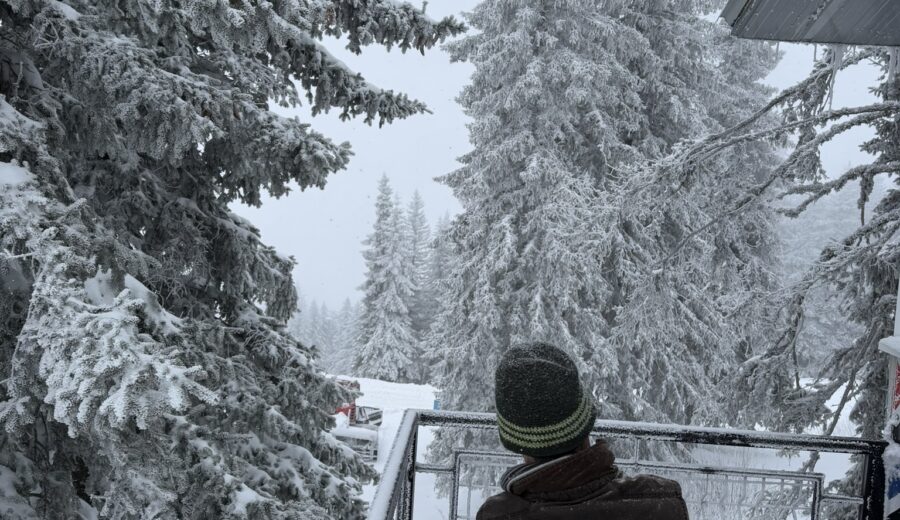
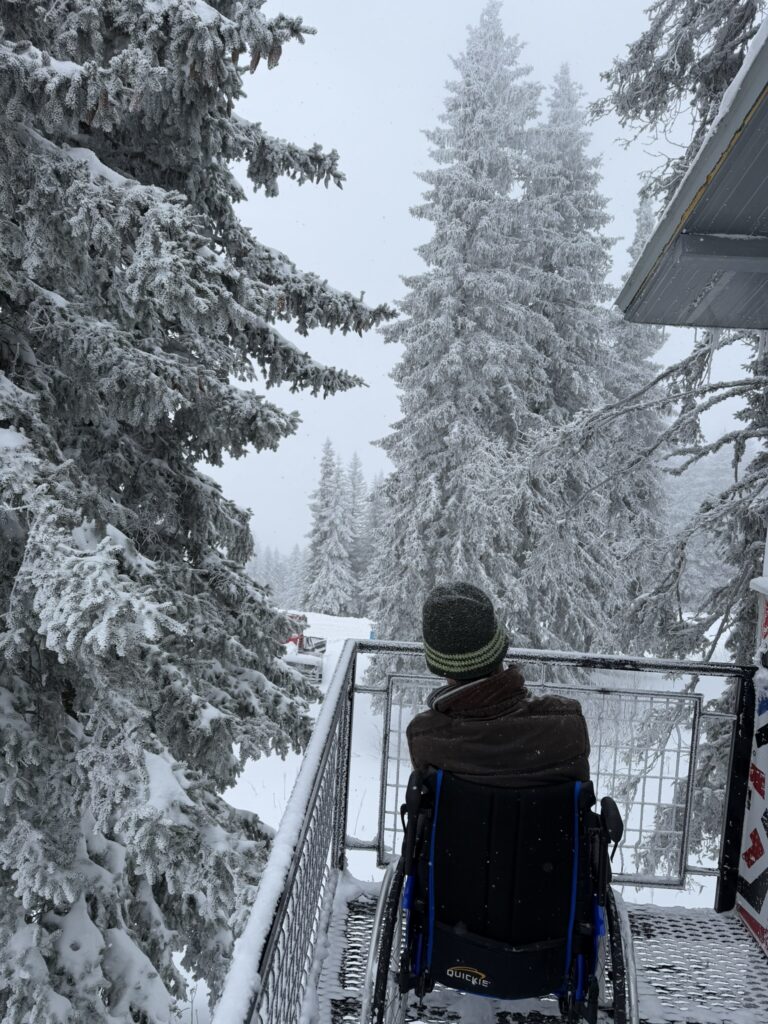
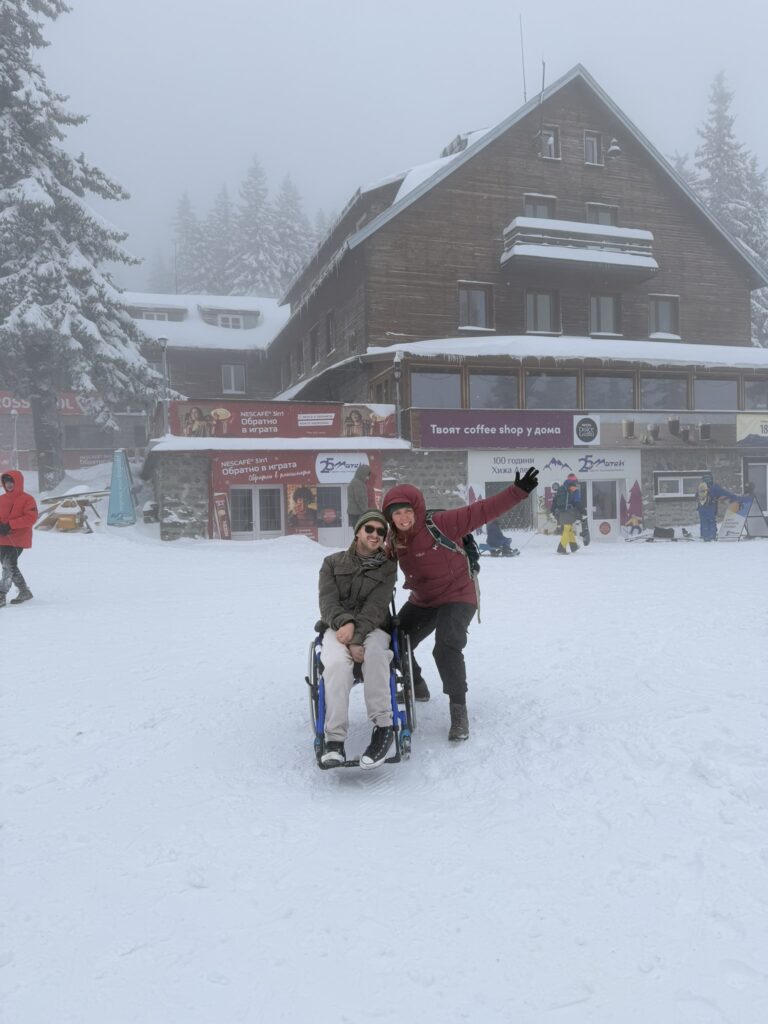
In the winter months, Aleko receives heavy snowfall and has no accessibility options for wheelchair users. This makes it almost impossible to roll around, even in a manual wheelchair. Despite this, one is still able to soak up the atmosphere…
Commonly known as the ‘City of the Seven Hills’, Plovdiv is located a mere 150km from the capital. Akin to Sofia, the city is littered with ancient ruins. In recent years, the Ancient Theatre of Philippopolis has been unearthed and preserved under one of the citys main streets. This has since become a major draw for tourists.
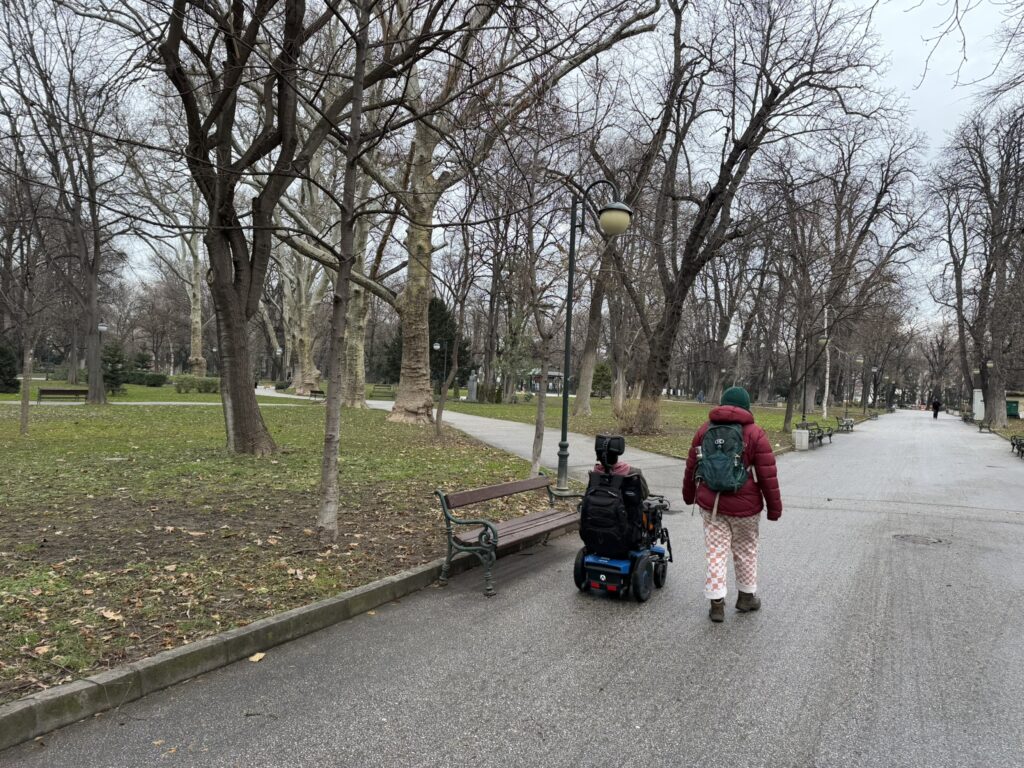
As mentioned previously, one travelled by train from the capital to Plovdiv. The station is around a 25 minute walk from the centre and is mostly accessible for wheelchair users, especially when one enters “Tsar Simeon Garden” Park…
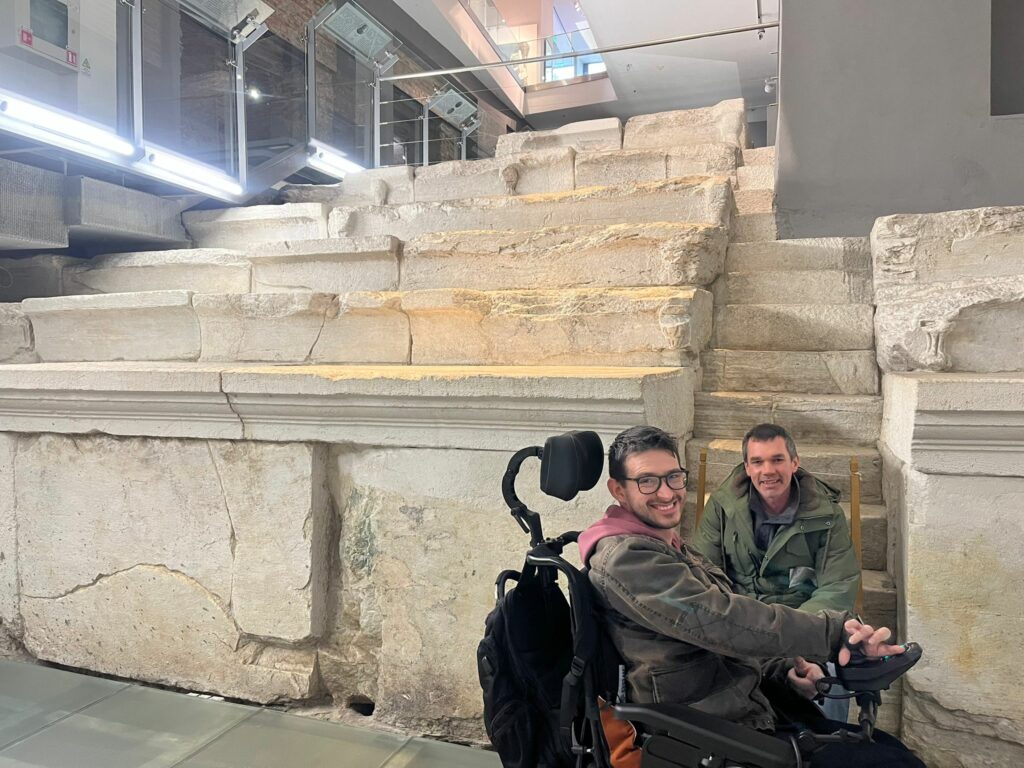
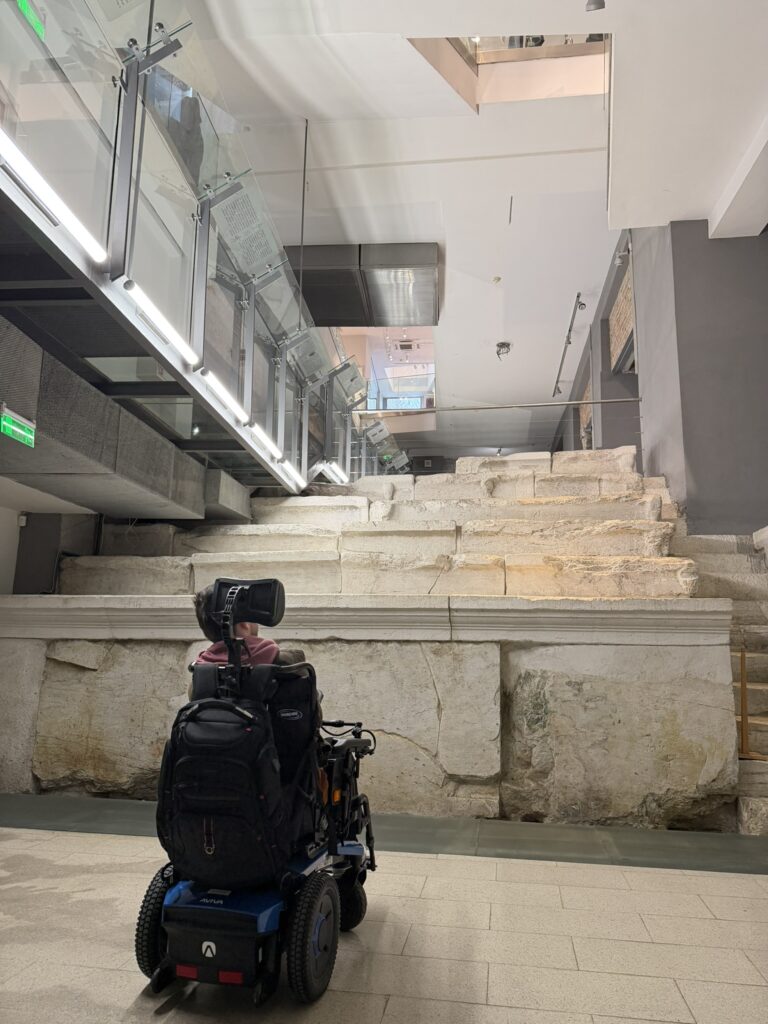
This leads straight onto the pedestrianised street where Philippopolis is located beneath. Now, most of the ruins are located outside in giant pits, however, if one was to enter an unassuming H&M store and head down to the basement, this is what will great you…
Disabled individuals and one companion can enter FREE of charge, definitely worth a visit if one wants am unusual experience!
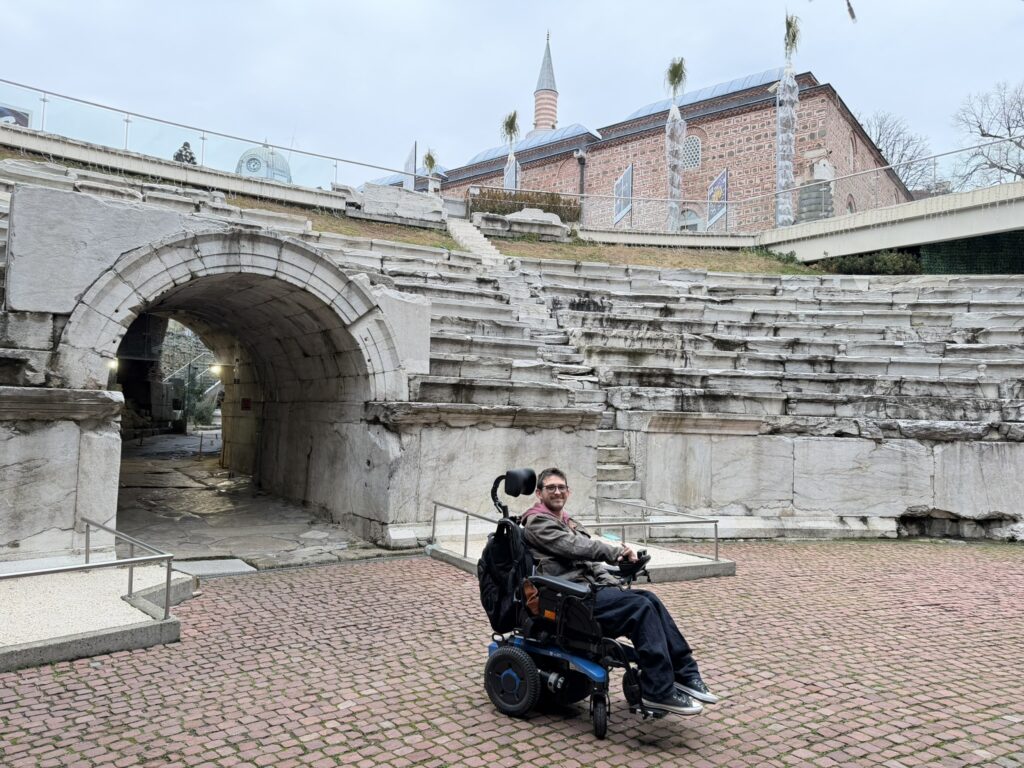
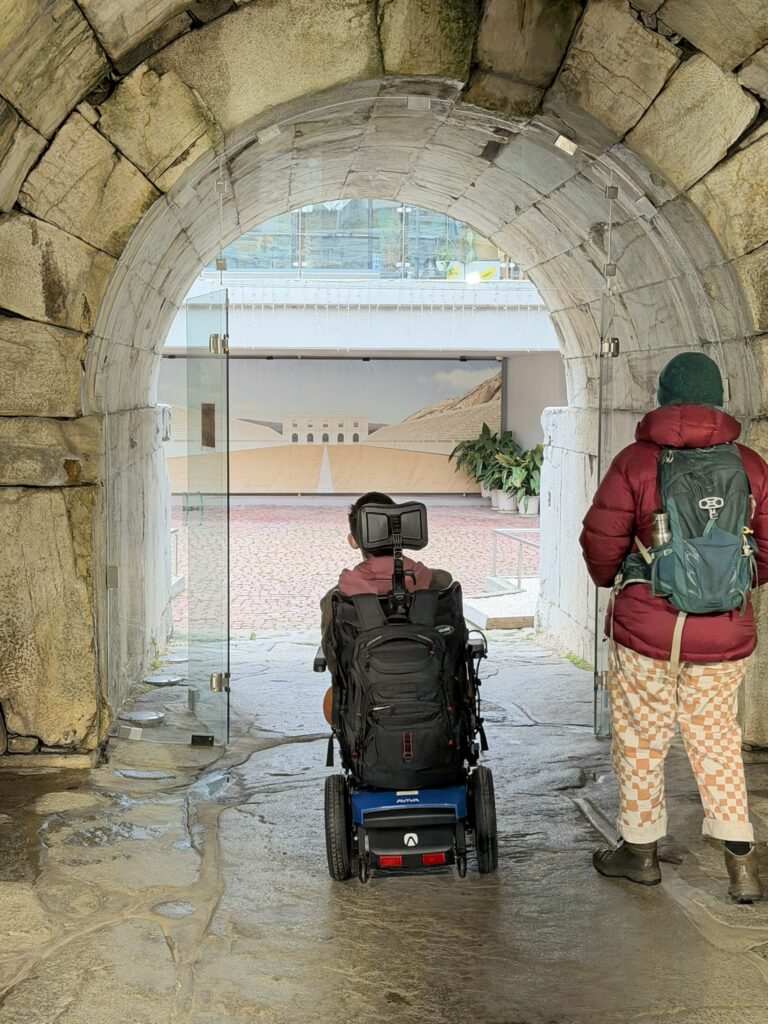
Back on street level, one of the main points of interest is the Ancient Stadium of Philipopolis. Wheelchair users can take a little unstable elevator down to the structure. Although shops within the vicinity possess steps, one can still marvel at the ancient engineering…
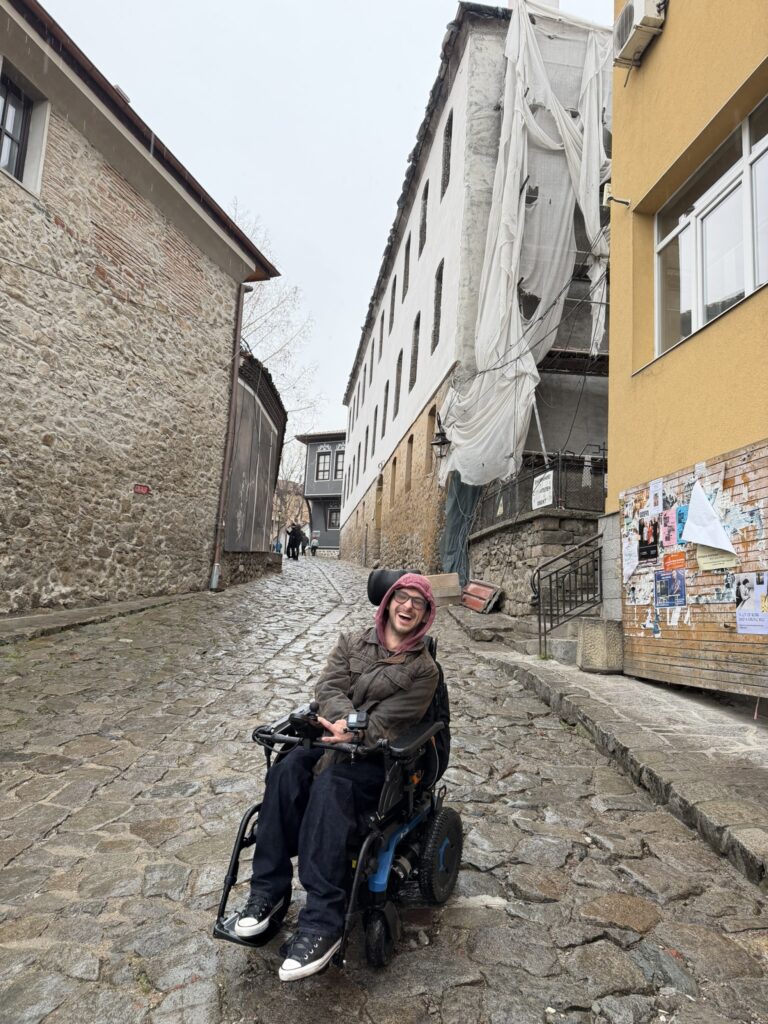
The Old Town where the Ancient Theatre of Philippopolis is located is a few minutes walk from this. As with many Old Towns, a large proportion of the streets comprise of cobbles making for a bumpy roll…
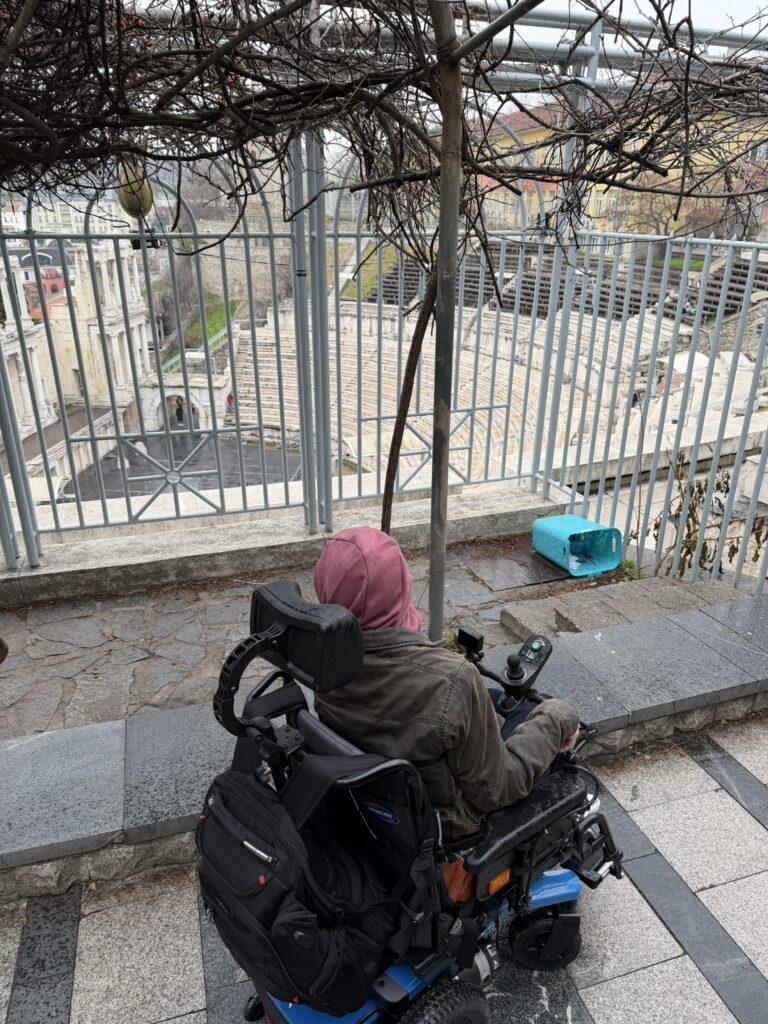
Soon enough, however, one will arrive at one of Plovdiv’s landmarks, Ancient Theatre of Philippopolis. Unfortunately, as of January 2026, not even the entrance is wheelchair accessible but if one takes the path to the left, the views are plentiful…
Despite the city having its flaws in terms of accessibility for wheelchair users, Plovdiv shouldn’t be overlooked!
The railways in Bulgaria are not exactly famed for their scenery compared to the likes of Bosnia. However, as one wished to visit Plovdiv, it seemed appropriate to assess the accessibility of Bulgarian Railways. It is worth noting that a new fleet of trains are due to be introduced over the forthcoming years. However, it is thought that the reduced mobility booking system etc will remain the same.
As of 2026, intercity trains in Bulgaria do not possess wheelchair spaces as standard hence one is required to contact Bulgarian Railways 72 hours prior to ensure that a ‘special carriage’ is added onto said train upon its formation. After a few misinterpreted emails, it transpires that the Bulgarian Red Cross handle the assistance side. However, one can only call to book speaking in Bulgarian. Fortunately, one was able to email and explain the situation for which they kindly sent over a booking request form i.e. an Excel spreadsheet.
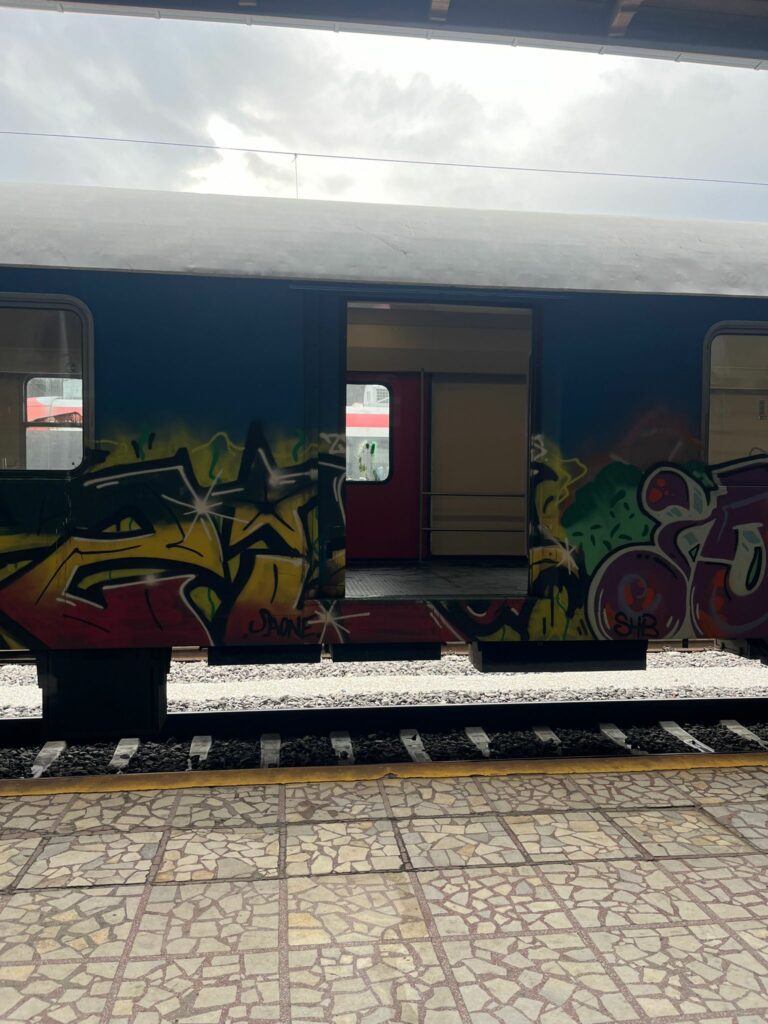
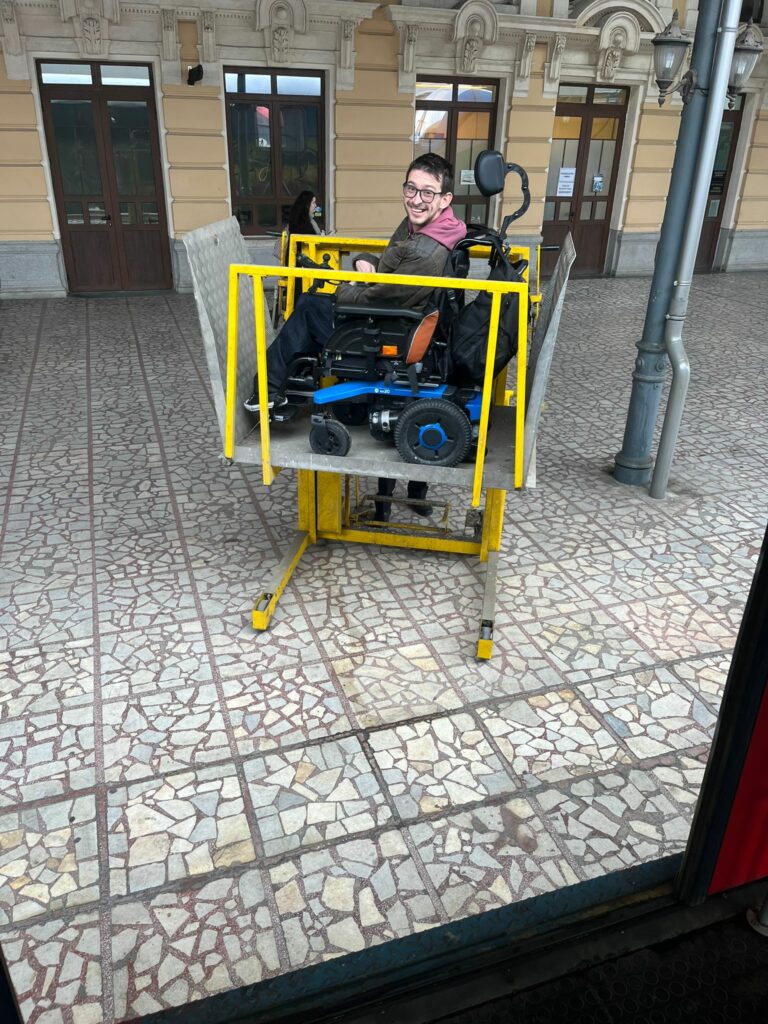
Upon meeting the Red Cross at Sofia Central Railway Station 30 minutes prior, it was a fairly easy process. Akin to Croatia, a manual lift is wheeled down to the ‘special carriage’ and then on one goes!
It is important to note that some assistance teams can be a little ‘lazy’ and inform you that the station does not have said lift so need to lift the wheelchair themselves. However, after a word with senior management, the lift soon shows!
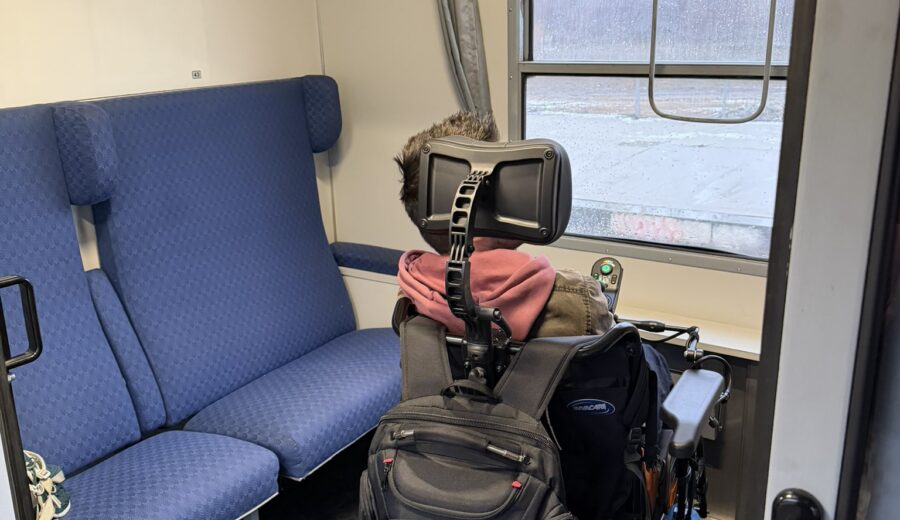
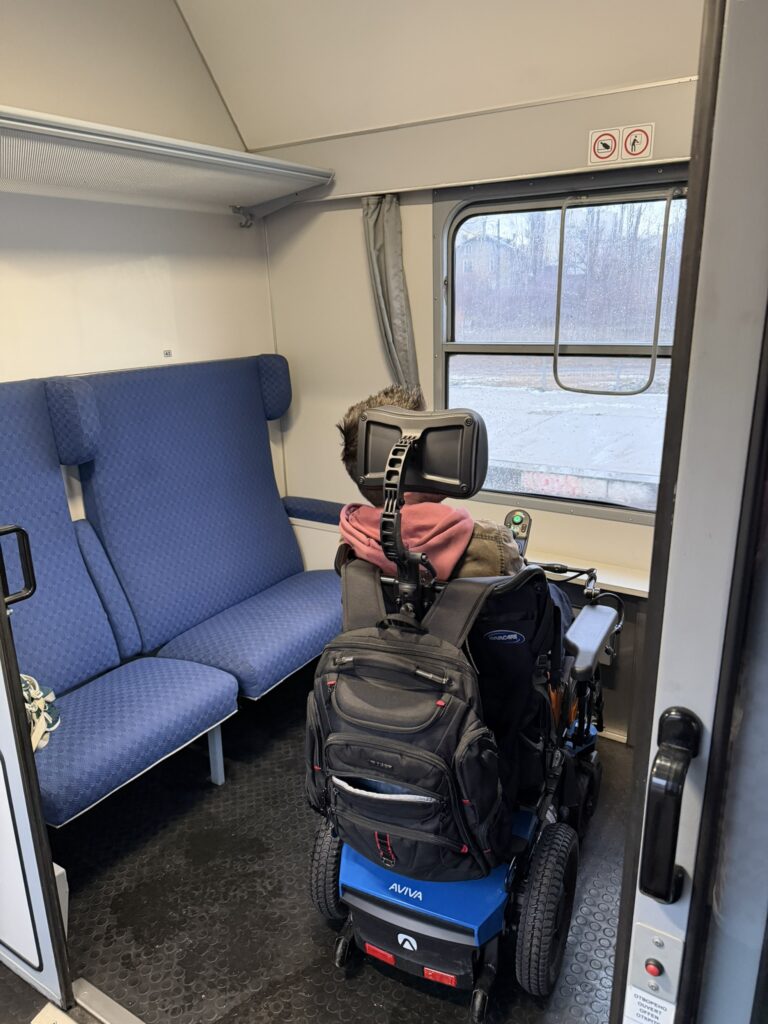
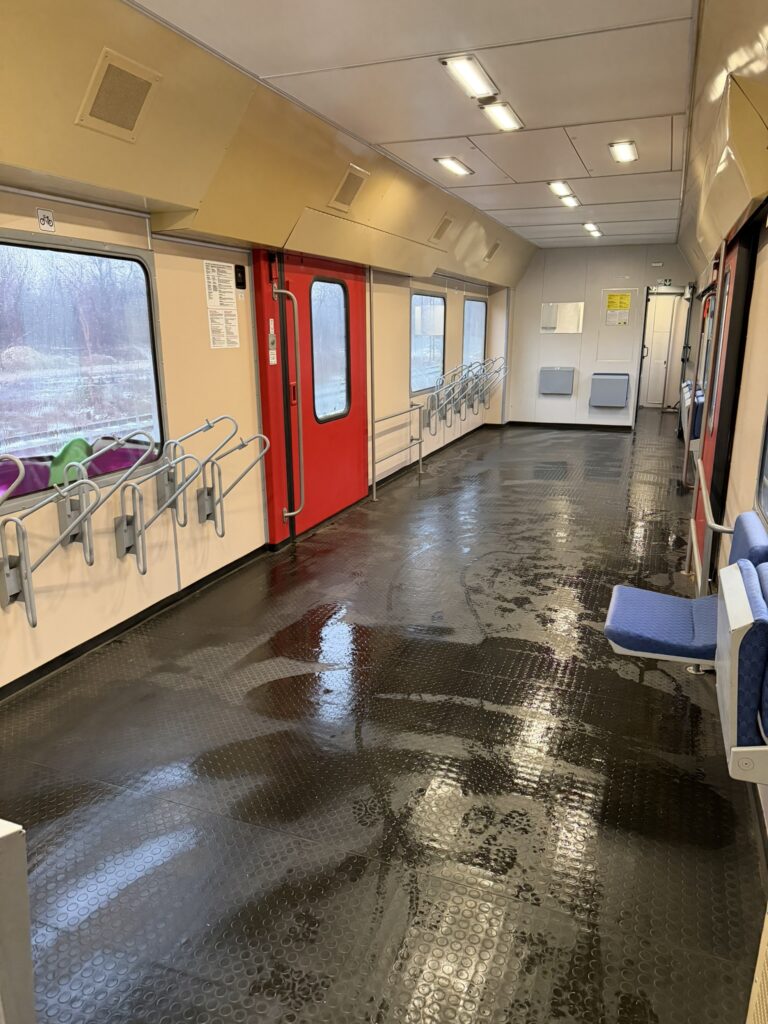
The ‘special carriage’ is essentially a bare carriage with a toilet, a few seats and an accessible compartment. Compared to an ordinary train compartment, this was fitted with automatic doors and a spacious interior, perfect for wheelchair users…
Sofia, one of Europe’s oldest cities (dating back over 7000 years) can be seen as a treasure trove. One will find mysteries lurking in the most unassuming places throughout the city.
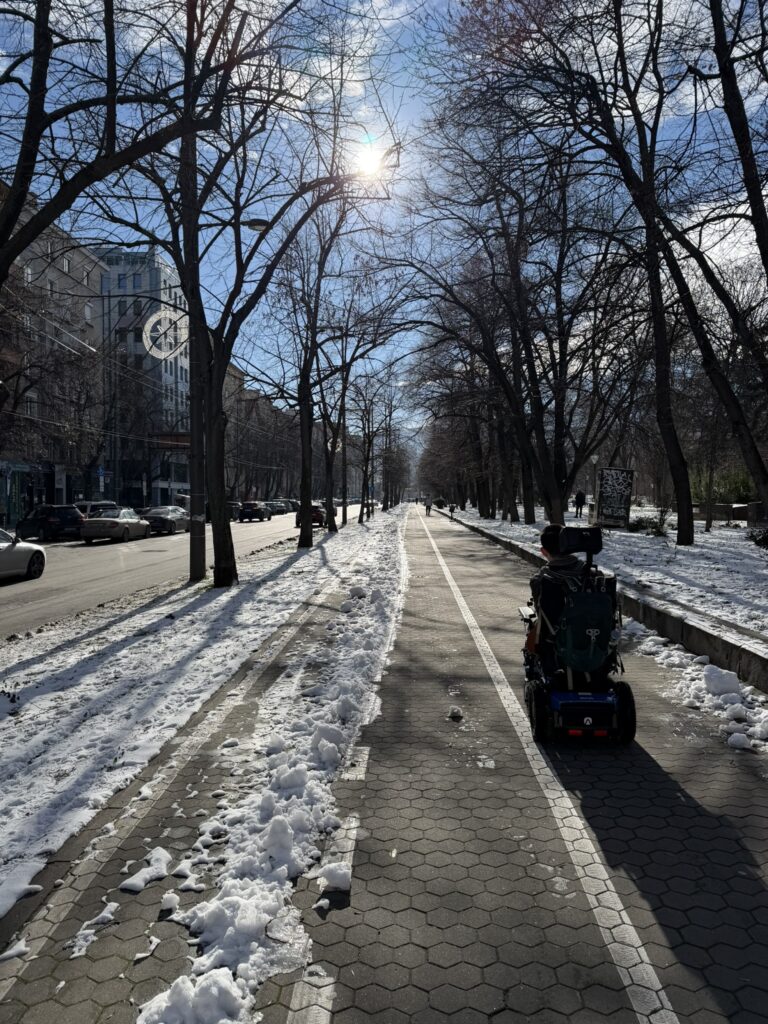
As little information regarding accessibility was publicly available (what was could be seen as quite negative), one began the roll from the hotel into the centre of Sofa with an open mind. It was pleasantly surprising to see wide pavements and 95% of drop curbs in appropriate places. This improved even further when pavements gave way to dedicated cycle paths…
Of course, there is still the age old chestnut of boulevards being constructed with underpasses consisting of steps or elevators that do not work (mostly along Todor Alexandrov Boulevard) meaning that one has to cross 4 lanes of traffic. However, if one is prepared to look past this, the centre of Sofia is pretty easy to navigate for wheelchair users.
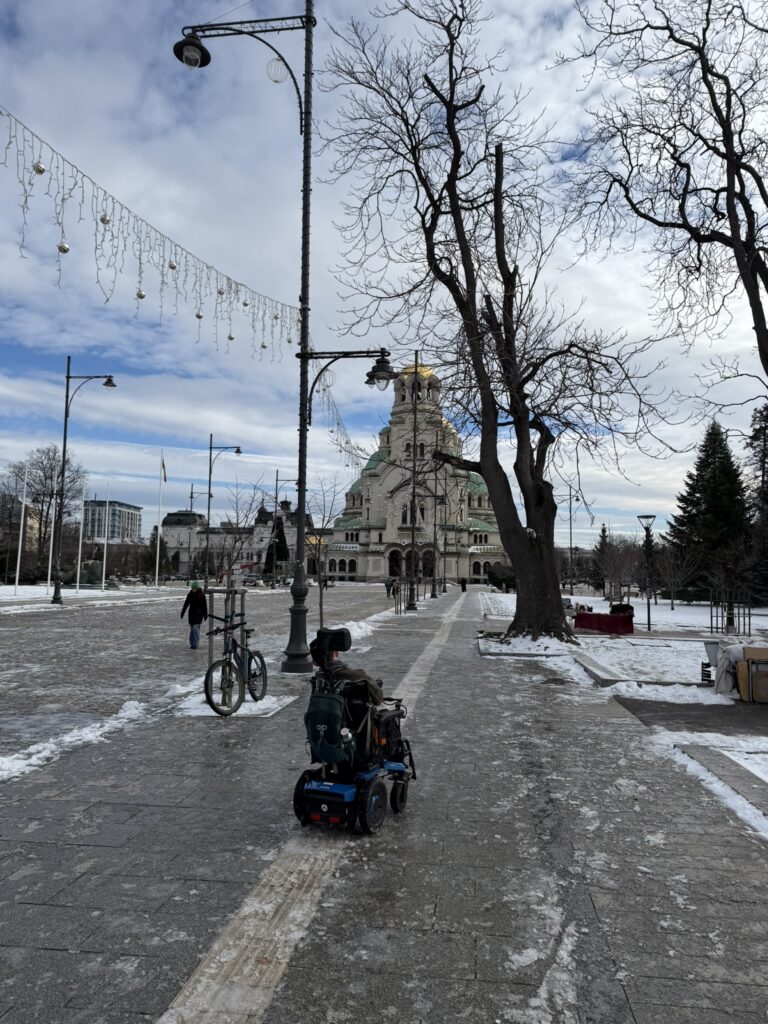
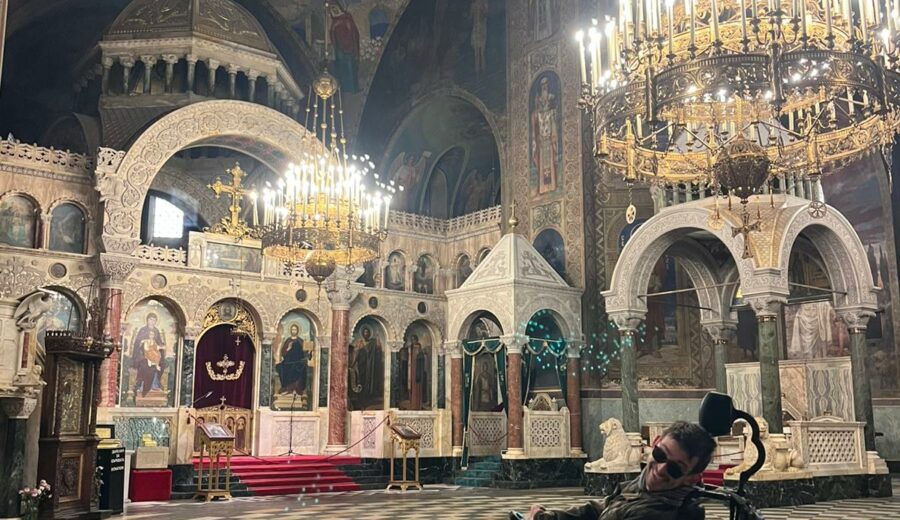
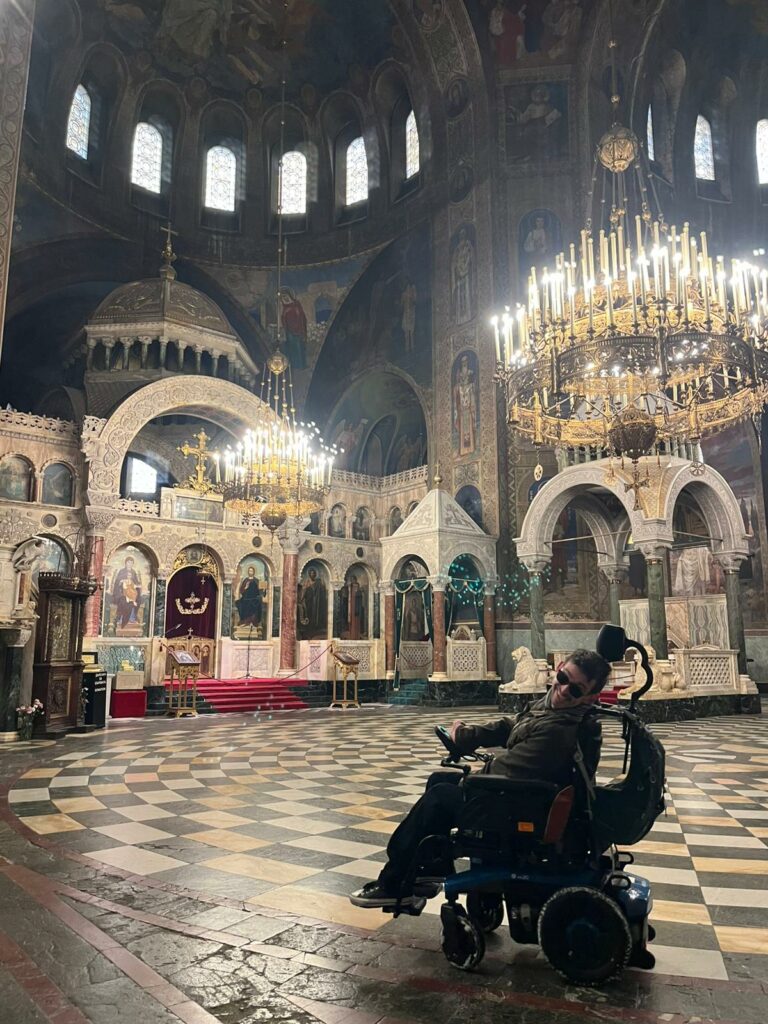
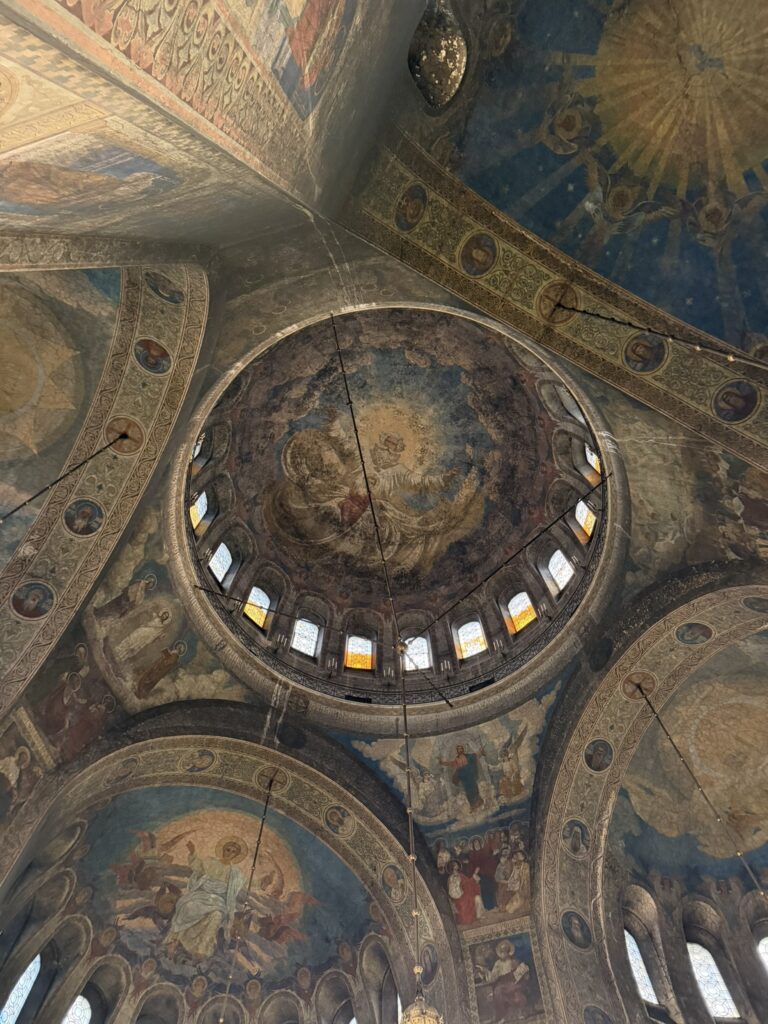
One of the top things to do in Sofia is to visit the Saint Alexander Nevsky Cathedral which is constructed in the Neo-Byzantine style. Now, the information presented online states that it is not wheelchair accessible (bar Google), however, this is one of Bulgaria’s top tourist attractions so one pressed on regardless…
To the left of the main entrance, one will observe a few disabled parking spaces and, lo and behold, a ramp leading into the structure. Granted, the entrance is locked hence it is necessary for someone to enter the main way in order for it to be unlocked. It is likely that the individuals manning the visitor entrance will inform you that it is not possible, one needs to ask a caretaker instead as the keys belong with them. This entrance leads straight into the heart of the cathedral…
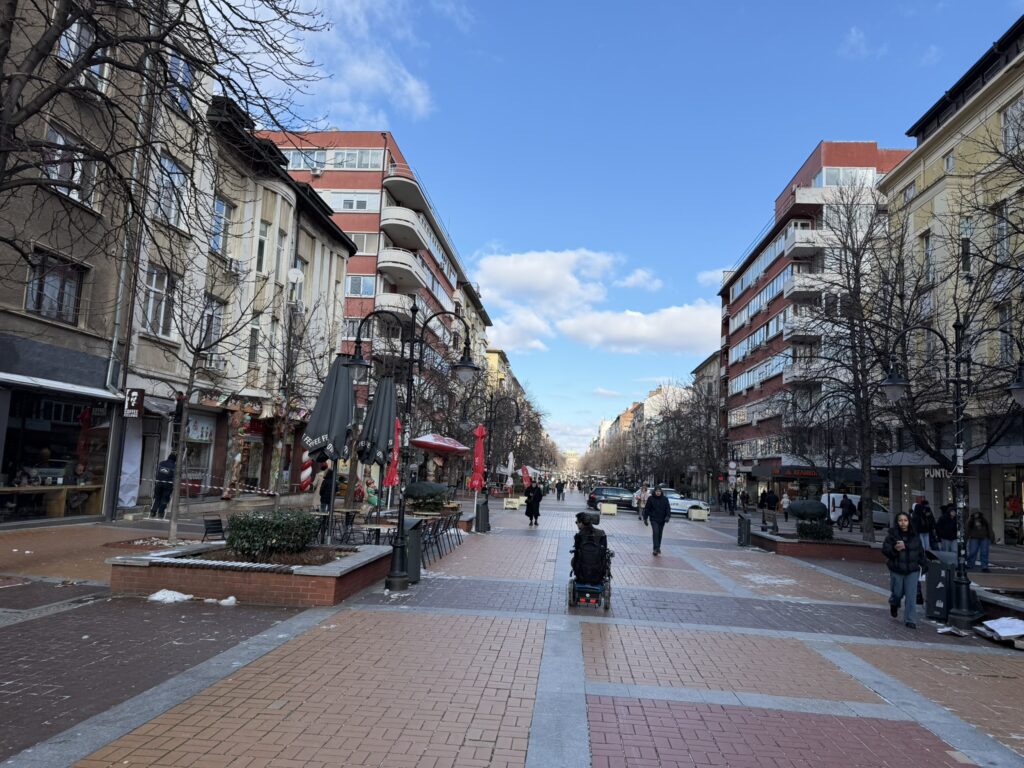
Cutting through the heart of the city is Vitosha Boulevard. Although this pedestrianised street is lined with shops (many with steps), it also offers a variety of restaurants with indoor and outdoor seating options. As the name implies, said street also makes for perfect rolling conditions for wheelchair users…
The majority of the sights in Sofia are accessible for wheelchair users such as the National Palace of Culture making the city pretty accessible compared to some of its European counterparts.
Since joining the EU in 2007, tourism in Bulgaria has significantly increased thanks to its mountainous terrain and Black Sea beaches. Despite this, as of January 2026, accessibility in the country remains a struggle (especially for individuals who use powered wheelchairs i.e. Superbunny2) which became apparent during ones planning. This ranged from booking wheelchair assistance with Bulgarian Railways to seeking accessible transportation as one will discuss over the forthcoming days. However, as with many of ones adventures, perseverance pays off and it is completely possible to explore Bulgaria as a wheelchair user (even after several disagreements via email).
Sofia, the capital of Bulgaria is a mere 3 hour flight from the UK with its international airport (Vasil Levski Sofia) boasting two terminals. Now, it is worth checking which terminal one will be entering during flight booking as T1 and T2 are separate entities linked by a shuttle bus which runs every 20 minutes (40 minutes after 8pm). Alternatively, it is possible to walk 25 minutes between terminals by exiting the complex and re-entering, however, the pavements that facilitate this are to be desired.
Although a bus route connects T1 to the city, the termination point is slightly outside the centre and, in ones case, was a 45 minute walk from the hotel. As a result, it seems that the most efficient connection without seeking wheelchair accessible transportation is via Sofia’s metro network. It is worth noting that, as of January 2026, it is extremely difficult to source wheelchair accessible transportation in Sofia. Nonetheless, one has been made aware through the Bulgarian Red Cross of a company named Mobilika who possess an accessible vehicle in the city. However, the earliest that said company stated that they were available was in two months!
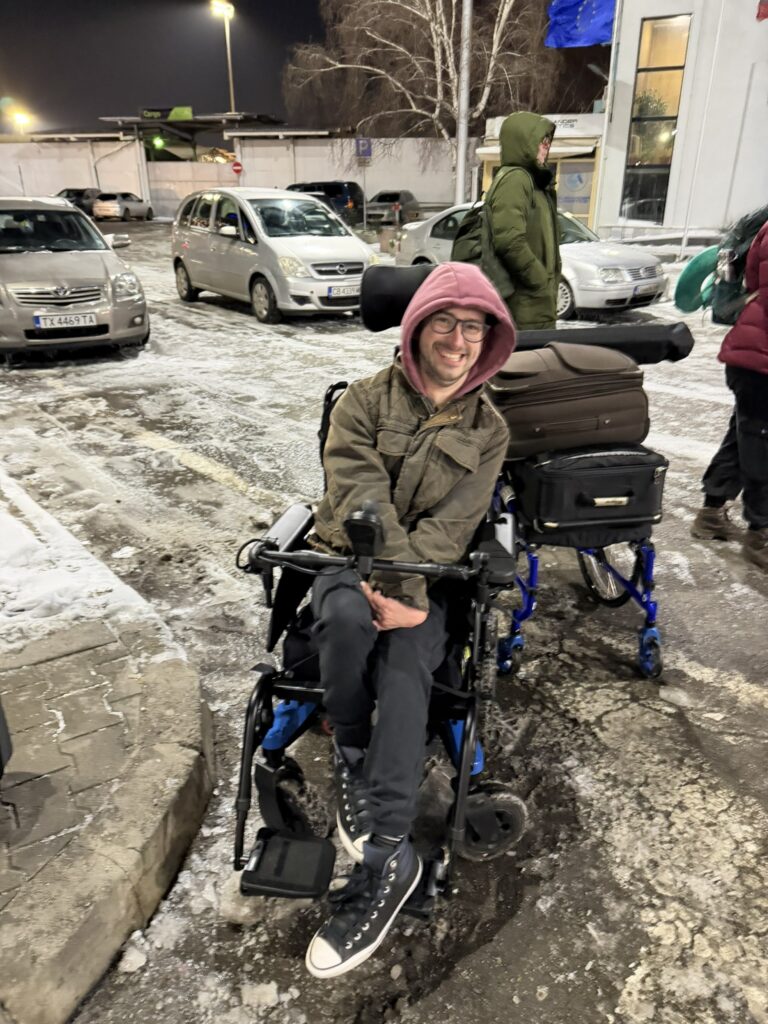
One of the main issues regarding the Sofia metro from said airport is that the system bypasses T1 meaning that it is necessary to catch the shuttle bus to T2 in order to enter the station. Although the bus stop is located next to the main T1 building, wheelchair users are unable to use the actual thing due to the lack of a drop curb. No matter though as one can sit on the road…
The next obstacle that one has to face is the ramp onto the bus. Although the bus can ‘kneel’, its ramp is designed to be used in conjunction with raised pavements to allow for level boarding. Of course, this isn’t possible when one is sitting on the road hence the gradient of said ramp is something to be desired.
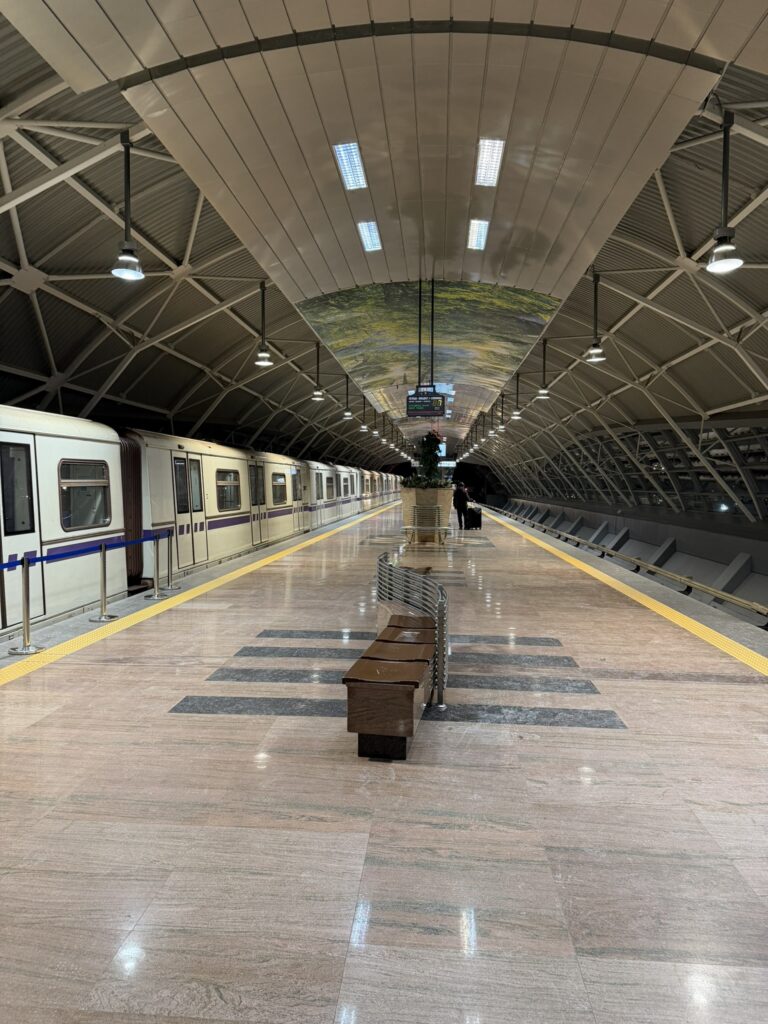
T2 has been constructed fairly recently meaning that the terminal area and metro station is completely wheelchair accessible making for an easy transition…
The cost of a ticket into Sofia city centre as of January 2026 is a mere 80 cents, what’s not to love!
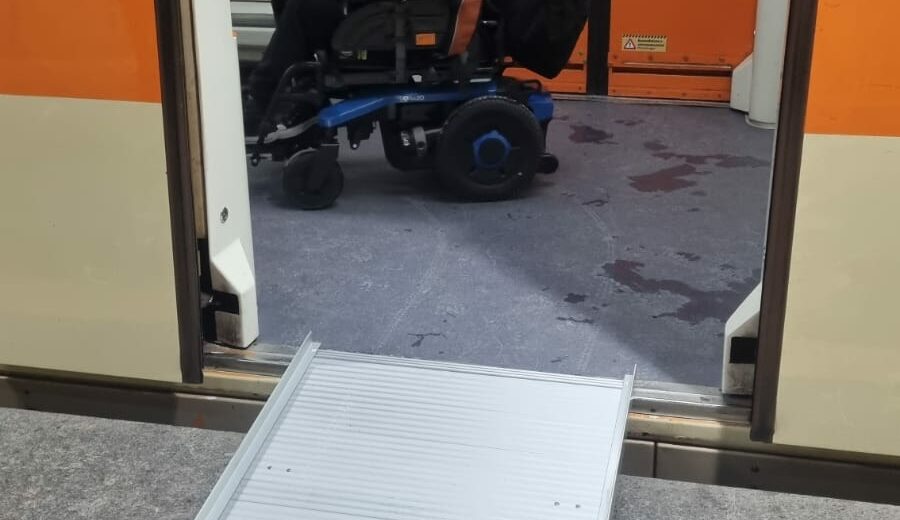
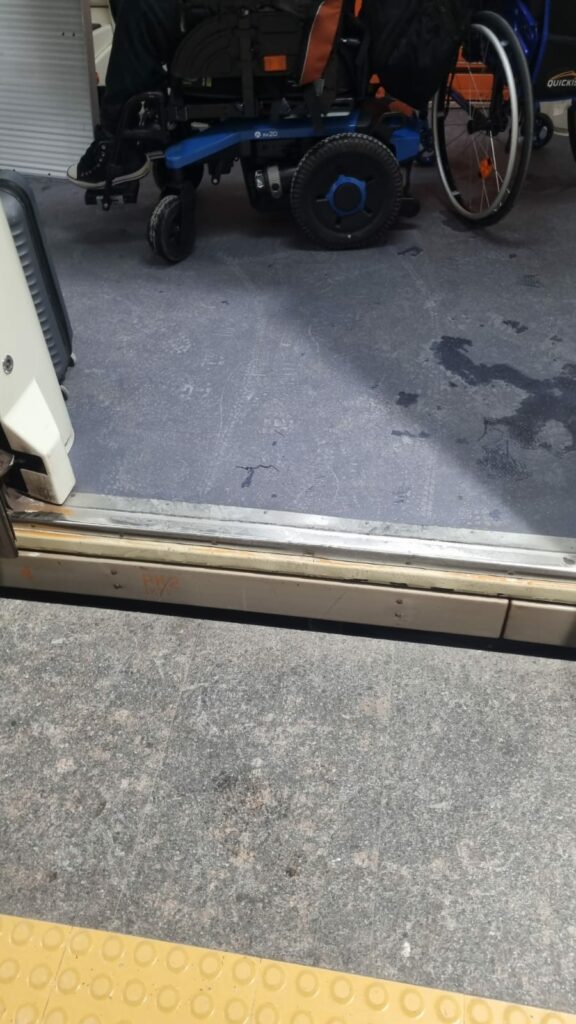
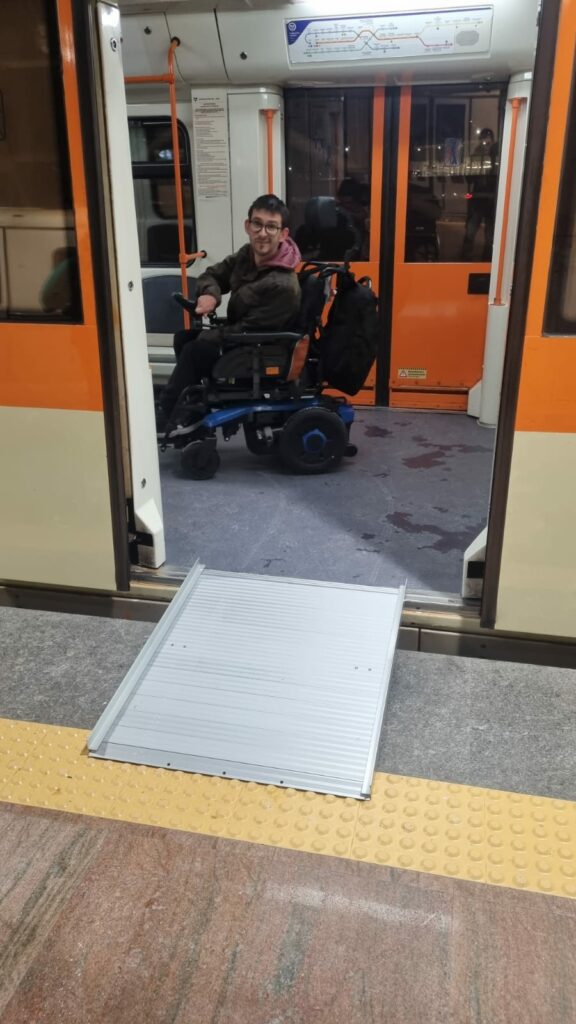
Now, during planning of the trip, one discovered that a rather large step is present between the train and the platform, much too high for Superbunny2. It was time for the portable ramp…
It is worth noting that all stations on the Sofia metro network possess elevators to street level hence if one can conquer said step, this is one of the most efficient ways to navigate the city.
As one is travelling by train to the city of Plovdiv in a few days, our hotel is located adjacent to Sofia Central Railway station which, of course, has it’s own metro station. The route to the hotel should be pretty straightforward for a wheelchair user thanks to the large underpass in front of the station thanks to multiple elevators. The only issue is that a large proportion of these do not work or have been set ablaze.
Let’s see how wheelchair accessible Sofia is for Superbunny2…