My next adventure: Tbilisi (Georgia) – May 2026

Nath

Day 5 (Cairo) – Final Thoughts

Cairo and indeed Egypt is a place that is steeped in ancient history known and taught about around the world. It is a destination also filled with 5 star luxury resorts which can portray a country through rose tinted glasses. It is for this reason why one decided to stay in Downtown Cairo to experience what city life is like for a wheelchair user. The difference between ‘luxury’ Egypt versus the reality is stark.

It can be said that Cairo is very difficult to navigate, even for those without wheelchairs. The lack of pavements means that, akin to India, it is daily practice to walk alongside multiple lanes of traffic. For those who are lucky enough to discover a pavement, it is unlikely that one will find a drop curb. As a result, a 20 minute wander may turn into a 60 minute jaunt for a wheelchair user with an element of imminent danger!

As of 2026, the majority of the public transportation in Cairo is inaccessible for wheelchair users. To facilitate movement, one would highly recommend using London Cab Egypt. In addition to providing a door to door service, it is possible to hire a cab for 8 hours. This allows one to visit attractions such as The Great Pyramids and Grand Egyptian Museum in the knowledge that a wheelchair accessible vehicle will be waiting for you.
Day 4 (Cairo) – Grand Egyptian Museum

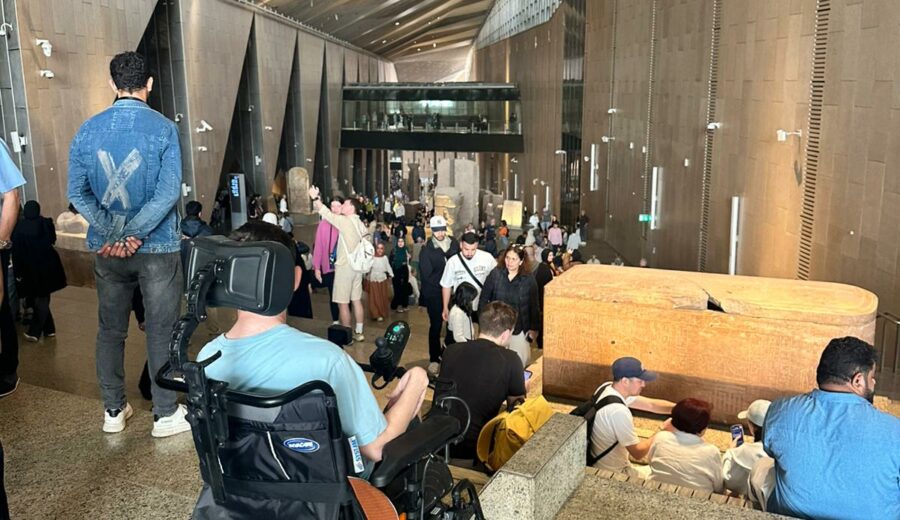
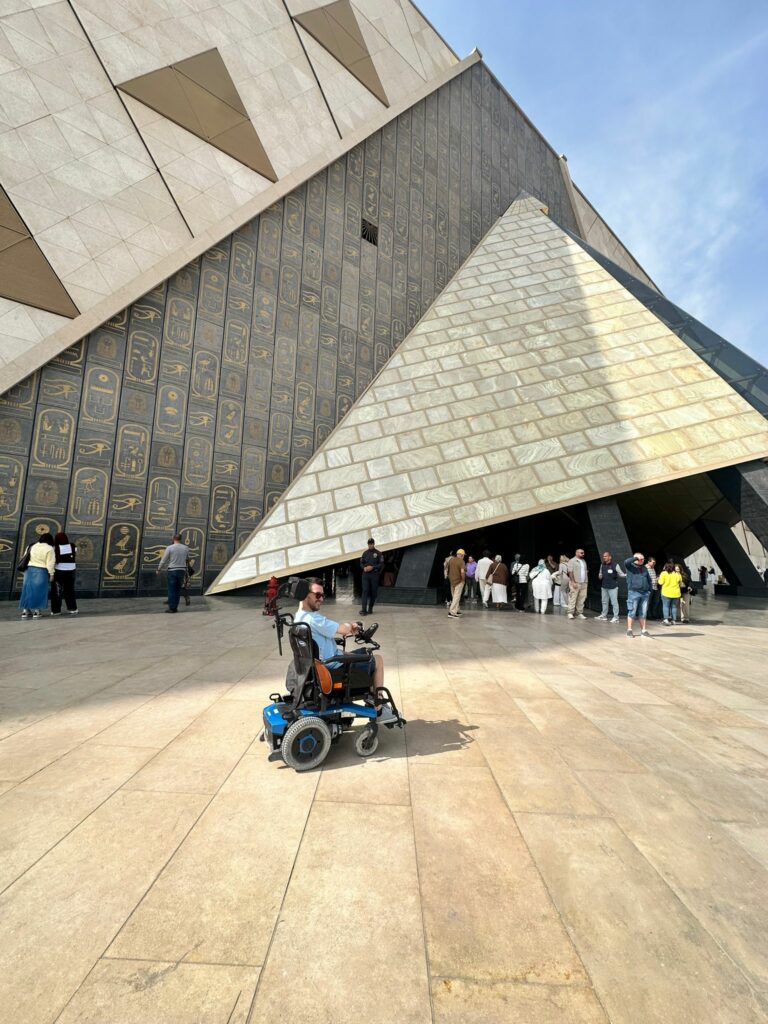
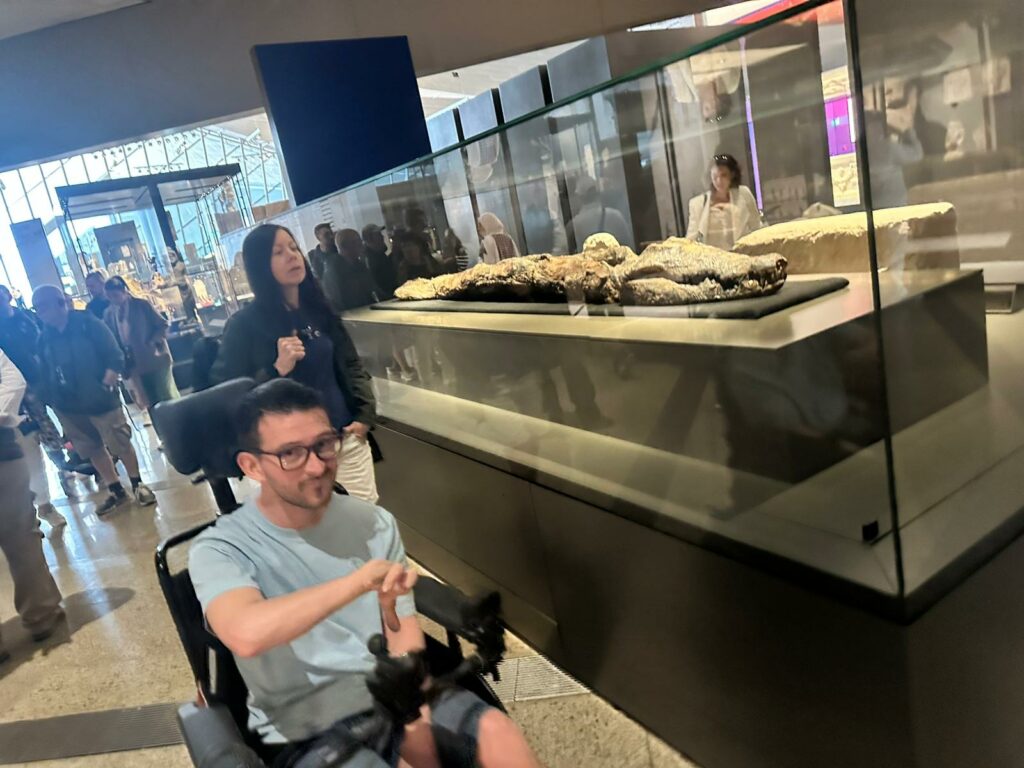
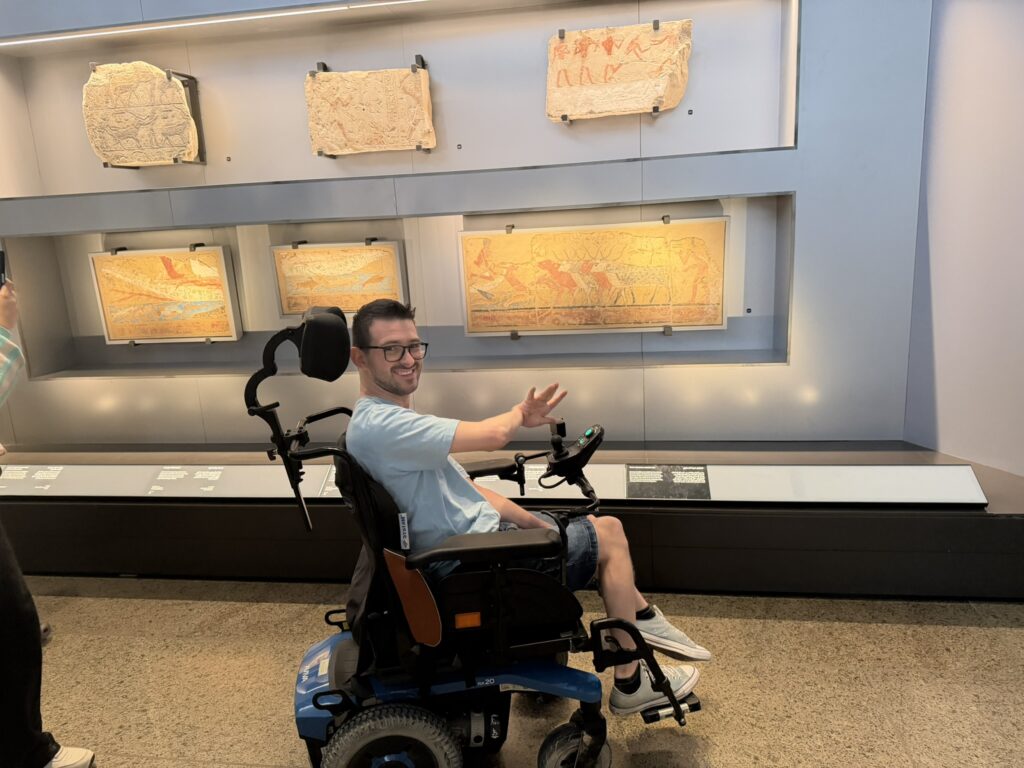
Commonly known as ‘the worlds largest archeological museum’, the Grand Egyptian Museum was finally completed in November 2025. However, visitors have been able to marvel at its expanse since 2024…
Although tickets are to be purchased online at a predetermined time slot, it is necessary for disabled individuals to present themselves at the ticket counter. They must also provide proof of disability to gain free entry. Despite the free entry, the museum is completely wheelchair accessible (as you would expect).

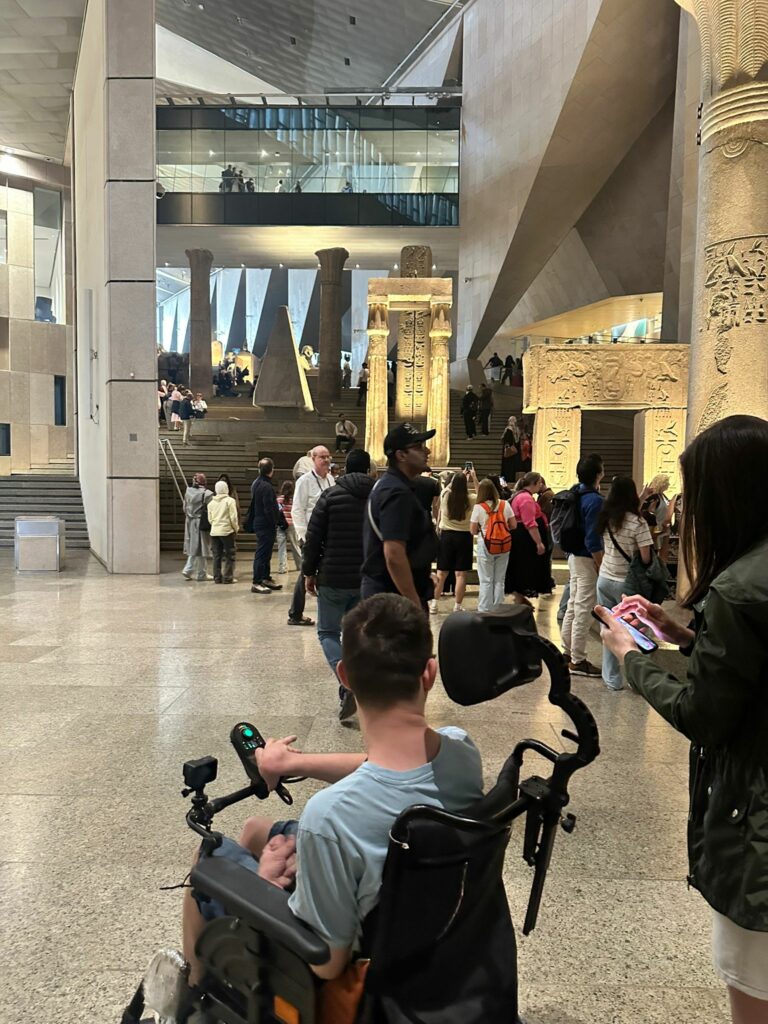
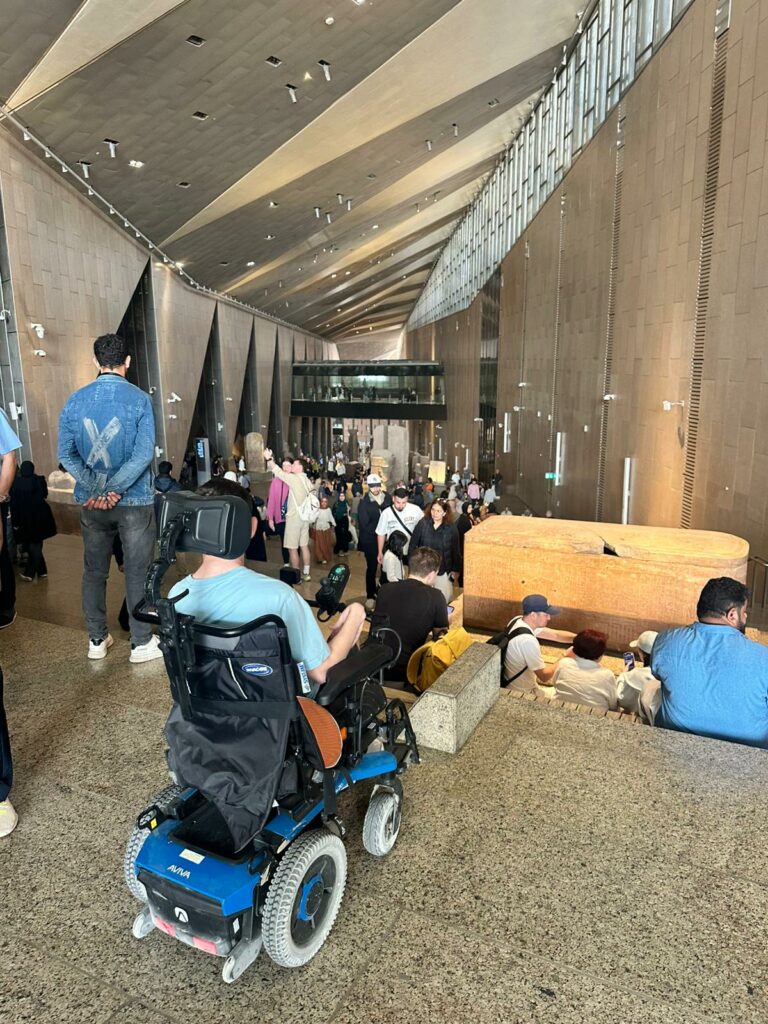
In order to access the ‘Main Galleries’ where the famous Tutankhamun exhibition is located, one must ascend the ‘Grand Staircase’…

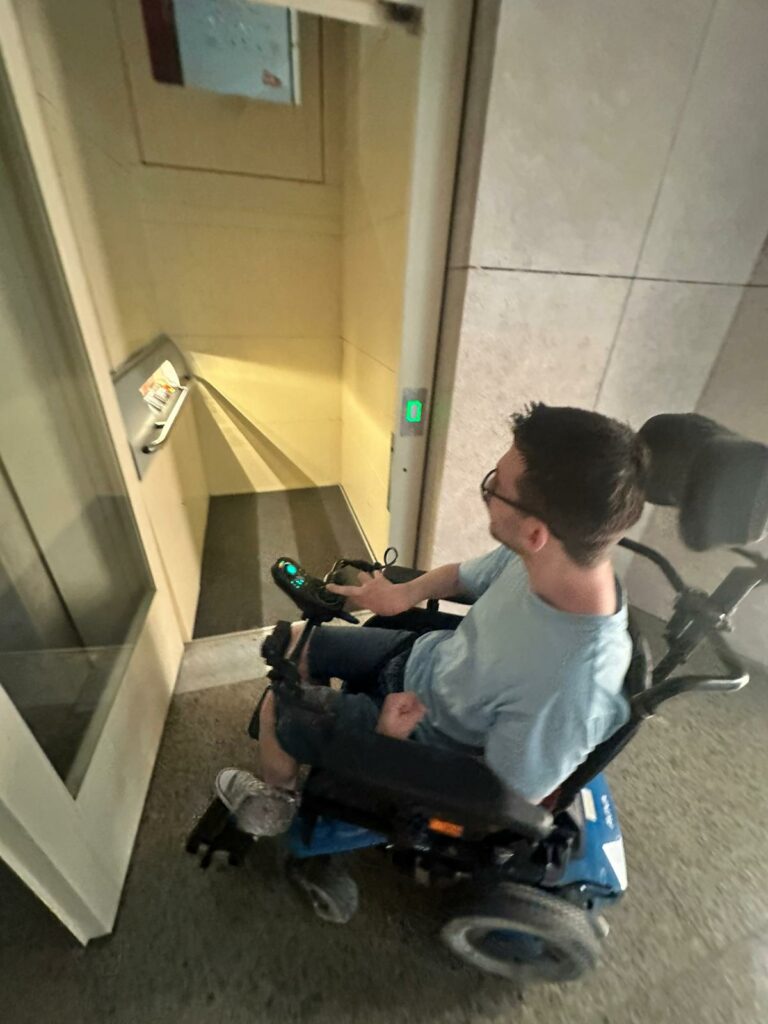
Elevators have been cleverly integrated into the side of the staircase, however, one must change elevators several times throughout. Whilst this is beneficial to marvel at various artifacts, it does mean that it takes one a while to descend to the exit…

When one asked if there was a direct way to the exit, staff simply directed us to the staircase. Of course, there are emergency elevators, however, these are padlocked hence it is recommended to allow for time to exit.

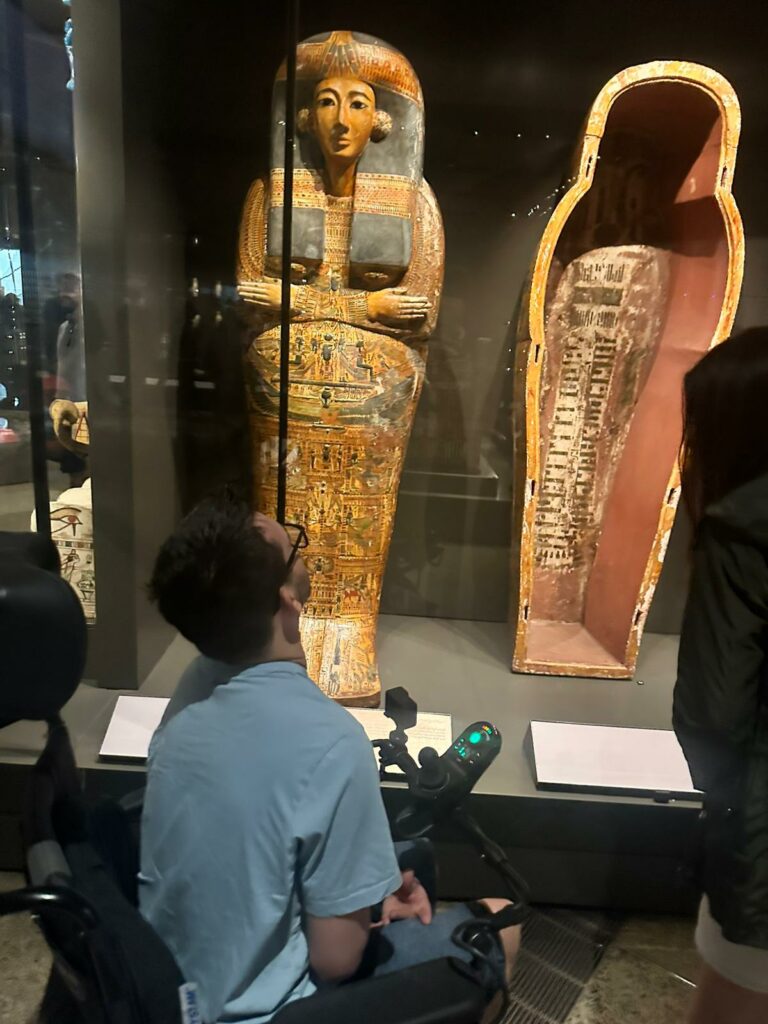
The ‘Main Galleries’ can be explored for hours and hours…

Ramps are present for wheelchair users to enjoy most of the exhibits, however, a small portion are located ‘underground’ requiring an elevator which can be tight for some…

It is clear that the Grand Egyptian Museum has been designed for mass tourism over The Egyptian Museum. There is a multitude of shops and restaurants (including Starbucks) plus the general floorplan is geared up for tour groups. However, it lacks the ability for one to be reminded of the historical aspect plus the city noise echoed throughout.

Day 3 (Cairo) – Great Pyramids of Giza Accessibility

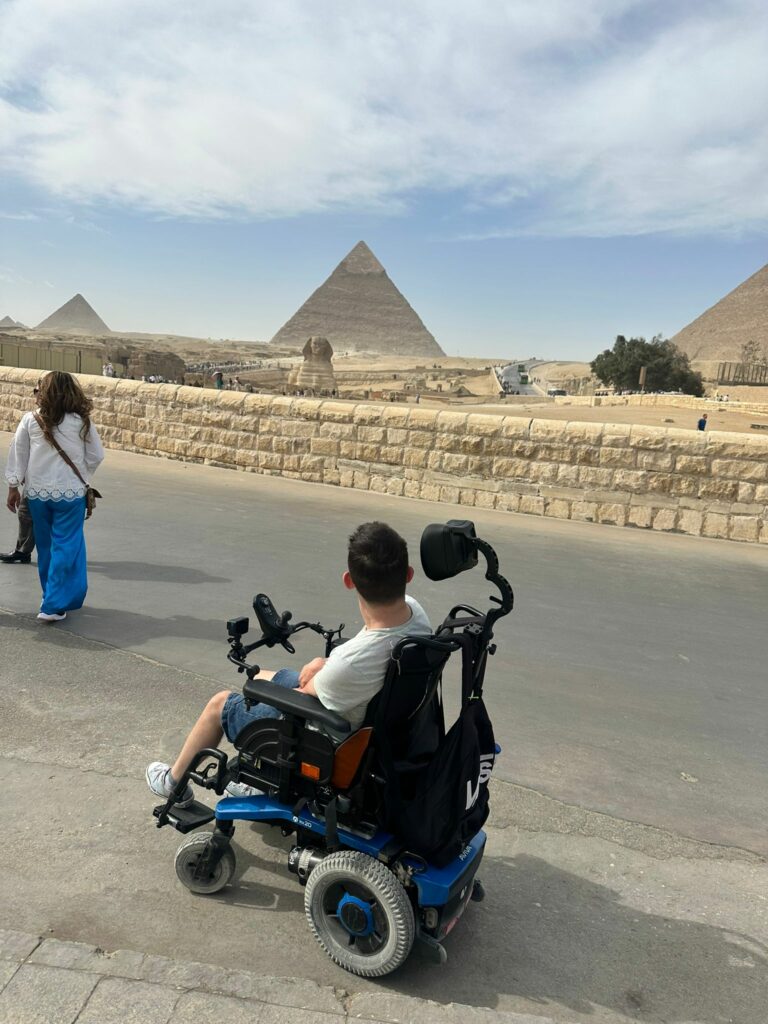
One can be certain in saying that the main draw for tourists visiting Cairo is to, of course, experience the Great Pyramids of Giza. Now, many wheelchair users opt to use a tour operator to see this Wonder of The Ancient World. Granted, this option has its benefits as tour vans and buses are able to use the interior road which weaves in between said structures. However, the ‘budget’ option may be of surprise to some.

As the Great Pyramids of Giza are located around a 40 minute drive from Downtown Cairo, one booked a wheelchair accessible vehicle for 6 hours from London Cab Egypt for which the driver is able to drop one off outside the main entrance.

As of February 2026, disabled individuals can enter half price but everyone else must pay. The main entrance as opposed to the Sphinx entrance is located some way from the Pyramids. To facilitate movement, ‘Hop On, Hop Off’ buses are in operation stopping at various points along the interior road. Unfortunately, not all buses are wheelchair accessible, however the staff will source one as soon as possible. The other thing to note is that the curb is quite low meaning a steep ramp gradient.

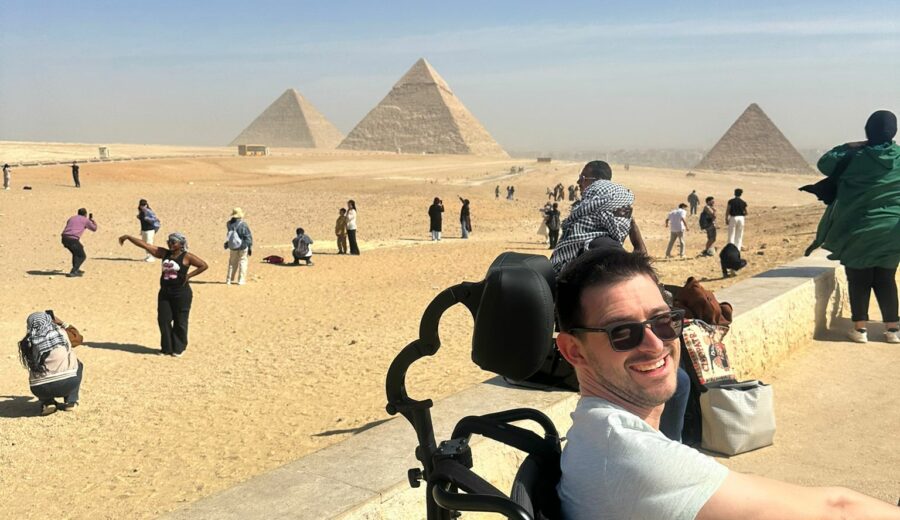
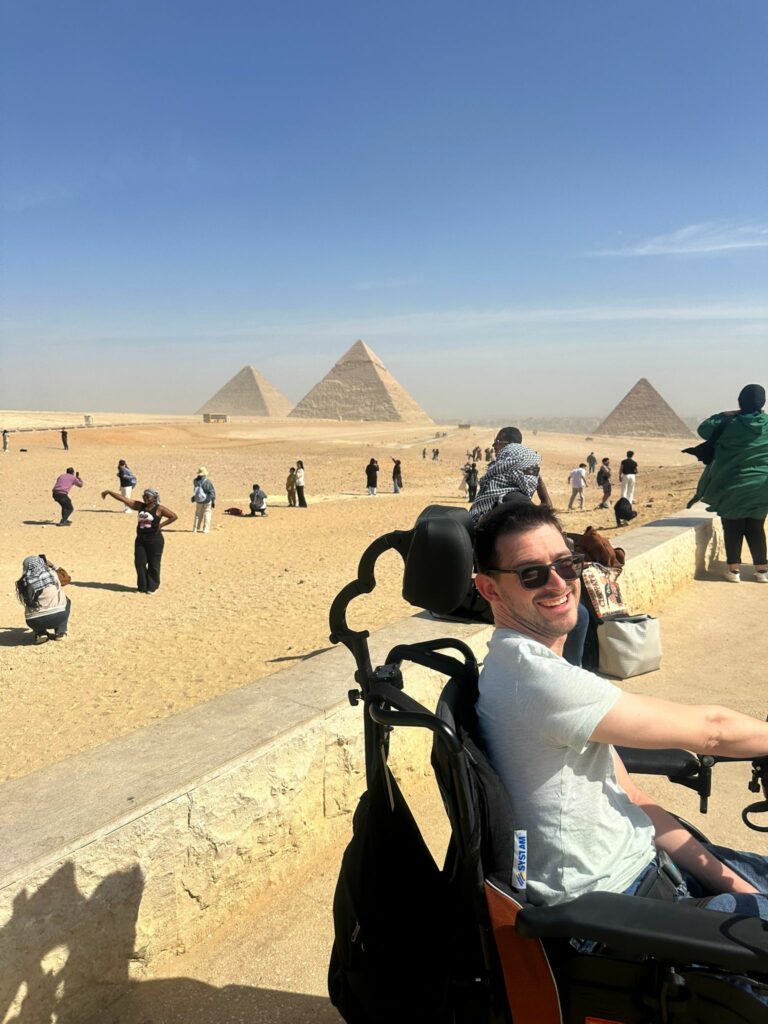
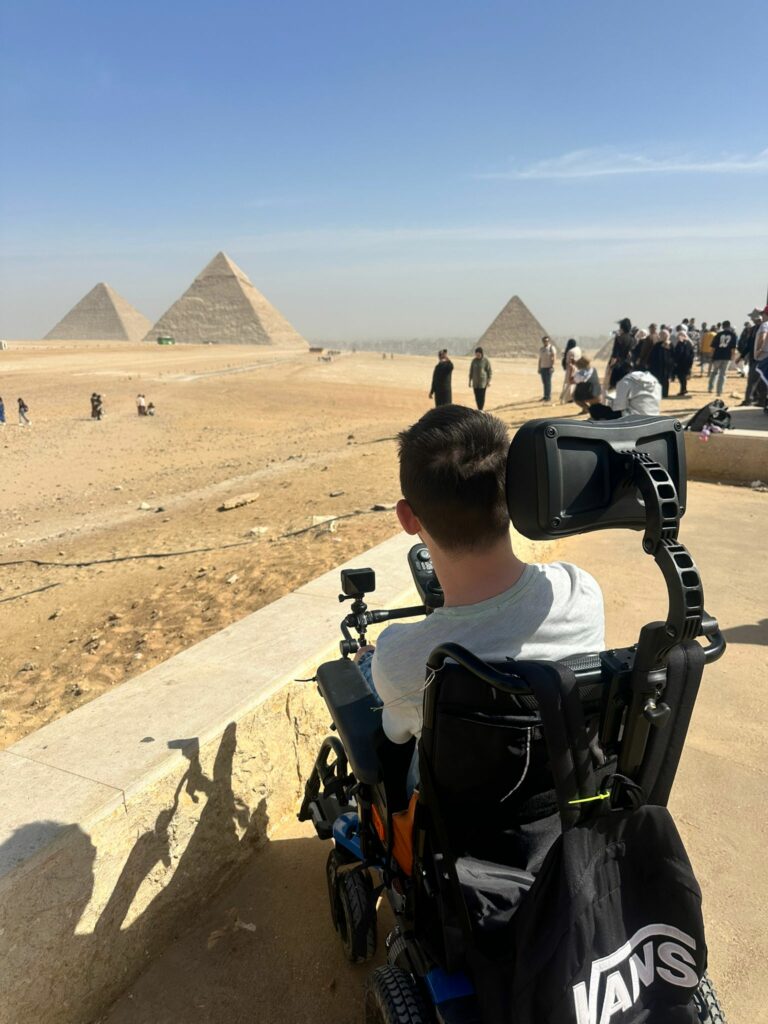
The first ‘stop’ is aptly named ‘Panorama’ allows one to take that famous selfie within an area that is wheelchair accessible and is home to a few cafés etc…

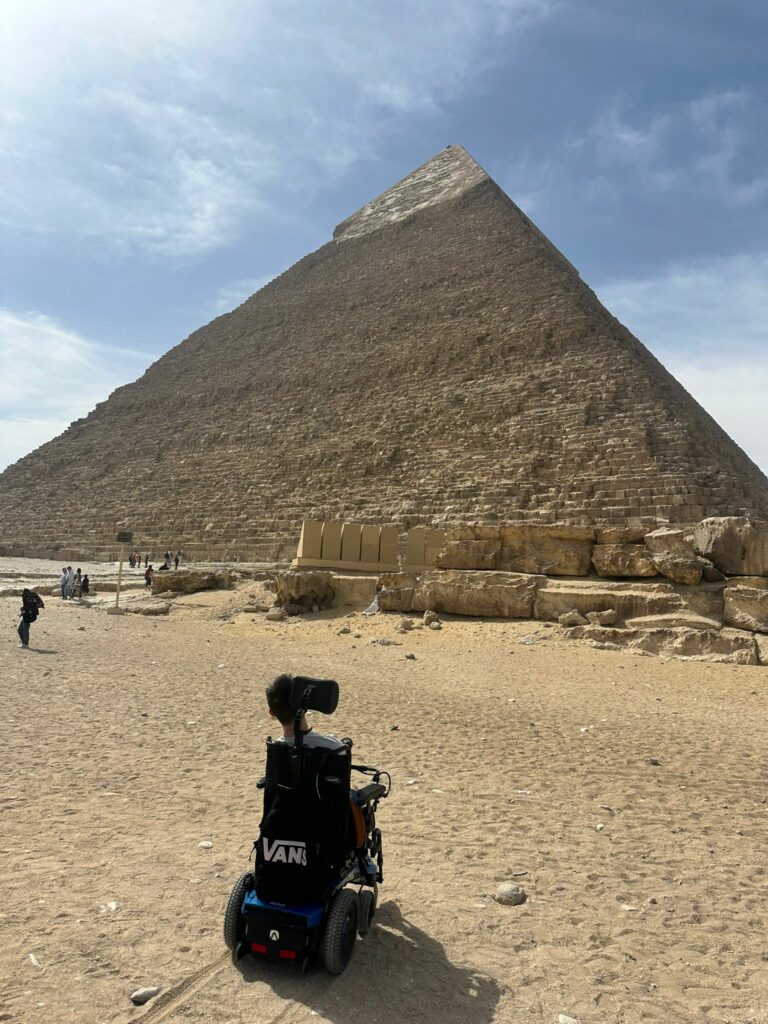
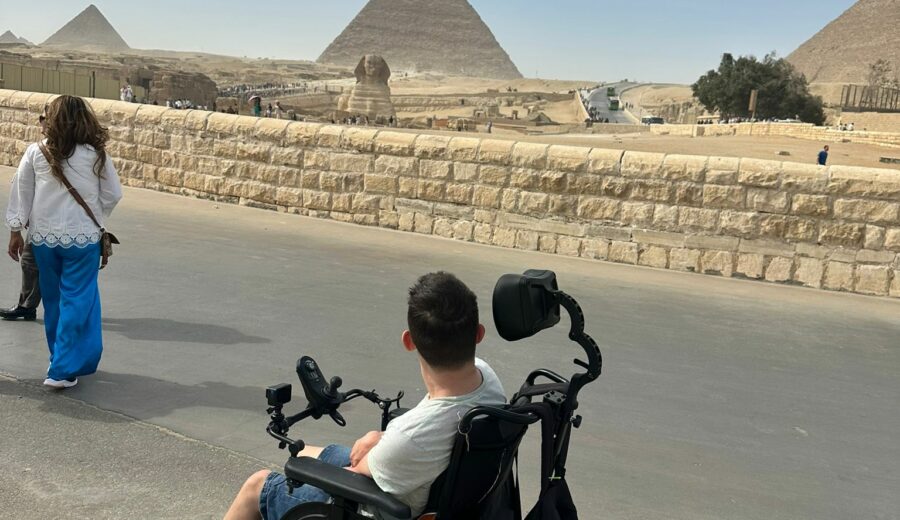
Said bus then travels in between the King Khafre Pyramid and the King Khufu Pyramid. Although board walks circulate the structures, there doesn’t appear to be an accessible way to reach the path other than rolling over the sand. Still, one can only try and, if all else fails, simply roll along the interior road…

The final ‘stop’ is located by the famous Sphinx. Unfortunately, the main path leading to the structure is currently under refurbishment meaning that one could only admire from the interior road…

Day 2 (Cairo) – The Egyptian Museum

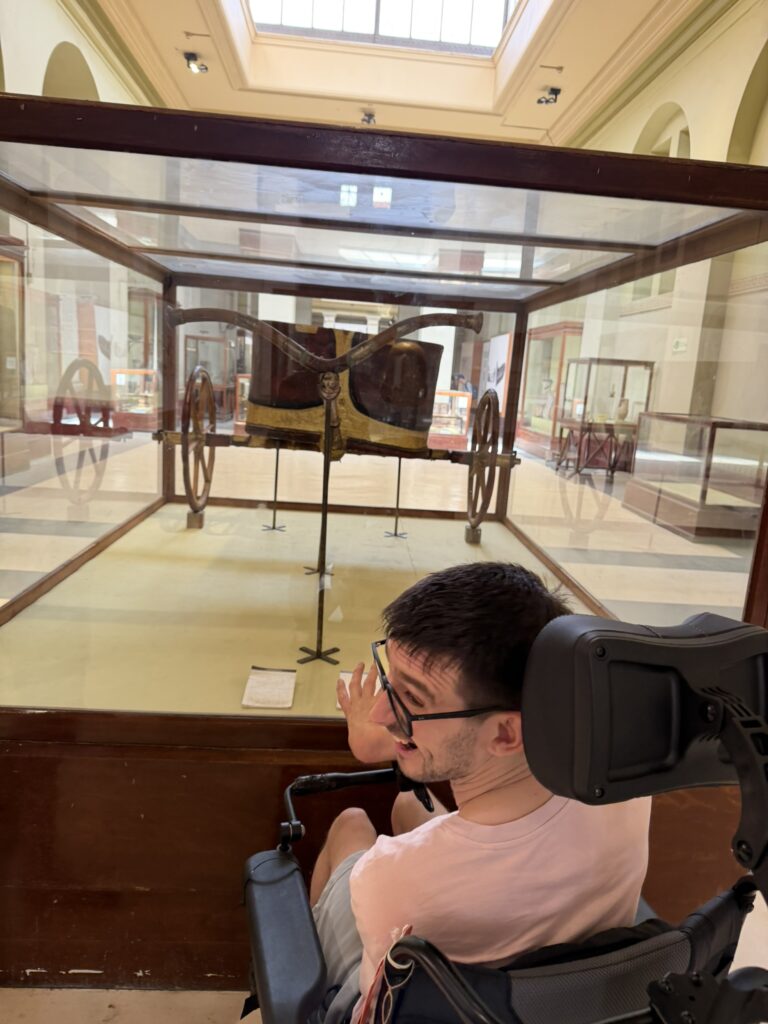
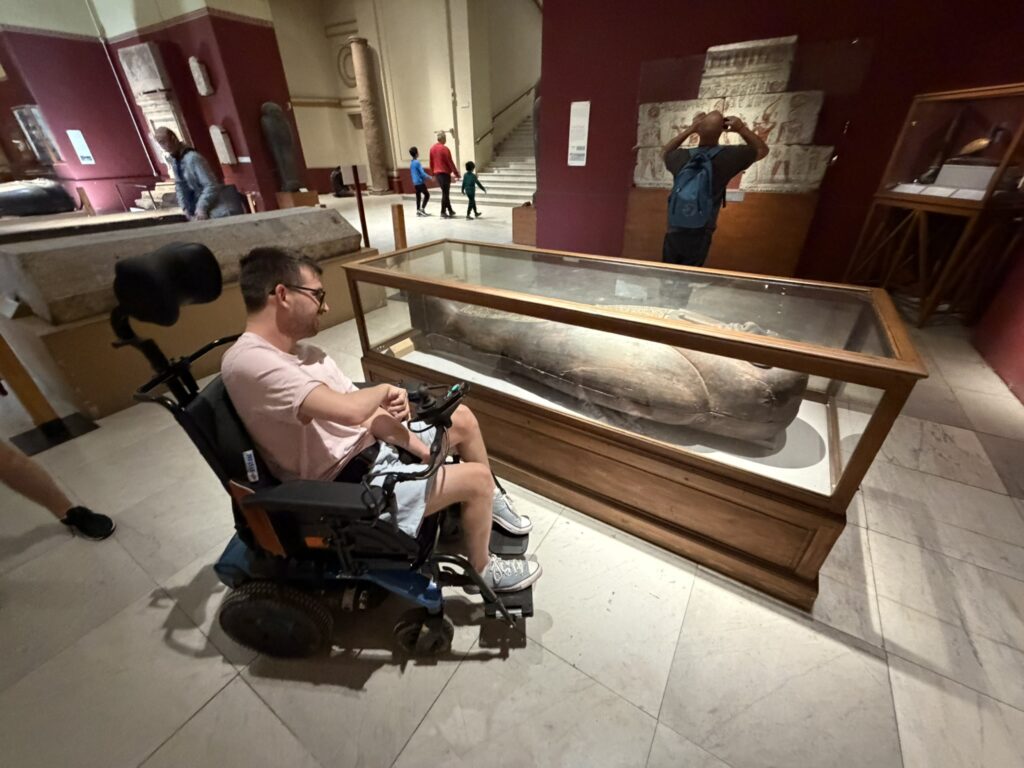
Until the Grand Egyptian Museum opened in 2024 within proximity of the Great Pyramids, the Egyptian Museum located in the heart of Downtown Cairo saw thousands flock to see its treasure trove of artifacts, only a small minority visit today. Although said museum is located a mere 5 minutes walk over the road from the Steigenberger Hotel, wheelchair users will note that the infrastructure in Cairo in terms of drop kerbs is almost non existent. Coupled with the poor condition of pavements, it makes rolling around the city very difficult and it is sometimes necessary to join residents on a stroll along a 4 lane highway where traffic rules do not apply.

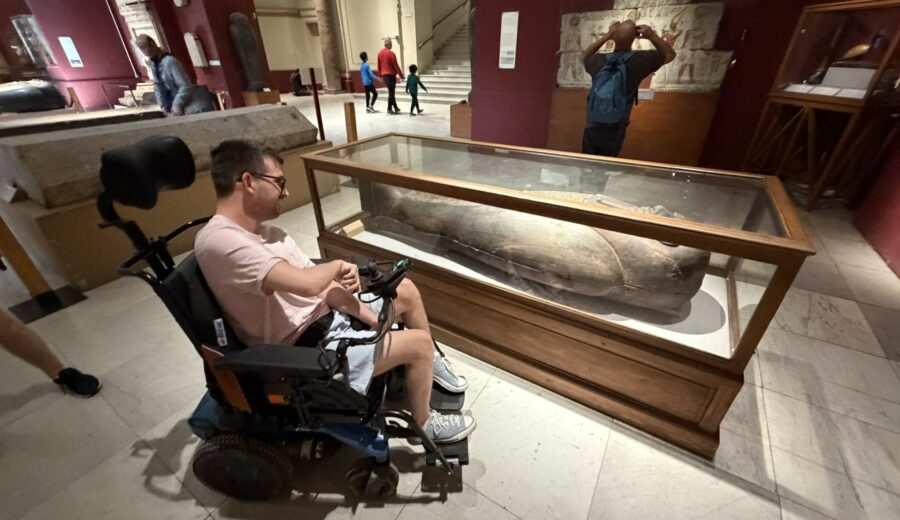
As I touched upon, the majority of tour operators now favour the Grand Egyptian Museum and overlook its predecessor. Due to a large portion of the ‘famous’ artifacts i.e. from the tomb of Tutankhamun having been moved over, the historical building now appears to be in a very sorry state (it is true when pigeons use the halls as hiding places!). Nonetheless, a variety of lesser known artifacts spans two levels (both wheelchair accessible)…

As of 2026, renovations are underway throughout the building in a bid to restore it to its former glory.

Day 1.5 (Cairo) – Steigenberger Hotel El Tahrir

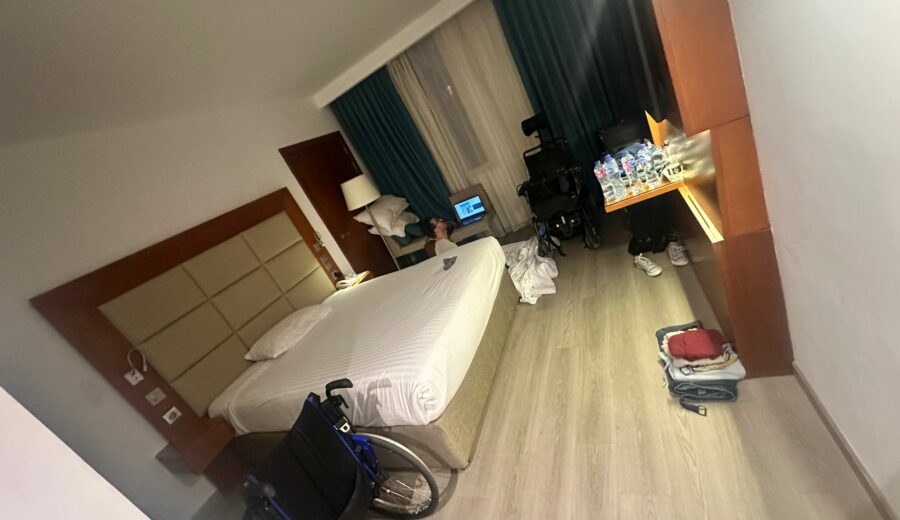
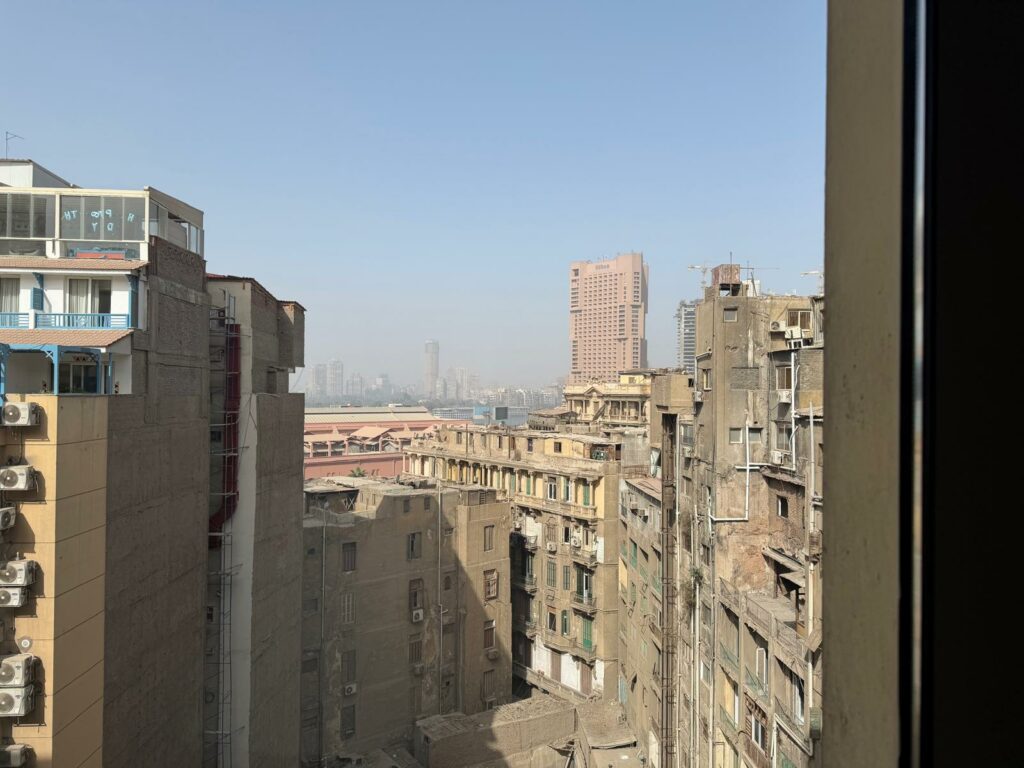
Amongst the hustle and bustle of Downtown Cairo stands the Steigenberger Hotel El Tahrir. It is true that a large proportion of completely wheelchair accessible hotels in the area are located within proximity of The Great Pyramids for various reasons. However, the largest city in Africa offers much more than tourist sights.

The majority of chain hotels i.e. Hilton and Novotel are either located on the banks of the River Nile or situated to provide glimpses which is also true with the Steigenberger…

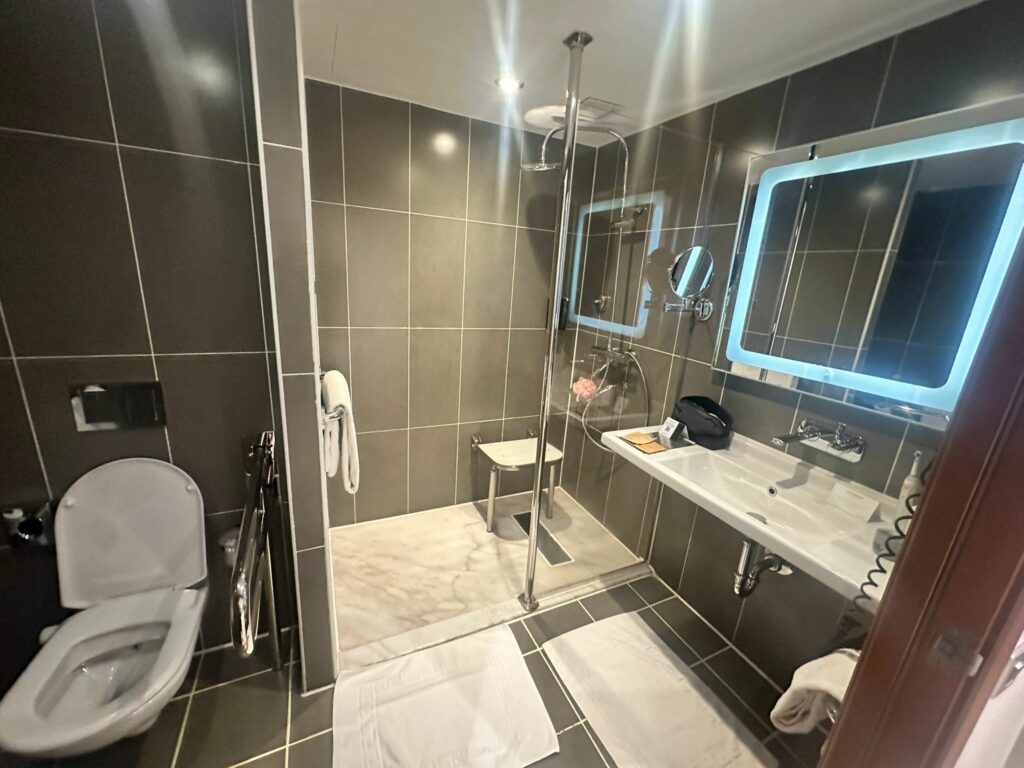
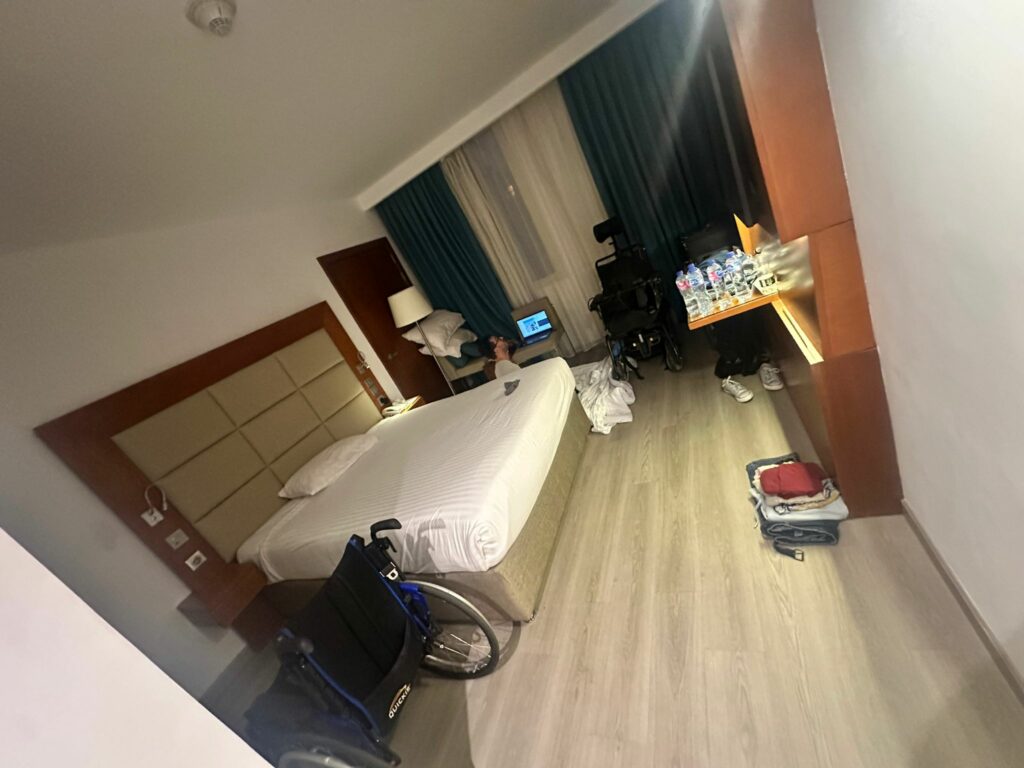
For around £100/night, wheelchair users can stay in a rather spacious room complete with a semi-accessible wetroom…

The only downside of staying in the centre of Cairo is that one will be subject to constant traffic honking late into the night!

Day 1 (Cairo) – Wheelchair Accessible Transportation

Egypt and its capital, Cairo, has long been a staple of Northern Africa and, indeed the world. This is due to, in the main, the country being home to one of the Seven Wonders of The Ancient World, The Great Pyramids of Giza. As a result, an unfathomable amount of operators offer tours to this historical country. This does extend to tours specifically designed for wheelchair users, however, it is likely that one will pay an added premium due to the limited amount of operators offering this. Granted, if one wishes for a completely hassle free trip, this option may suit. However, for those who wish to visit Cairo on a (lesser!) budget, the following blog posts will hopefully demonstrate how.

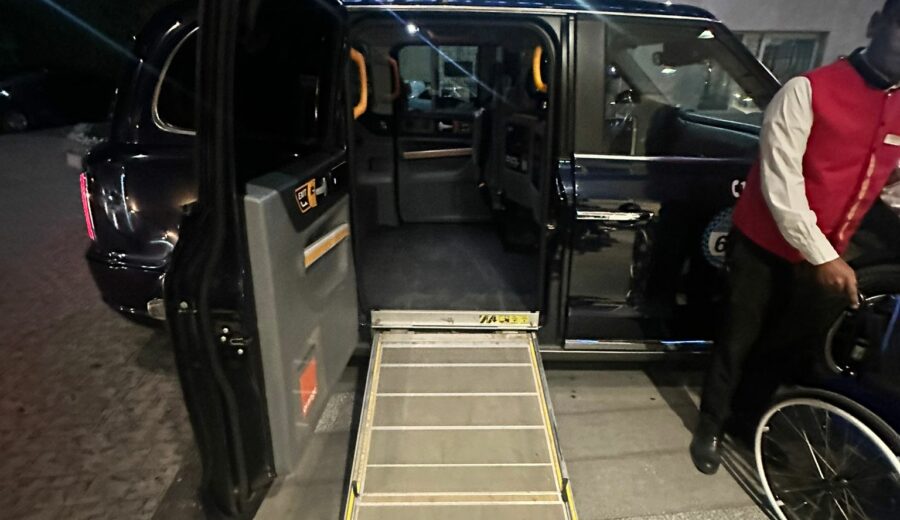
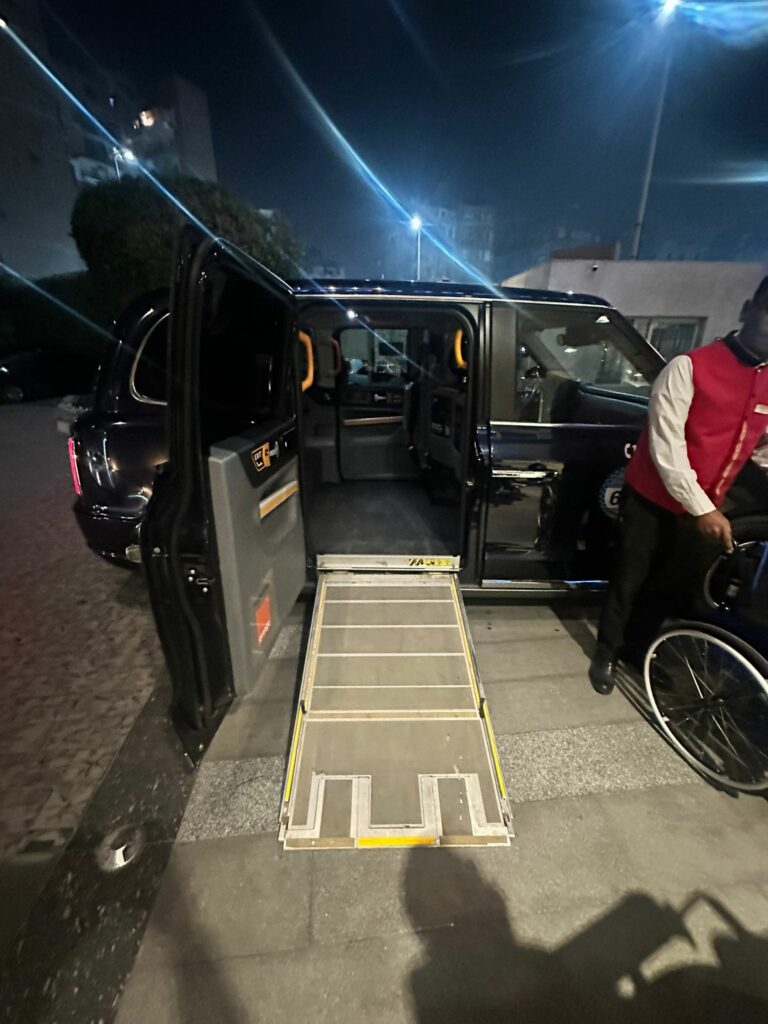
For the 10.5 million inhabitants of Cairo, a number of London Black Cabs roam the city thanks to London Cab Egypt. Naturally, these vehicles are wheelchair accessible to the UK standard. When booking a ride through the website, an option is available to request a vehicle equipped with a ramp, it’s as simple as that!

An one way journey from Cairo International Airport to the city centre costs just over £30 as of February 2026. However, it is worth noting that if one flies into T2 especially, the craziness of the terminal exterior can be likened to an Indian airport.

Akin to the vehicles found in Azerbaijan, it is possible to hire a Black Cab for between 2 – 8 hours for a flat fee, perfect for exploring the sights or an Giza excursion.

Day 5 (Bulgaria) – Final Thoughts

Packed full of ancient history, rugged terrain and beach resorts, Bulgaria has something to satisfy everyones taste. Prior to ones visit, it appeared that the country would present many challenges for wheelchair users. Granted, planning the trip wasn’t the easiest, however, a large proportion of the stumbling blocks were simply due to the language barrier. For example, contacting Bulgarian Railways to discover that it is actually the Red Cross who provide wheelchair assistance.

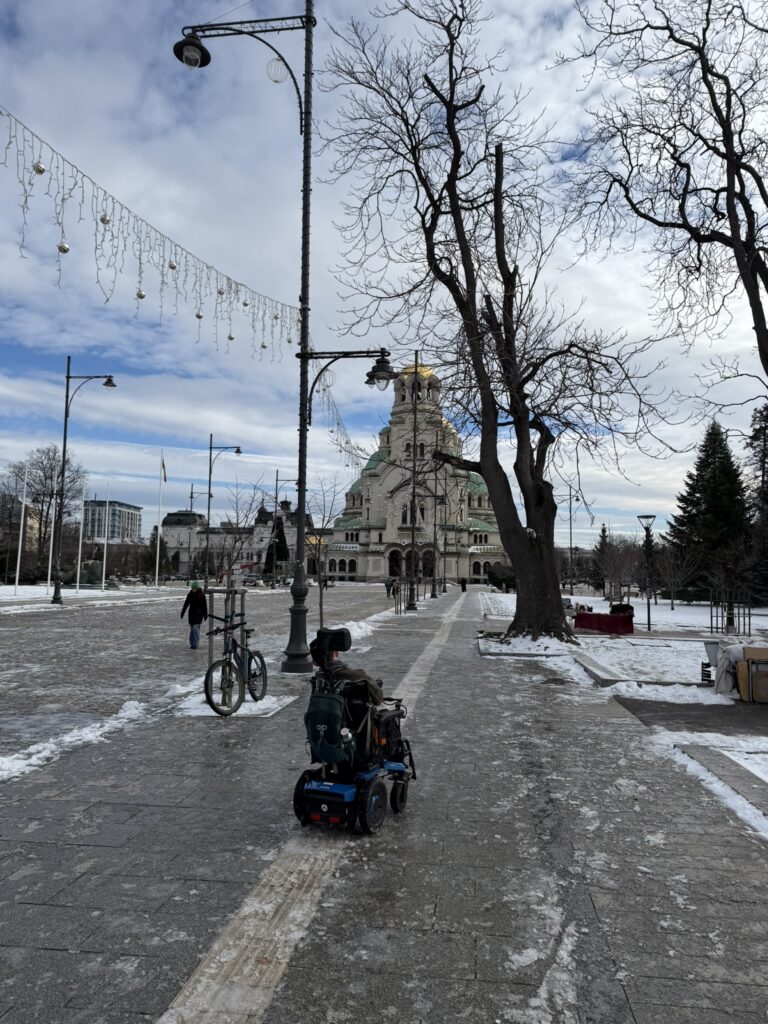
In some respects Bulgaria and its capital are, in fact, ahead of their European counterparts in terms of accessibility. For example, all stations on the Sofia Metro possess elevators to street level in addition to providing level access to attractions such as the Saint Alexander Nevsky Cathedral. However, it can be said that the country still has a long way to go to become truly accessible. This is evident in the lack of private wheelchair accessible transportation.

For now, it is necessary for one to be a little creative when visiting the country. This may mean carrying a portable ramp, however, it certainly should not deter a wheelchair user from visiting this fascinating country!

Day 4 (Sofia) – Vitosha Mountain

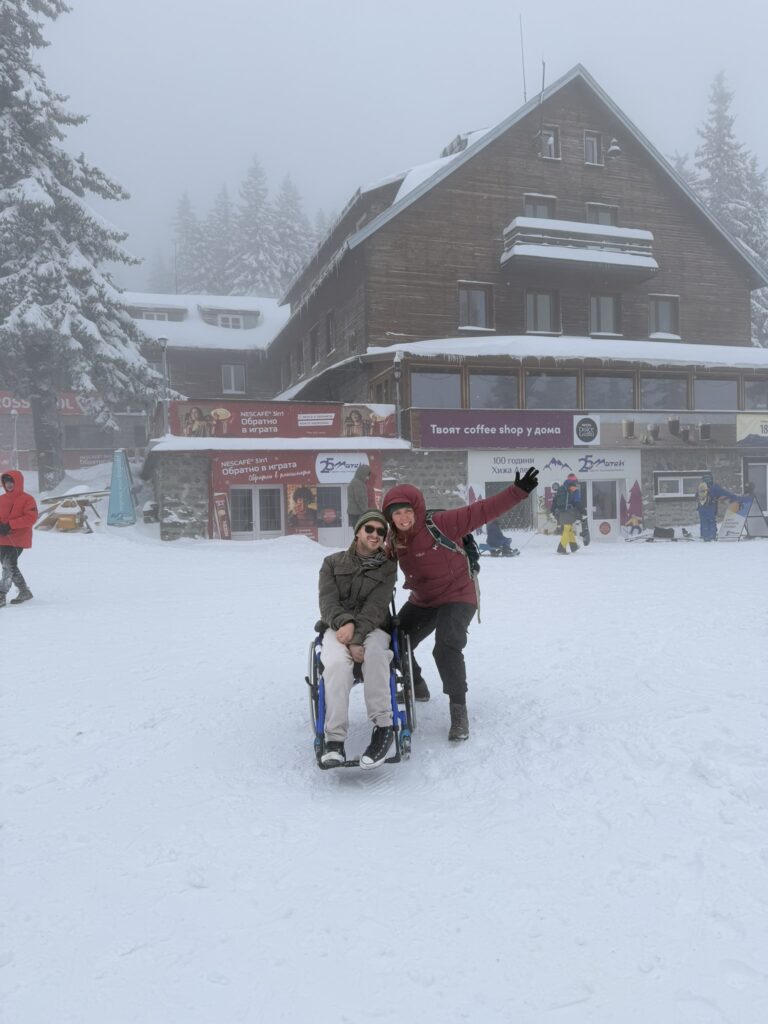
Vitosha Mountain overshadows the city of Sofia providing a perfect day trip whether that is to ski or a walk in nature during the summer months. Until 2024, one was able to catch a cable car from the suburb of Simeonovo to the ski resort base in Aleko. Unfortunately this has now closed due to health and safety fears and there are no plans to reopen it for the foreseeable future. To add to this, the bus lines up to the Aleko Hut are not wheelchair accessible. As of 2026, this leaves powered wheelchair users with one option, to use an accessible taxi for which Mobilika seems to be the sole provider of.

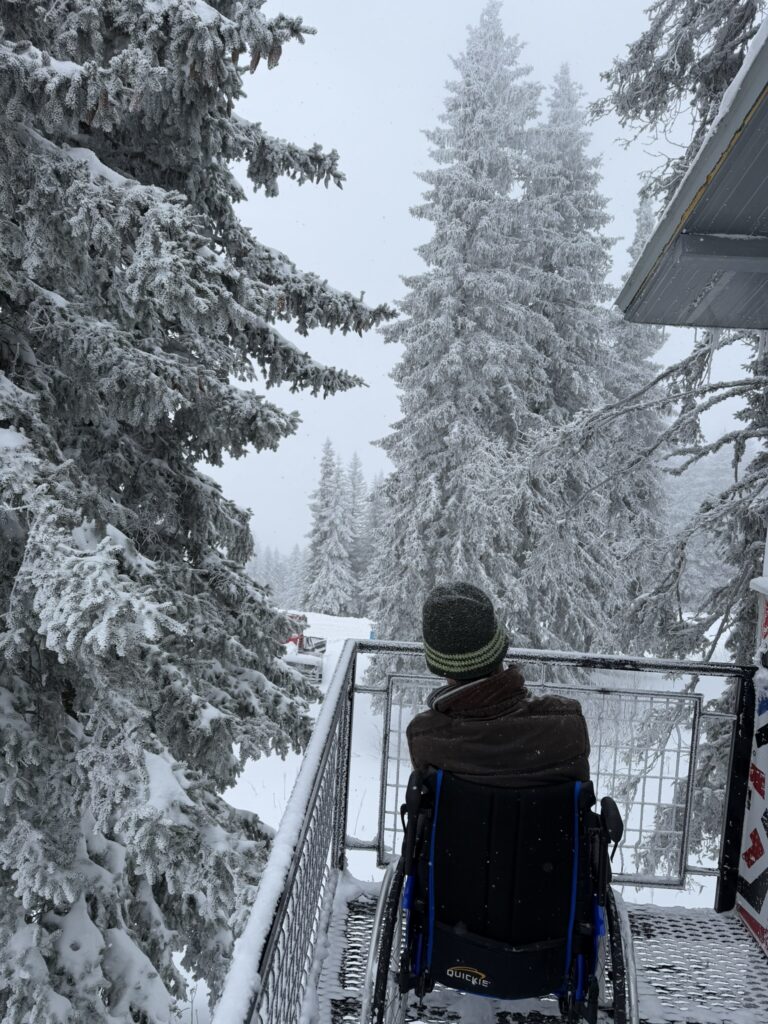
In the winter months, Aleko receives heavy snowfall and has no accessibility options for wheelchair users. This makes it almost impossible to roll around, even in a manual wheelchair. Despite this, one is still able to soak up the atmosphere…

Day 3.5 (Plovdiv) – City of the Seven Hills

Commonly known as the ‘City of the Seven Hills’, Plovdiv is located a mere 150km from the capital. Akin to Sofia, the city is littered with ancient ruins. In recent years, the Ancient Theatre of Philippopolis has been unearthed and preserved under one of the citys main streets. This has since become a major draw for tourists.

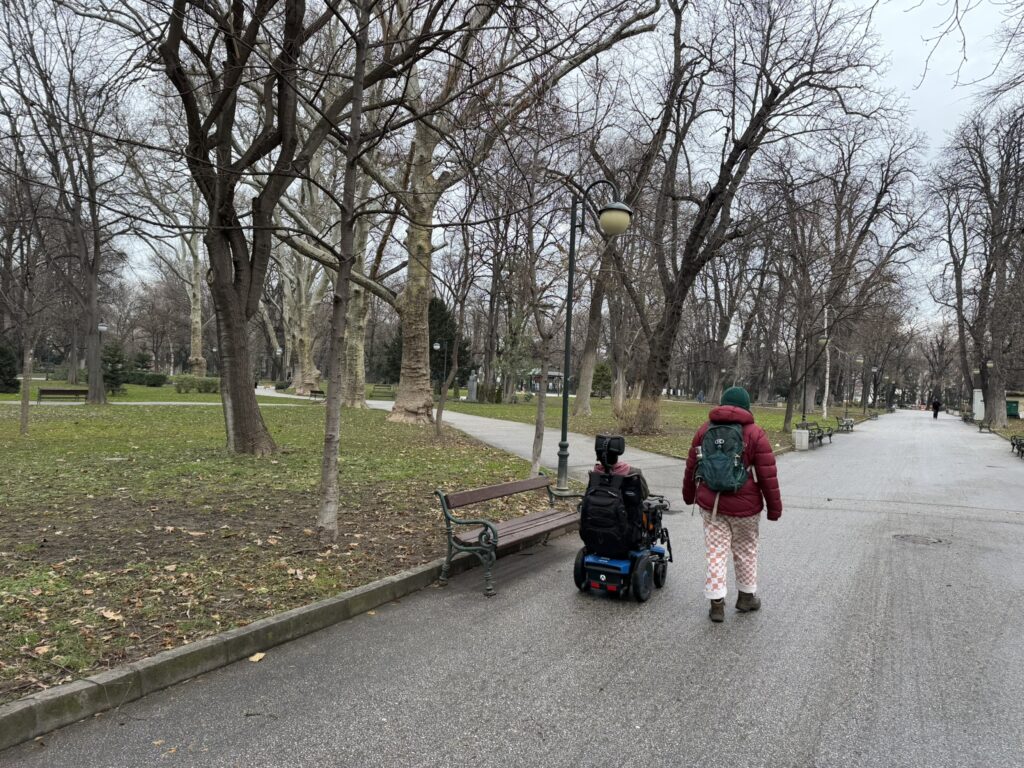
As mentioned previously, one travelled by train from the capital to Plovdiv. The station is around a 25 minute walk from the centre and is mostly accessible for wheelchair users, especially when one enters “Tsar Simeon Garden” Park…

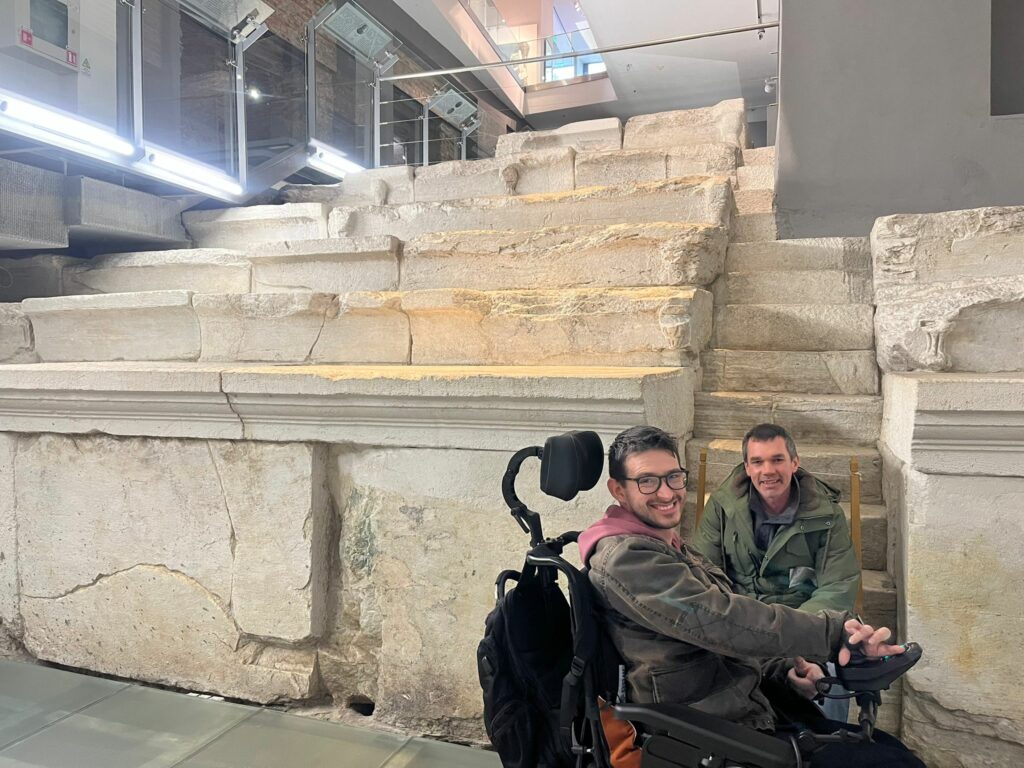
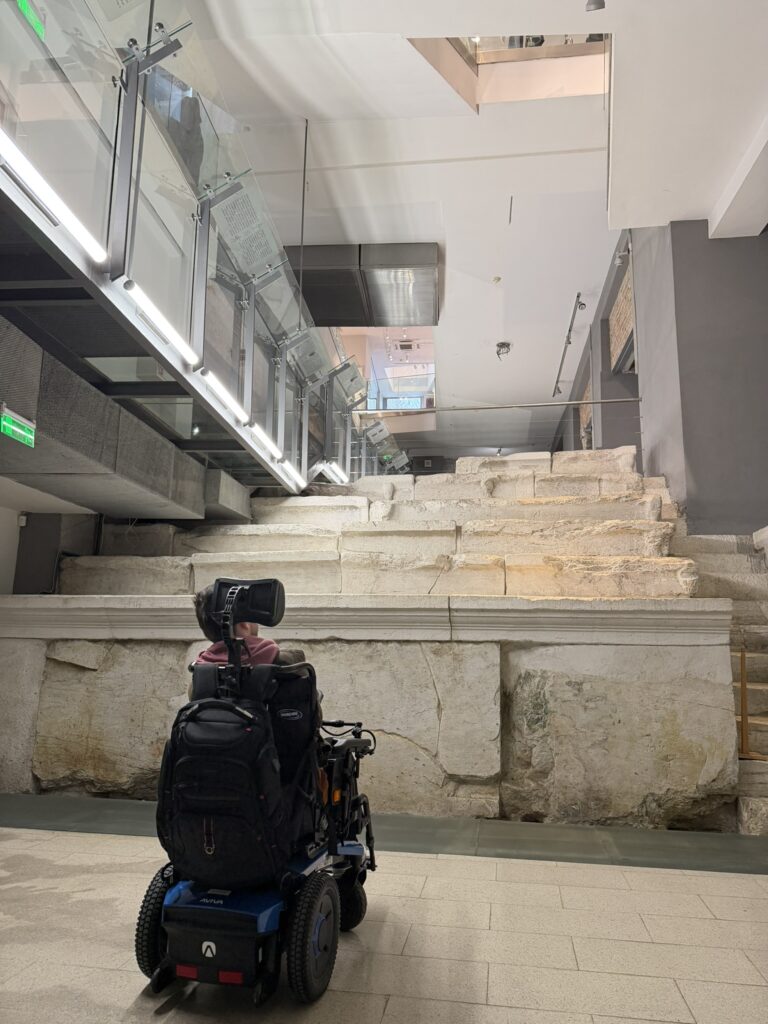
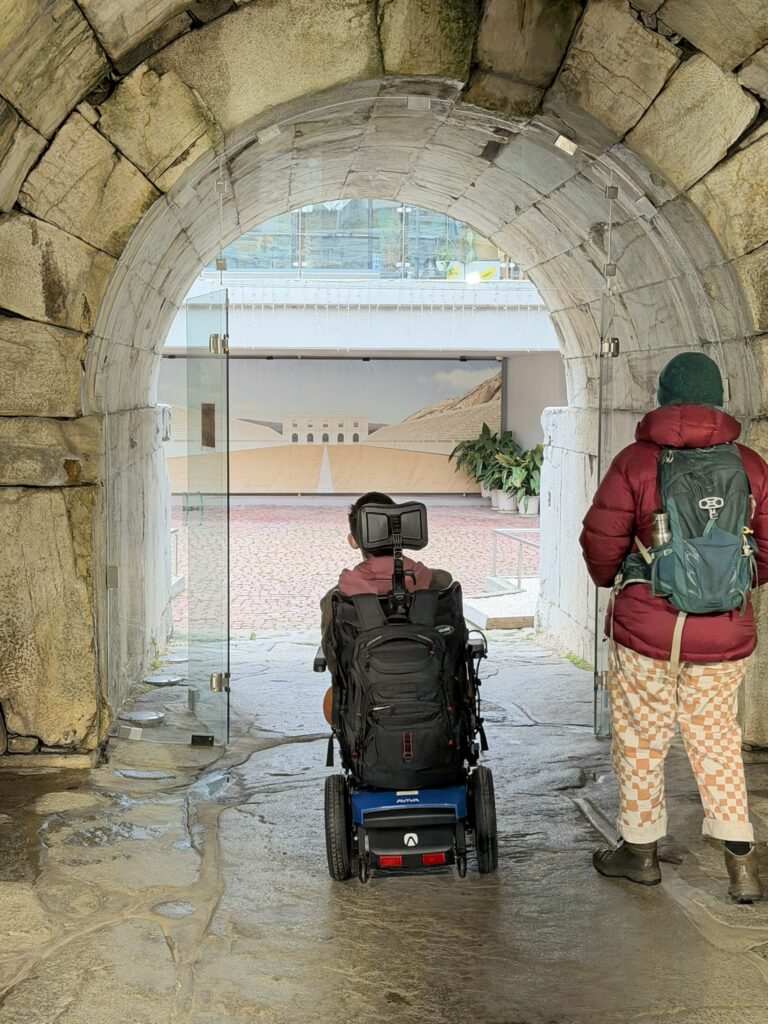
This leads straight onto the pedestrianised street where Philippopolis is located beneath. Now, most of the ruins are located outside in giant pits, however, if one was to enter an unassuming H&M store and head down to the basement, this is what will great you…

Disabled individuals and one companion can enter FREE of charge, definitely worth a visit if one wants am unusual experience!

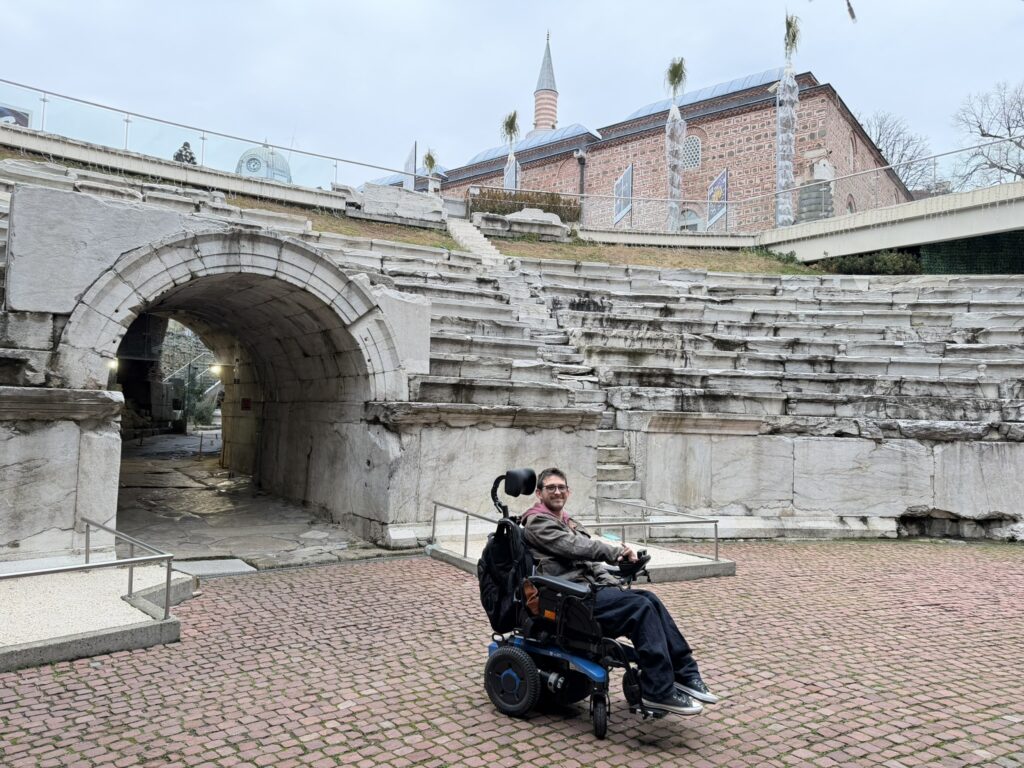
Back on street level, one of the main points of interest is the Ancient Stadium of Philipopolis. Wheelchair users can take a little unstable elevator down to the structure. Although shops within the vicinity possess steps, one can still marvel at the ancient engineering…

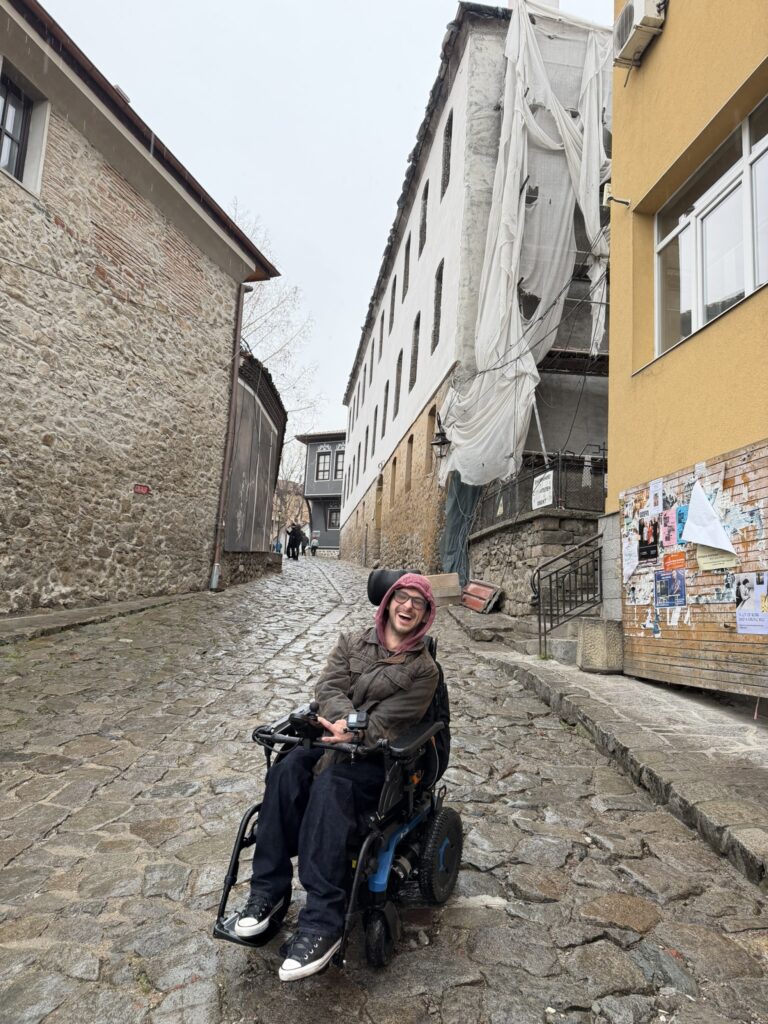
The Old Town where the Ancient Theatre of Philippopolis is located is a few minutes walk from this. As with many Old Towns, a large proportion of the streets comprise of cobbles making for a bumpy roll…

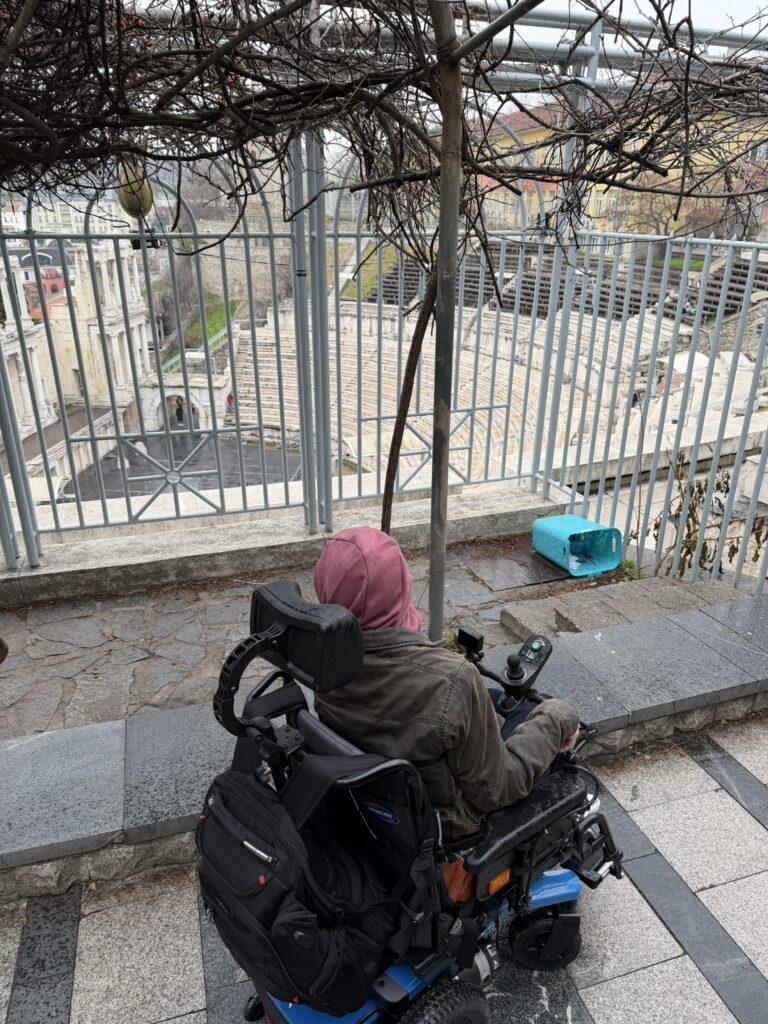
Soon enough, however, one will arrive at one of Plovdiv’s landmarks, Ancient Theatre of Philippopolis. Unfortunately, as of January 2026, not even the entrance is wheelchair accessible but if one takes the path to the left, the views are plentiful…

Despite the city having its flaws in terms of accessibility for wheelchair users, Plovdiv shouldn’t be overlooked!

Day 3 (Sofia) – Bulgarian Railways Experience

The railways in Bulgaria are not exactly famed for their scenery compared to the likes of Bosnia. However, as one wished to visit Plovdiv, it seemed appropriate to assess the accessibility of Bulgarian Railways. It is worth noting that a new fleet of trains are due to be introduced over the forthcoming years. However, it is thought that the reduced mobility booking system etc will remain the same.

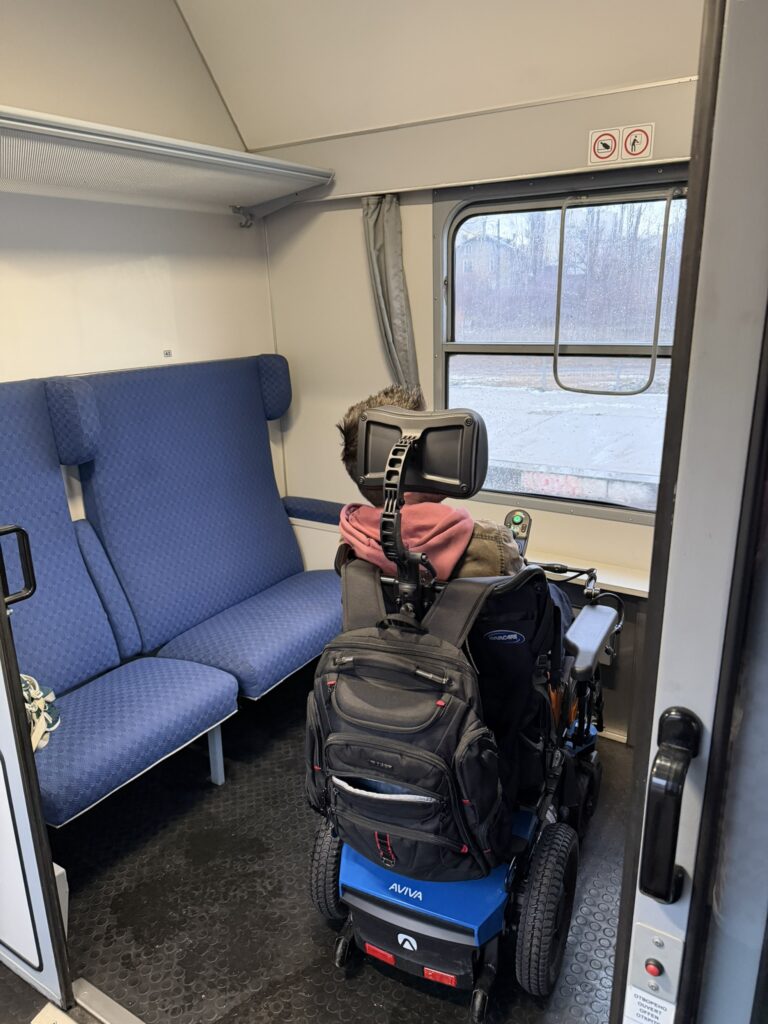
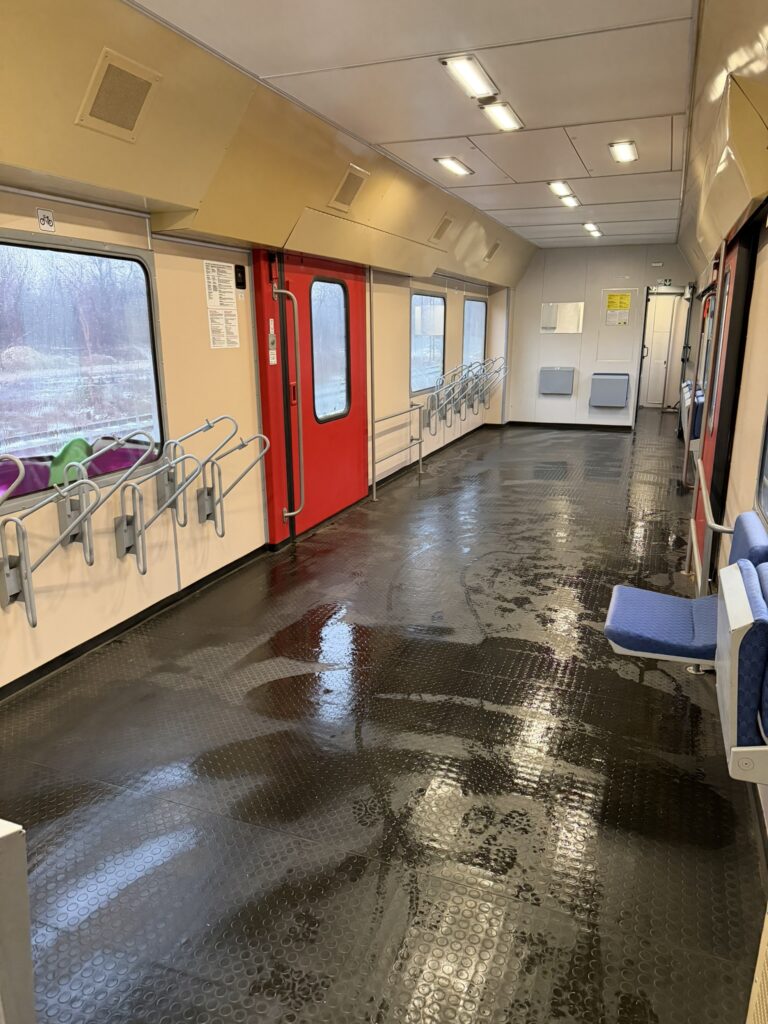
As of 2026, intercity trains in Bulgaria do not possess wheelchair spaces as standard hence one is required to contact Bulgarian Railways 72 hours prior to ensure that a ‘special carriage’ is added onto said train upon its formation. After a few misinterpreted emails, it transpires that the Bulgarian Red Cross handle the assistance side. However, one can only call to book speaking in Bulgarian. Fortunately, one was able to email and explain the situation for which they kindly sent over a booking request form i.e. an Excel spreadsheet.

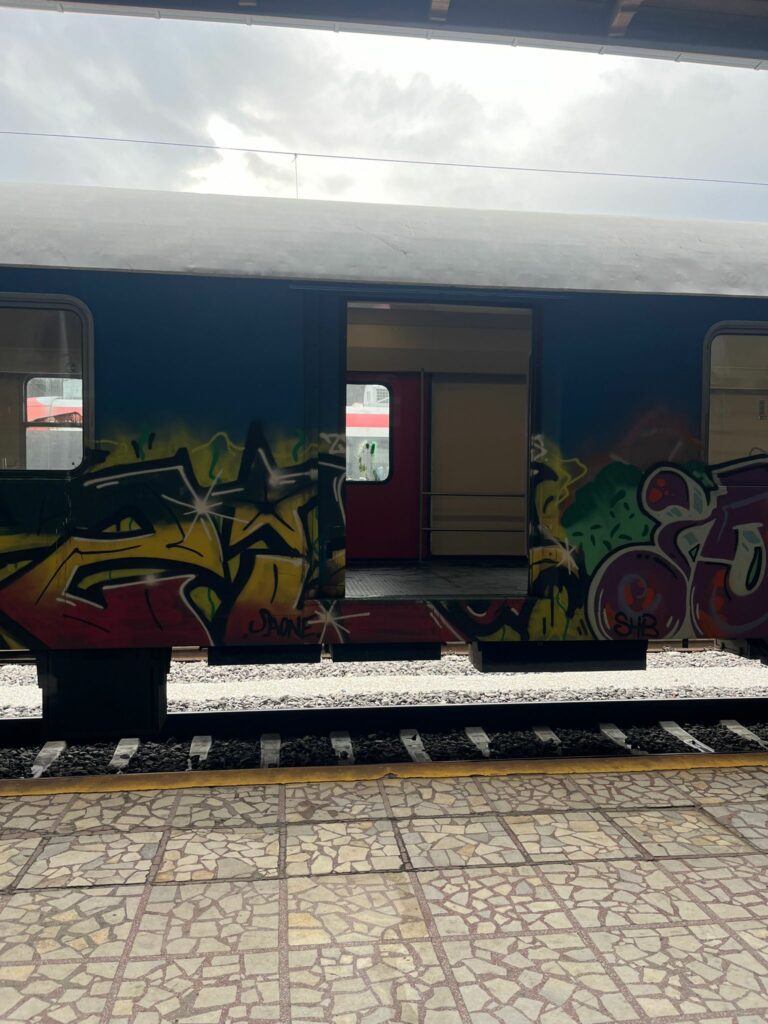
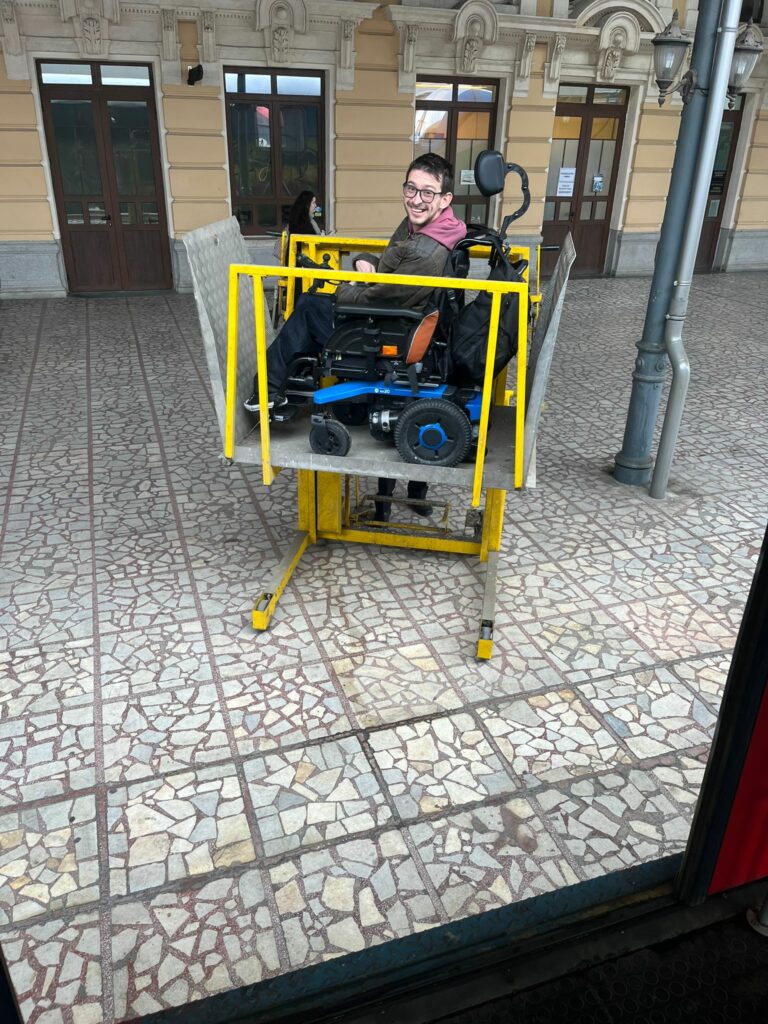
Upon meeting the Red Cross at Sofia Central Railway Station 30 minutes prior, it was a fairly easy process. Akin to Croatia, a manual lift is wheeled down to the ‘special carriage’ and then on one goes!

It is important to note that some assistance teams can be a little ‘lazy’ and inform you that the station does not have said lift so need to lift the wheelchair themselves. However, after a word with senior management, the lift soon shows!

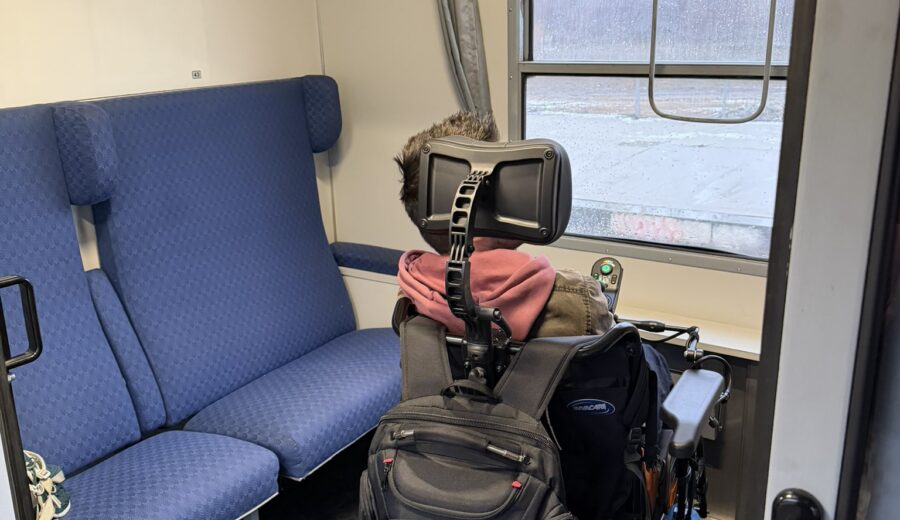
The ‘special carriage’ is essentially a bare carriage with a toilet, a few seats and an accessible compartment. Compared to an ordinary train compartment, this was fitted with automatic doors and a spacious interior, perfect for wheelchair users…

Scroll to top