One of the main draws to Chennai is Marina Beach which faces the Bay of Bengal and what better way to experience it than at sunset. From prior research, one had discovered that a wooden walkway had been erected a few years ago to allow wheelchair users to access the waters edge (one of the first in India I believe) hence it was necessary to check out!
The road running parallel to Marina Beach has plenty of parking and is fairly quiet (for a change) bar the occasional tuk tuk or motorcycle…
One can also park fairly close to said walkway…
Along the wooden walkway, there are several points from which one can marvel at the scale of Marina Beach…
Unlike many walkways or boardwalks in the UK, one can actually roll pretty close to the waters edge…
This enables you to fully capture that famous sunset…
The plan for tomorrow is to head slightly outside Chennai to visit Mahabalipuram, an UNESCO Heritage site dating back to the 7th and 8th century. All of this is possible thanks to The Swarga Foundation…
After a relaxing day yesterday at the hotel, it was time to embrace the chaos of Chennai by visiting the Arulmigu Vadapalani Murugan Temple. It was well worth the expense of hiring an accessible vehicle and a driver as it allowed us and Superbunny to get to said location easily without battling through cars, lorries, tuk-tuks and everything in between! However, it is worth noting that the temple doesn’t have parking hence you are required to park down a side street and wander down…
Although the streets appear to be chaotic, it only seems to take a few minutes to get used to the etiquette (or what there is of it!).
As predicted, ones presence caused a bit of a stir with a little crowd forming around us, some curious and some just asking for money. The front of Arulmigu Vadapalani Murugan Temple is semi pedestrianised making for easy rolling…
Whilst taking off shoes and socks (one just had to take off shoes!), we were approached by a guy wanting to show us around bypassing the ticket office (not sure if we were meant to do this) so we followed suit…
As per Istanbul and Sousse, there is a threshold to combat with a step but nothing that a portable ramp or a wheelie can’t fix. After that, ramps are in appropriate places and the majority has level access. The temple even has a special gate for wheelchairs to be able to access the inner part…
Of course the guy showing us around was after a tip but it was deserved!
As the train museum is shut on Mondays (bad planning that!), it was time for a haircut before heading to the beach….
It has been a while since one has travelled long haul, especially with Superbunny (which was back in 2016!) hence it was rather strange boarding a plane for the 10 hour flight to Chennai. As Iranian airspace is currently closed off due to the deteriorating situation, we were sent on a jolly around Turkmenistan and Afghanistan, however, as soon as we knew it, we touched down in India albeit at 3:15am.
As I was unsure how Chennai International would handle Superbunny at that ungodly hour, one packed a spare joystick in addition to numerous tools, however, it appears that said wheelchair doesn’t even to have a scratch to it!
Now, one had a feeling that Indians would be quite helpful, however, as soon as we stepped down from the plane door, a swarm of staff came over to assist with the wheelchair which is used to transport individuals to baggage claim…
We were also kept informed as to the whereabouts of both the electric and manual wheelchair hence knowing the exact location of their entrance into said terminal…
We have the next 4.5 days to explore Chennai, the capital of the Tamil Nadu state and all it has to offer before boarding the Vande Bharat Express (also referred to India’s semi-bullet train) for the journey across the country to Pollachi via Coimbatore Junction. During our time in Chennai, we are lucky enough to have the accessible transportation (which made the 8 hour trek across India from Coimbatore yesterday along with the driver who is staying with the vehicle just down the road until Friday!) available at all times to allow one to explore the city with ease. However, the city is home to a metro system which, of course, has to be experienced at least once.
We are staying at the Courtyard by Marriott whilst in Chennai. Of course, the Indian version of accessibility is slightly different from the UK, however, the rooms still have ample space to roll around albeit the bathroom is a little small.
Despite being based in Chennai for the next few days, we will also be heading down to Puducherry (Pondicherry) to marvel at it’s French architecture along tree-lined streets. The plan is also to visit Auroville along the way.
Tomorrow, we plan to head to the Arulmigu Vadapalani Murugan Temple followed by a visit to the Chennai Railway Museum (of course, trains had to be involved!). Let’s see how chaotic driving through Chennai really is!
(Oh and Tom and Jerry popped up at the hotel earlier greeting guests for an international vacation conference…western influence strikes again!):
India has always been a destination that intrigues one whether it be the culture or the landscape, however, it may not be on all bucket lists due to the ‘supposed’ lack of accessibility in the country. Now, when you think of India, you are likely to think of the ‘Golden Triangle’ which consists of Delhi, Agra (famous for the Taj Mahal) and Jaipur. Due to this being one of the most ‘trodden’ routes by visitors, one has found that the majority of information regarding accessibility focuses on the states of Rajasthan and Uttar Pradesh with little or no information on other parts of the worlds most populous country.
When one started planning this trip, the ‘Golden Triangle’ route was considered and then dismissed for several reasons. The first being that one doesn’t enjoy crowds on a regular basis (especially with fellow tourists!) but, more importantly, this beautiful country has so much more to offer which, as we know, is best experienced when we step off the tourist trail. I also want to gain a small insight into daily living in India, especially for wheelchair users hence one of the reasons why Superbunny has made the journey with us. The aim of the blog over the next two weeks is to paint a ‘true’ picture of what life is like for those living with a disability in addition to documenting the ‘dos’ and ‘do nots’ when travelling around Southern India with an electric wheelchair.
So why did I choose to explore the South rather than the North? Well, apart from wanting an adventure (as usual) and the tourism aspect, hours were spent on Street View and watching vlogs working out which cities appeared to be the most accessible for Superbunny to explore i.e. places with reasonable public transportation, most of which are located in the South. The South of India is also renowned for it’s stunning landscapes and reserves which we will be experiencing on this 14 day trip.
As in most countries, nearly all of India’s ‘accessible’ tour operators are based in the North, however one was lucky enough to stumble across The Swarga Foundation based in Coimbatore who have been kind enough to, not only provide wheelchair accessible transportation for the duration but also be ones ‘eyes on the ground’ assisting with accommodation and the booking of trains. Although based in the South (convenient for us!), they can provide accessible transportation across the length and breadth of the country if needed.
It is worth noting that a proportion of the ‘accessible’ tour operators based in the North claim to have wheelchair accessible vehicles, however, said vehicles have been designed for individuals who are able to transfer onto a conventional car seat rather than remaining in the wheelchair and also lack safety features such as tie-down points (upon request). It may cost a little more for a ‘proper’ accessible vehicle to drive from a different state, however, it is well worth while if you consider the safety (it is India after all!), ease and comfort aspect. One will definitely be paying the extra if the North is to be explored at a later date.
Although the South, especially Chennai have more resemblance of pavements compared to the North, Street View has shown that road signs, traffic lights, even ventilation shafts for the metro seem to be plonked in the middle making it almost impossible to get past in Superbunny meaning that one has to use the road which, can sometimes contain three lanes of crazy Indian traffic. There is then the slight issue of getting back onto the pavement once you have avoided said obstacle, no fear though as one has a new toy! Well, I call it a toy, its just a roll up ramp that one has strapped to Superbunny with bungee cords for when steps or curbs are too high to wheelie up.
Now that Valletta and, indeed, Malta has been rolled around twice, it seems appropriate to provide ones final thoughts.
From an electric wheelchair users point of view, it is possible to enjoy the island, however a lot of prior planning is needed. For example, although the boats (with the exception of car ferries) are somewhat accessible, it is still tricky to navigate using this method of transportation. As I mentioned, all the buses, especially in Valletta are accessible and there are a few wheelchair accessible taxi companies to get around the place.
Ongoing efforts (as of 2024) are clearly being made to make Malta more accessible, for example, ensuring smooth paving around Mdina. As in Armenia, the Maltese society are very willing to lend a hand if necessary and will go out of their way to do so.
My next adventure is a culmination of months of planning as I head to Southern India and, in particular, Chennai, Pollachi and Kochi for 14 days in August.
We start in Chennai, the capital city of the Tamil Nadu state where we will endeavour to explore using the accessible parts of the metro plus a trip to either Mahabalipuram, an UNESCO World Heritage site or Puducherry.
From Chennai, we will be catching the Vande Bharat Express train (which one is quite excited to sample with Superbunny!) to Coimbatore Junction where we will then head down to Pollachi. During this time, we plan to head on a safari within the Anamalai Tiger Reserve and the nearby tea fields.
Finally, we head to Kochi where we hope to explore the backwaters of Kerala and sample the water metro (who knew!).
When one began to plan this trip, it appeared that 99% of accessibility blogs focus purely on the North and the famous Golden Triangle where, to my knowledge, all the accessible tour companies are based. Of course, I had to deviate from this and visit the South which appeals much more to ones liking.
To assist with the planning ‘on the ground’, one has been in regular contact with The Swarga Foundation who provide accessible transportation across the length and breadth of India upon request and has also been assisting with hotel and train bookings.
Bear in mind that the trip coincides with monsoon season so anything could happen! Regardless, it should be a great and insightful adventure beginning on the 10th August!
One had researched the fortified city of Mdina as a potential destination for last years trip which we never ended up doing hence that was the plan for today. Like one did in Armenia and Tunisia, an app (ECabs) was used to arrange a taxi from the hotel. The app allowed you to choose from a list of vehicles akin to Uber rather than ‘you get what you get’, however it doesn’t allow you to book a fully accessible vehicle.
During the drive to Mdina, we passed through the more modern parts of Valletta within which one thing stood out, lifts were present on nearly every footbridge even if it wasn’t in a busy area…other countries take note!
Anyway, we arrived at the Mdina City Gate which is approximately 30 minutes by car from central Valletta…
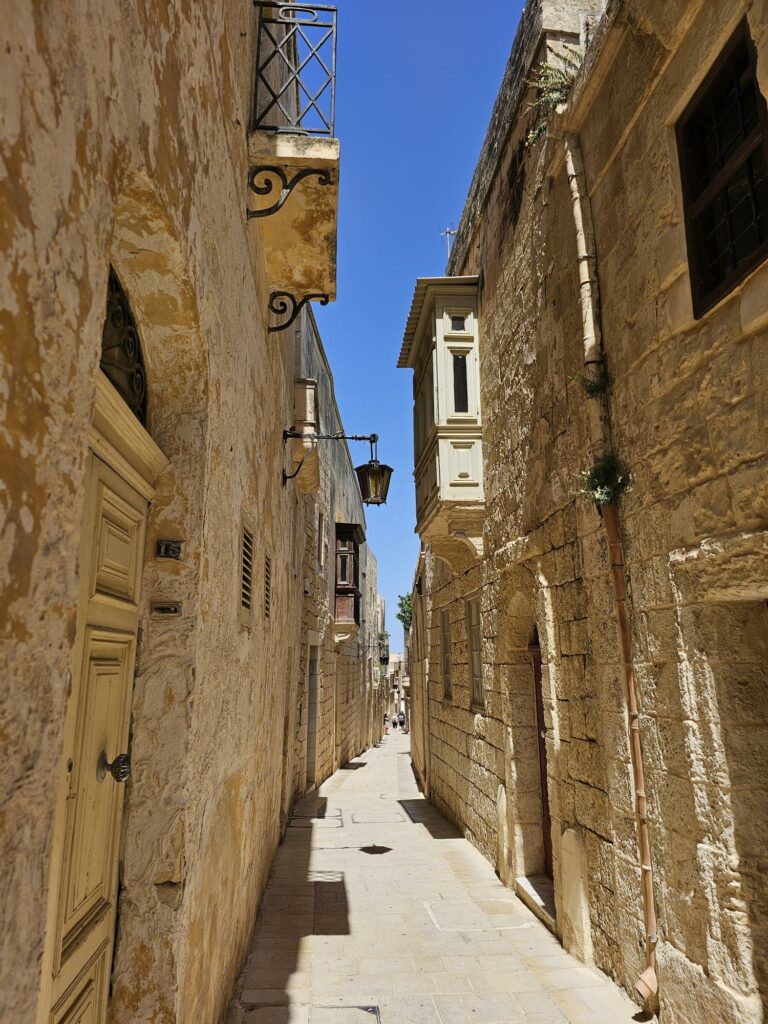
From prior research, it was noted that the surfaces have been recently refurbished which was something of interest. From wandering around the place for a few hours, it appears that 99% of the surfaces comprise of ‘fake’ paving (akin to Bratislava) making for a completely smooth roll (see below)…
In the heart of Mdina is St Paul’s Cathedral for which a ticket needs to be purchased, however, said ticket can also be used to enter the Mdina Cathedral Museum. As per other attractions, disabled individuals can enter for FREE. The museum also contains an underground section which can be reached via a lift…
Only half of this section is wheelchair accessible, however, still worth a visit.
Next, we crossed over to the majestic St Paul’s Cathedral which can be accessed via a ramp and contains spectacular artwork…
Tomorrow, we head back to LHR hopefully with the wheelchair in one piece. Final thoughts to follow…
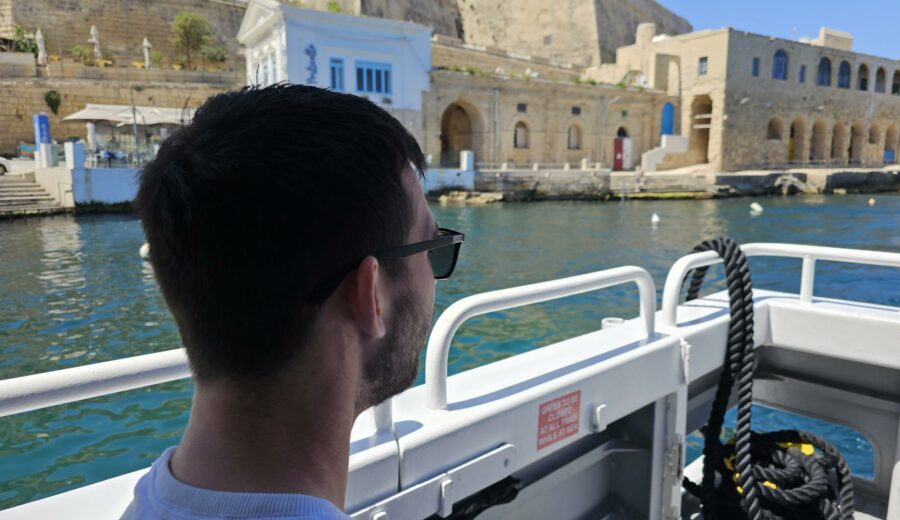
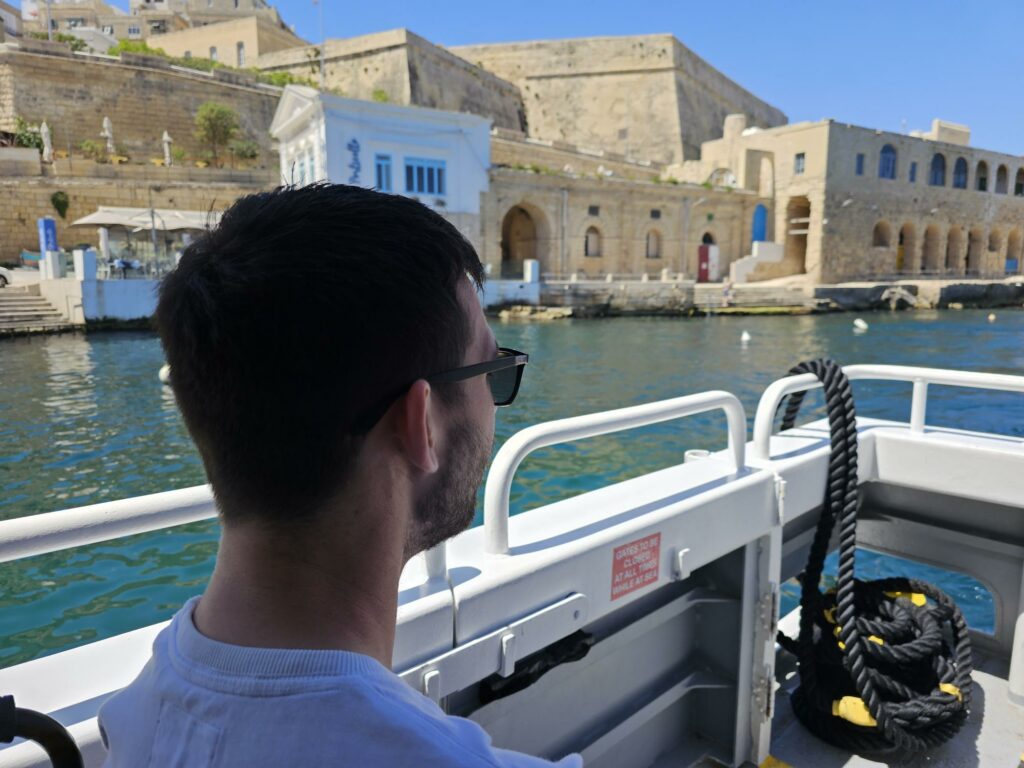
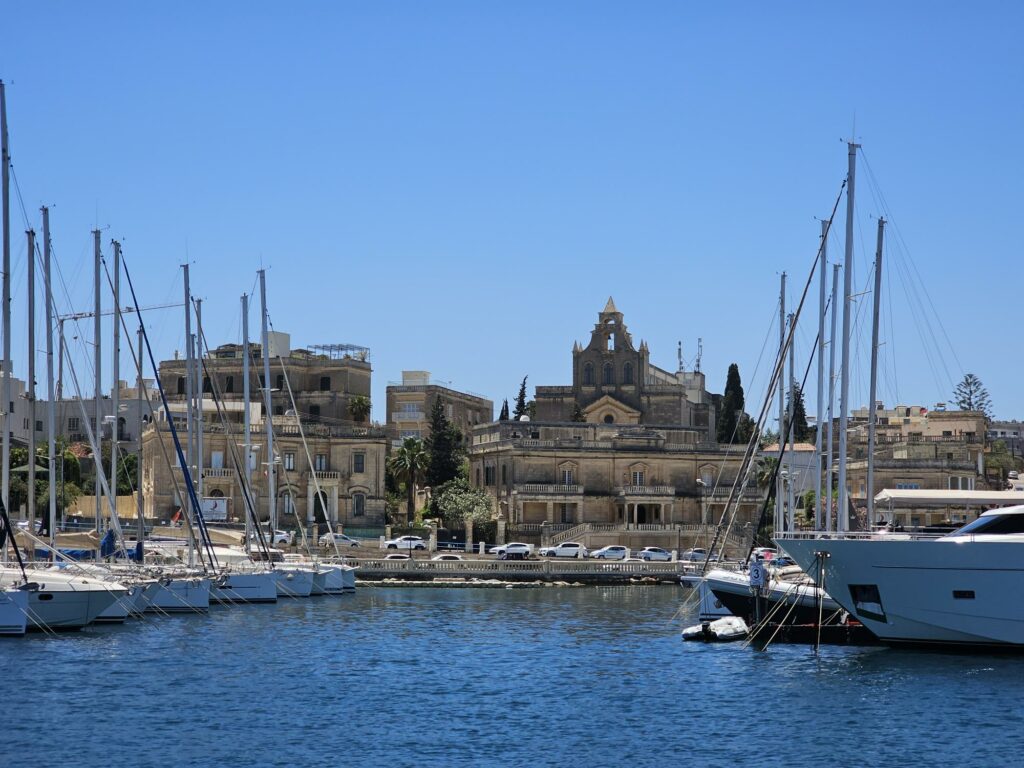
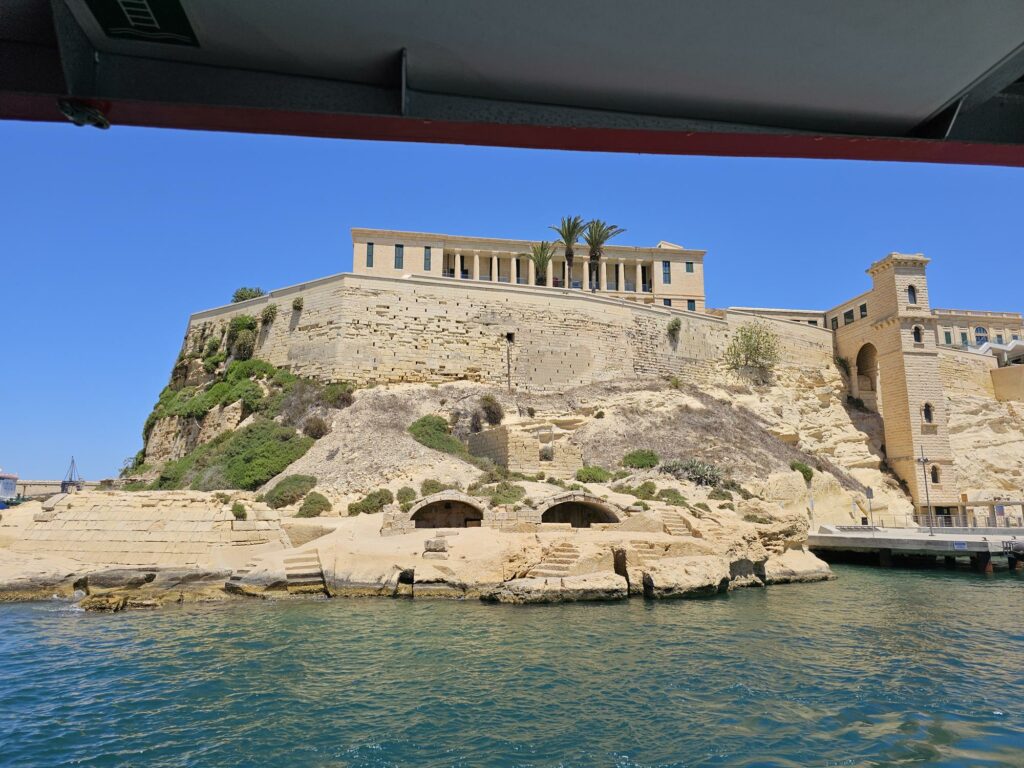
The plan for today was similar to ones final day last year in terms of hopping on a boat tour around the various harbours, however this time we tried out the Hop On, Hop Off ferry from Sliema.
One thing that has changed from last year is that the Sliema-Valletta ferry terminal on the Sliema side has been revamped thus making it more accessible. Despite this, it would have still been a struggle for Superbunny.
As we know, Hop On, Hop Off is an international franchise so you would have thought that everything would be wheelchair accessible? Appears not as there is still quite a step up to the rocking gangway which would be almost impossible for the majority of electric wheelchairs. What is surprising is that, after yet another small step into the inside portion, there is a roomy wheelchair space…the mind boggles sometimes! Still, the tour presents nice views if you can actually get on the thing…
Not forgetting majestic views of todays cruise ship arrival…
Although a few streets in Valetta are very steep, we discovered when wandering around last night that some of these can be avoided by crisscrossing other streets with a lesser gradient. One also noted that the streets within recently renovated area such as St. Paul’s Cathedral comprise of smooth paving rather than tarmac with giant potholes, perfect for rolling around…
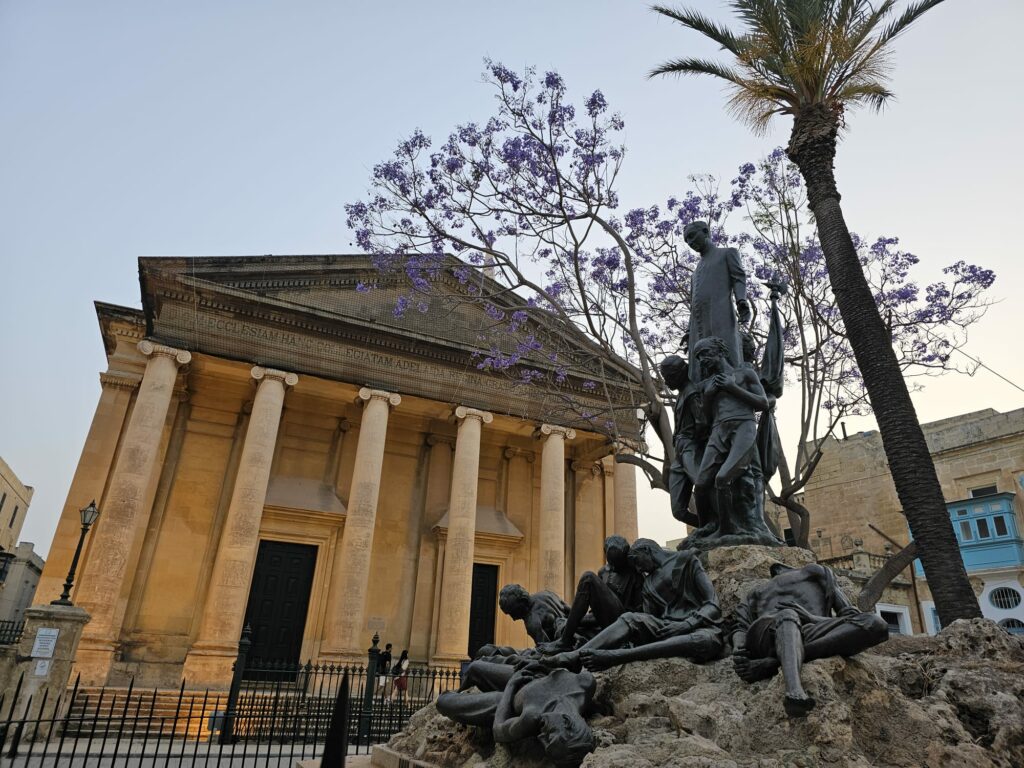
Valletta is home to a number of parks such as Hastings Garden which is located a stones throw away from the City Gate and the Triton Fountain. All of the parks that we visited last night and today (including the Lower and Upper Barrakka Gardens plus the King George V Recreational Grounds) had accessible walkways and drop kerbs in the appropriate places. It’s perfect if you want to go someplace without crowds…
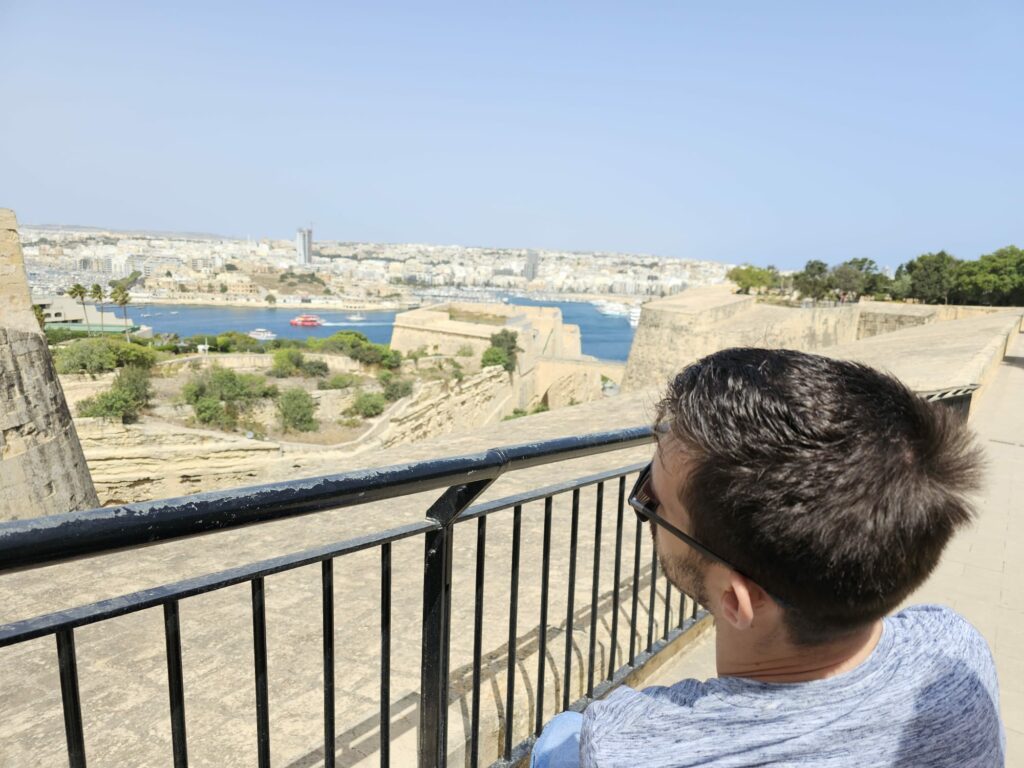
Hastings Gardens is situated atop of the city walls hence provides panoramic views across the harbours etc…
After admiring the ‘Knisja ta ‘San Publiju’ and working our way down to the cruise ship that has docked today, we utilised the good old Barrakka Lift back into Valletta city centre. As I mentioned last year, the lift, in it’s current form is relatively new hence fully accessible…
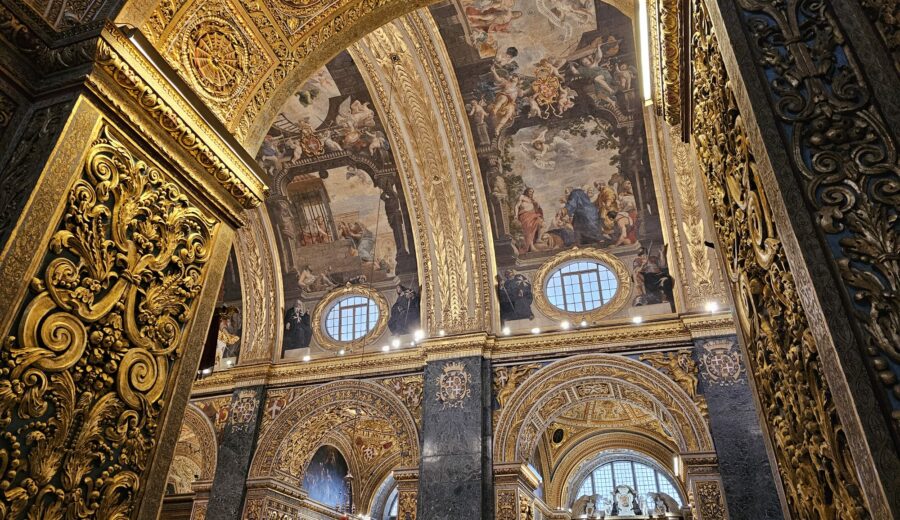
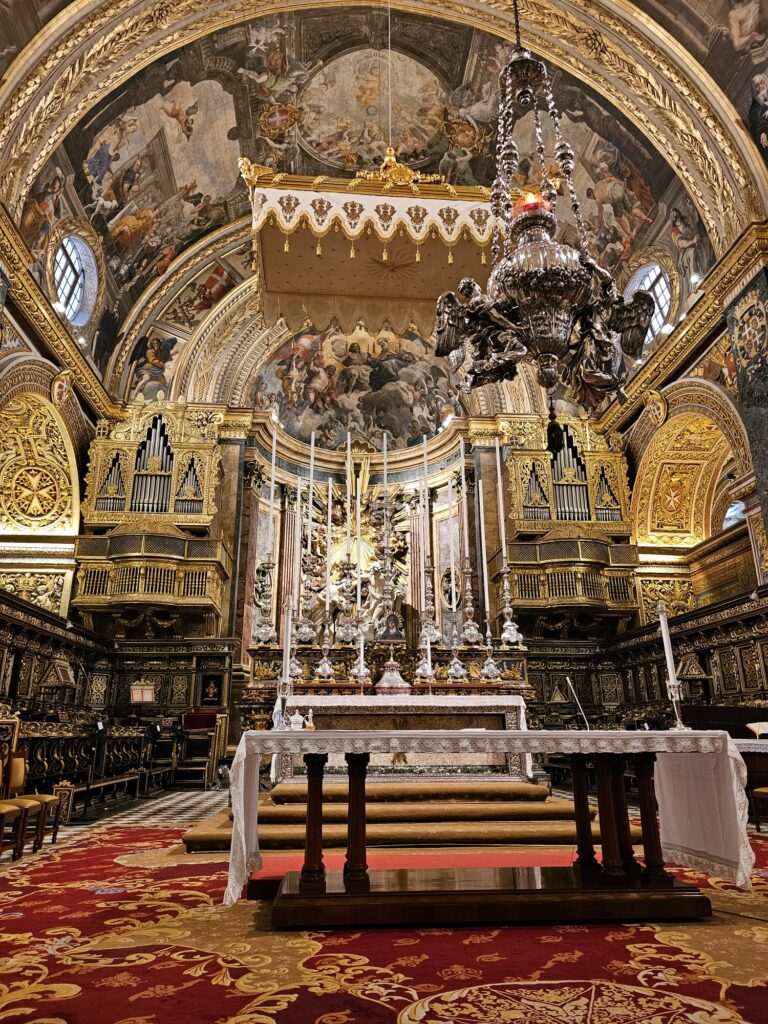
The next stop was the majestic St. John’s Co-Cathedral which disabled individuals can enter for FREE. Around 75% of the structure is accessible via various ramps around the place…
One has lost count of how many cathedrals have been rolled around over the years!
It feels very odd not to be travelling with Superbunny on this trip considering that it has rolled around a large proportion of Europe over the past two years. However, as we learnt last year, Malta and it’s capital Valletta isn’t the best place for an electric wheelchair. Granted that the city is making progress towards being more wheelchair accessible with the introduction of low floor buses etc, however it’s not quite there yet.
The benefit of not taking said wheelchair is that we could take any taxi to the hotel from the airport which one knows almost inside out after our walking exploration last year thanks to Google Maps.
This time, we are staying at The Embassy Hotel in the heart of Valletta rather than in Sliema to avoiding faffing with ferries over and back. However, it is worth noting that accessible hotel rooms are hard to come by in the city and The Embassy seems to be one of the only hotels to have them (rather expensive also!. Despite this, it hasn’t been an easy booking process.
One originally booked rooms with a Sea View, however, said hotel decided to call us last week (with one week to go mind you!) informing us that there are no accessible rooms available with a Sea View and are, in fact, on another floor. Anyway, we decided to check out the Sea View regardless of the accessibility and it turns out that the ‘non accessible room’ is bigger than a lot of accessible rooms that one has stayed at…
The only thing, akin to Athens, is that the bathroom is on the small side…
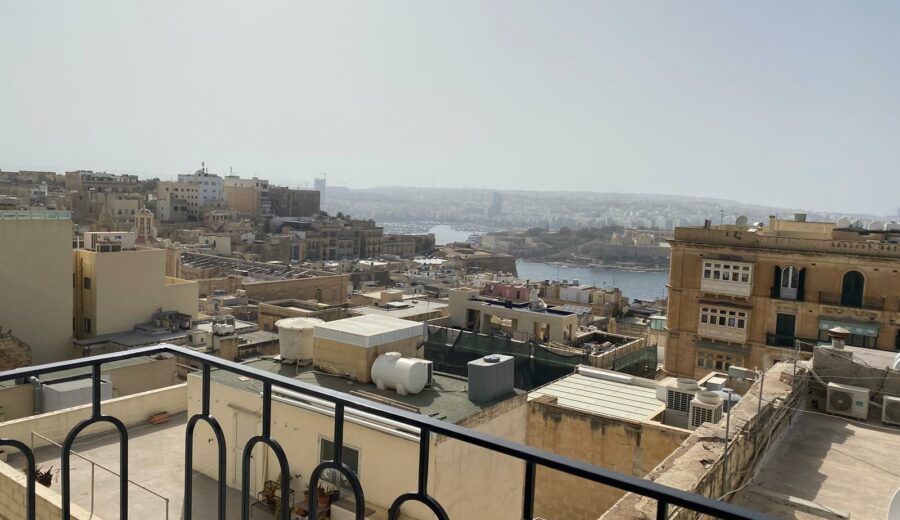
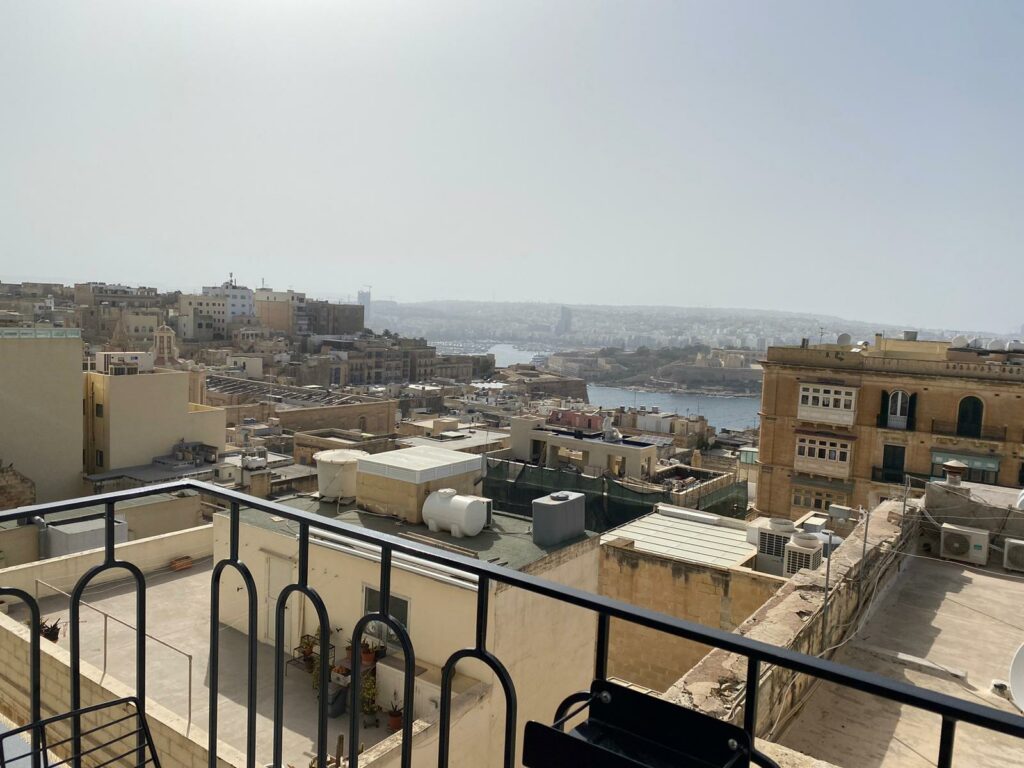
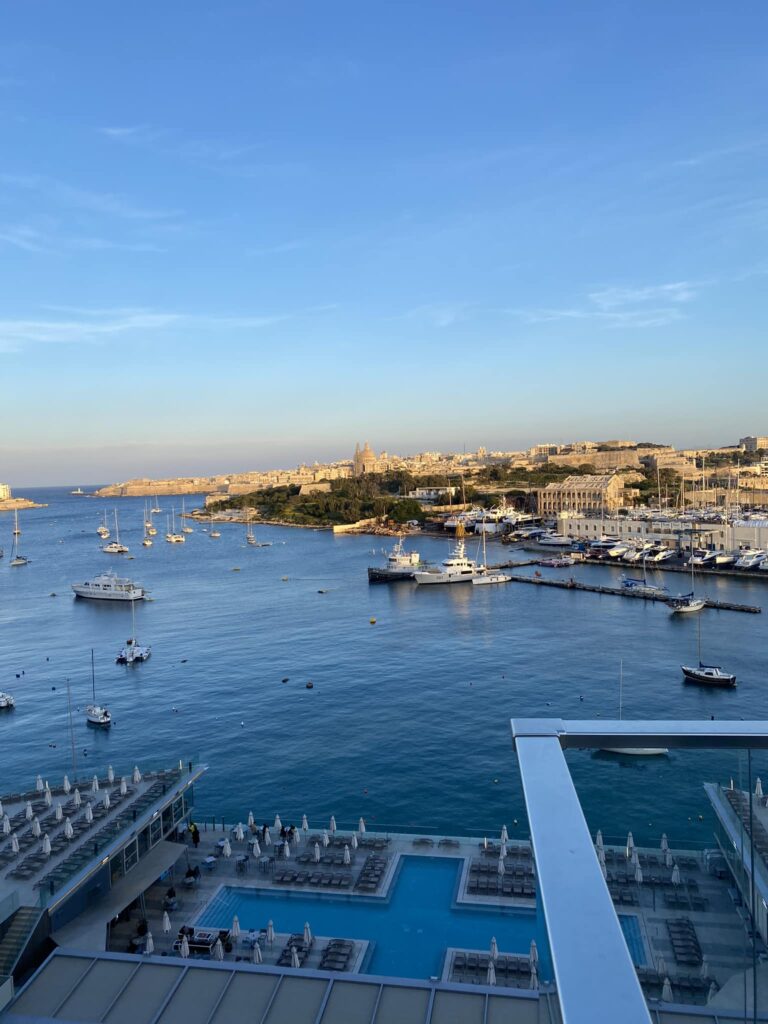
However, look at the view from ones balcony over one of the harbours surrounding Valletta…
The plan tomorrow is to wander around hilly Valletta, maybe the Barrakka Lift could come in handy once more over the next few days?
Before we delve into ones final thoughts on Istanbul, let’s discuss airports! Given that staff were not willing to assist with lifting Superbunny off the trolley upon arrival, it was thought that the departure process would be a palaver. IST does have a special assistance ‘office’, however, it was closed requiring you to telephone the number given. Once connected, the individual asked which airline followed by a simple message of ‘contact BA’ and then hung up…very helpful! We then found the relevant check in desk who, thankfully, was used to the process. The actual ‘flow’ of the airport was pretty straightforward with dedicated lanes for individuals with disabilities with baggage handlers willing to listen about how to operate electric wheelchairs. It is worth noting, however that you need to explain EVERYTHING even if you are in a manual wheelchair which they kindly bent AGAIN…thanks IST!
Final thoughts on Istanbul aka the largest city in Europe then. As I say, in terms of travelling around the city via public transportation, its one of the most accessible that I have visited in Europe, especially with the trains, trams and funicular being flush to said platform. However, as per most cities, if you are looking to visit neighbourhoods outside of the centre, be prepared for the drop kerbs to be pieces of concrete.
In terms of its citizens, you have probably gathered that it requires a little persuasion for people to assist you in general, although the hospitality sector is very welcoming. The attitude towards disability seems mixed in Turkey, for example, when waiting for lifts on the Marmaray railway, the majority of the public seemed to ‘dismiss’ the fact that you are present and push themselves into said lifts with little regard. Due to this, it’s helpful to leave a little extra time.
From the biggest city in Europe to the smallest capital in the EU, my next adventure takes me back to Valletta in Malta on the 19th May exploring what was missed last year and, in particular, the island of Gozo.